Best Garden Practices Update: How to Grow a Diverse & Dense Plant Palette
Horticulturists are known for their patience. After all, plants grow at their preferred pace, they attract their pollinators in a kind of coordinated waltz where timing is key. Botanists measure their work not by the clock but by the calendar: collecting nature’s samples to study plant life cycles, plant’s responses to environmental change and restoring habitat, managing invasive plants. Garden and landscape architects create enduring biophilic designed environments.
So, when this year’s annual plant symposium, Plant-O-Rama (POR), was rescheduled for two days hence from its original event date due to the snowmaggeden ~ the members of Metro Hort took it all in stride.
And despite the ongoing snow accumulation that was then piled ever-higher on Gotham’s streets and sidewalks, er paths (!), and the startling, breathtaking frigid temps, we all were energized to meet up, learn from the lectures, panel discussions, career fair, and trade show vendor specialists. There were also Guided Walks, a Seed and Garden Book Swap / Exchanges and a cheerful Closing Party.
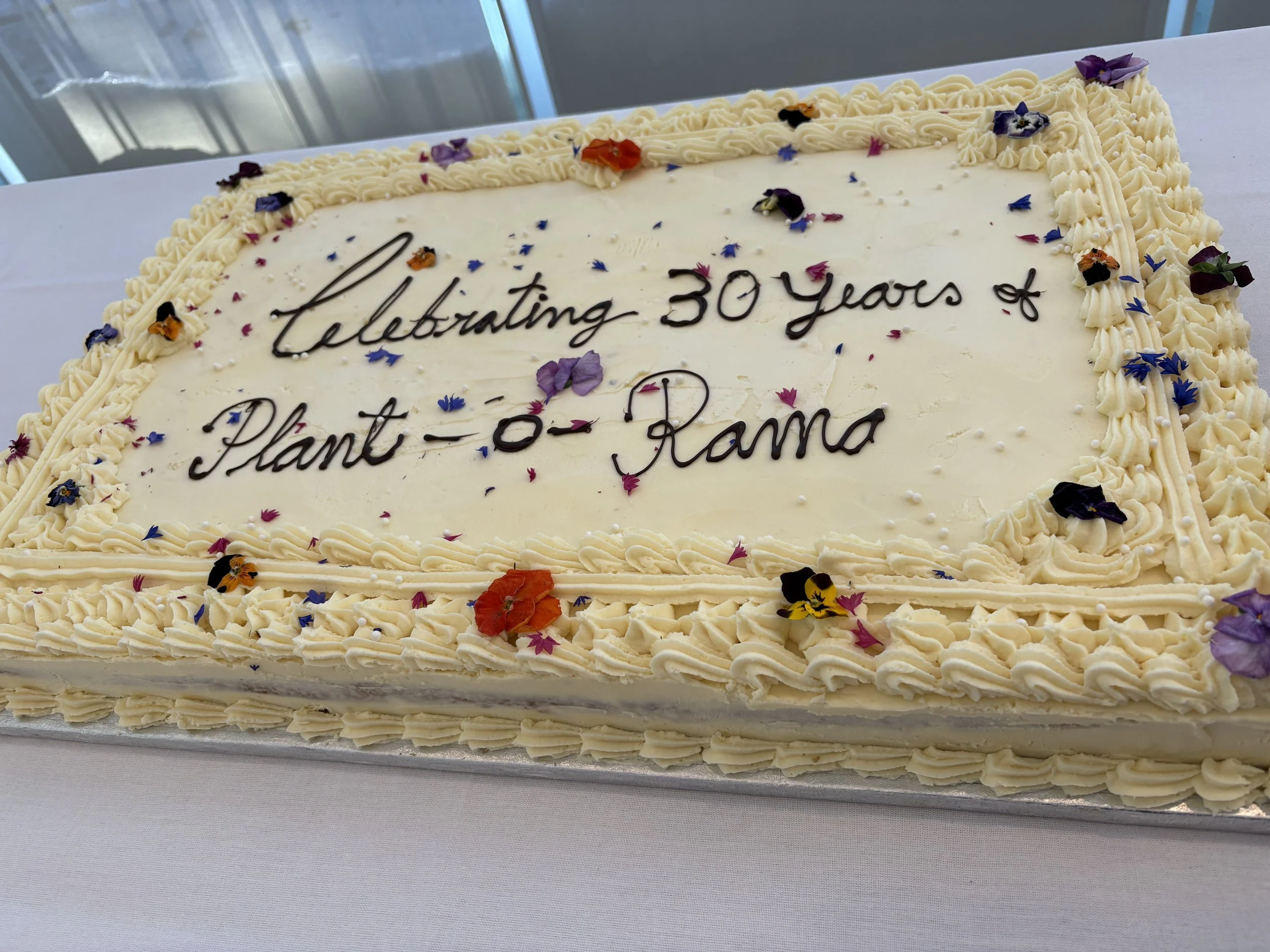
Plus this year, Metro Hort turned 30 years old. It was a festive anniversary. The world of horticulture and gardening has witnessed a lot of fundamental changes over these three decades. The only player missing was our venerated POR leader, Bob Hyland, who sent his heartfelt wishes. (Glad you’re on the mend after your tune-up!)
For those of you who don't know, Metro Hort is a professional organization for horticulture and landscape experts in the New York City tri-state region, founded to connect practitioners in public and private sectors. It serves as a network for designers, arborists, and growers, promoting education, sustainability, and networking, It may be best known ~ at least to its members ~ for our annual Plant-O-Rama (POR) held every February where expert speakers and panel discussions highlight the one-day symposium. I believe it’s a unique event.
Why, you may ask, do any of you outside the professional horticulture network care about this? Thank you for asking.
POR is important to all because it has the singular ability to highlight key themes and issues about our environment, in the macro sense, and offers visionary best practices on how to manage not only our public spaces but our gardens, yards, and window boxes. It provides the garden and landscape design professionals, “green” enthusiasts and, by extension, all of us, a kind of road map of what we can expect when looking to what our environment will look like in the future. This impacts air and water quality, agriculture, sports, and leisure.
The experts at the event look into their crystal balls, see the issues, and lay out best practices and solutions that will make our world greener, prettier, and healthier.
Celebrity Speaker
In the past, the keynote, or featured speaker, have included Edwina von Gal ~ a founding member of Metro Hort, Jimi Blake, A Beautiful Obsession: A Plantsman’s Journey in his own Garden, Thomas Rainer, Phyto Studio, Translating the Wild: Practical Design Strategies for Evocative Urban Landscapes and Abra Lee, The Great American Garden Road Trip.
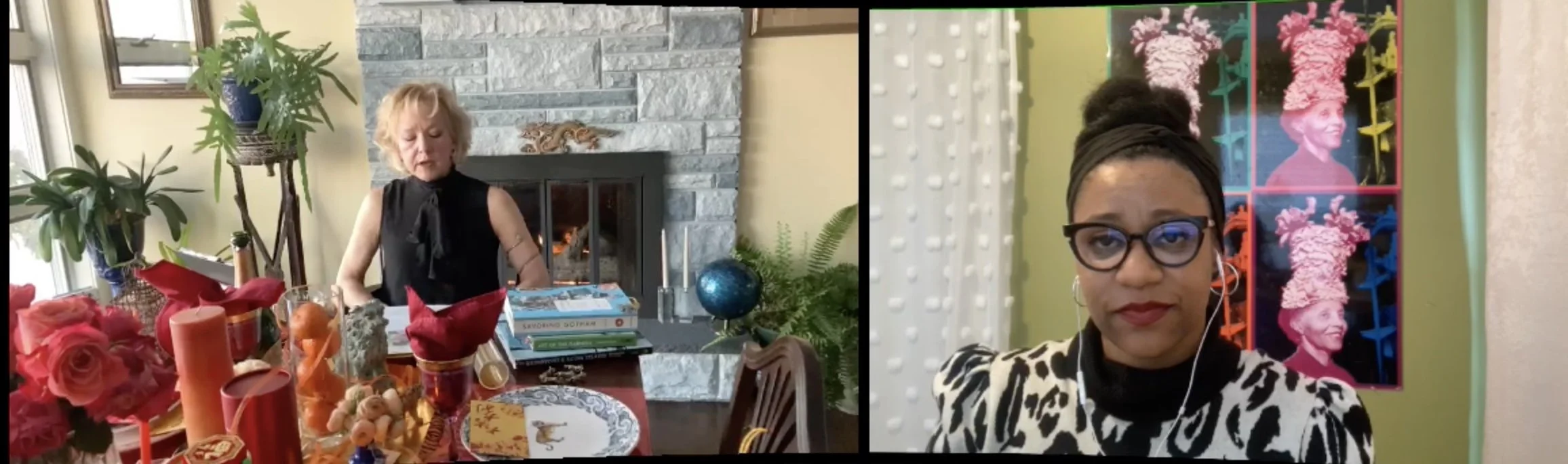
I’m so proud to point out that Abra was a special guest on my Ladies Who Lunch Conversations videocast. If you missed it back in 2022, please watch ~ or re-watch. Our Conversation is brimming with horticultural history, fashion, and fun,
Garden Gal Pals: Lynn Torgensen, garden designer, (L) Jean Galle, garden designer~botanical artist & Moi
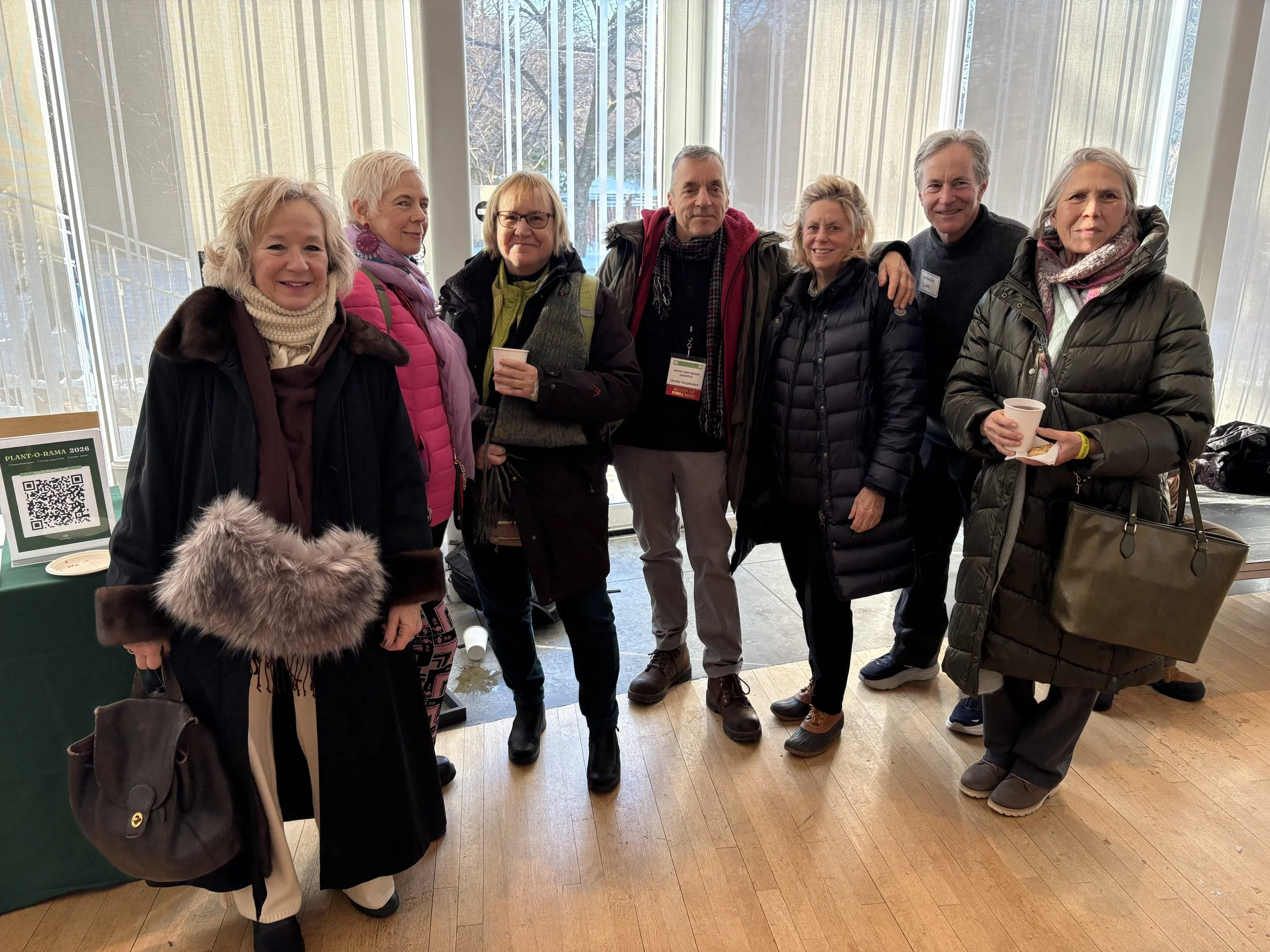
While undoubtedly we attend Plant-O-Rama for the lectures; the visionary talks shine a light on important trends and breaththroughs, the other key element that makes the event so special is the bomhomie, the networking. I always note that “ideas have agency” and at the POR, the ideas are pervasive and ubiquitous. The vibe is palpable.
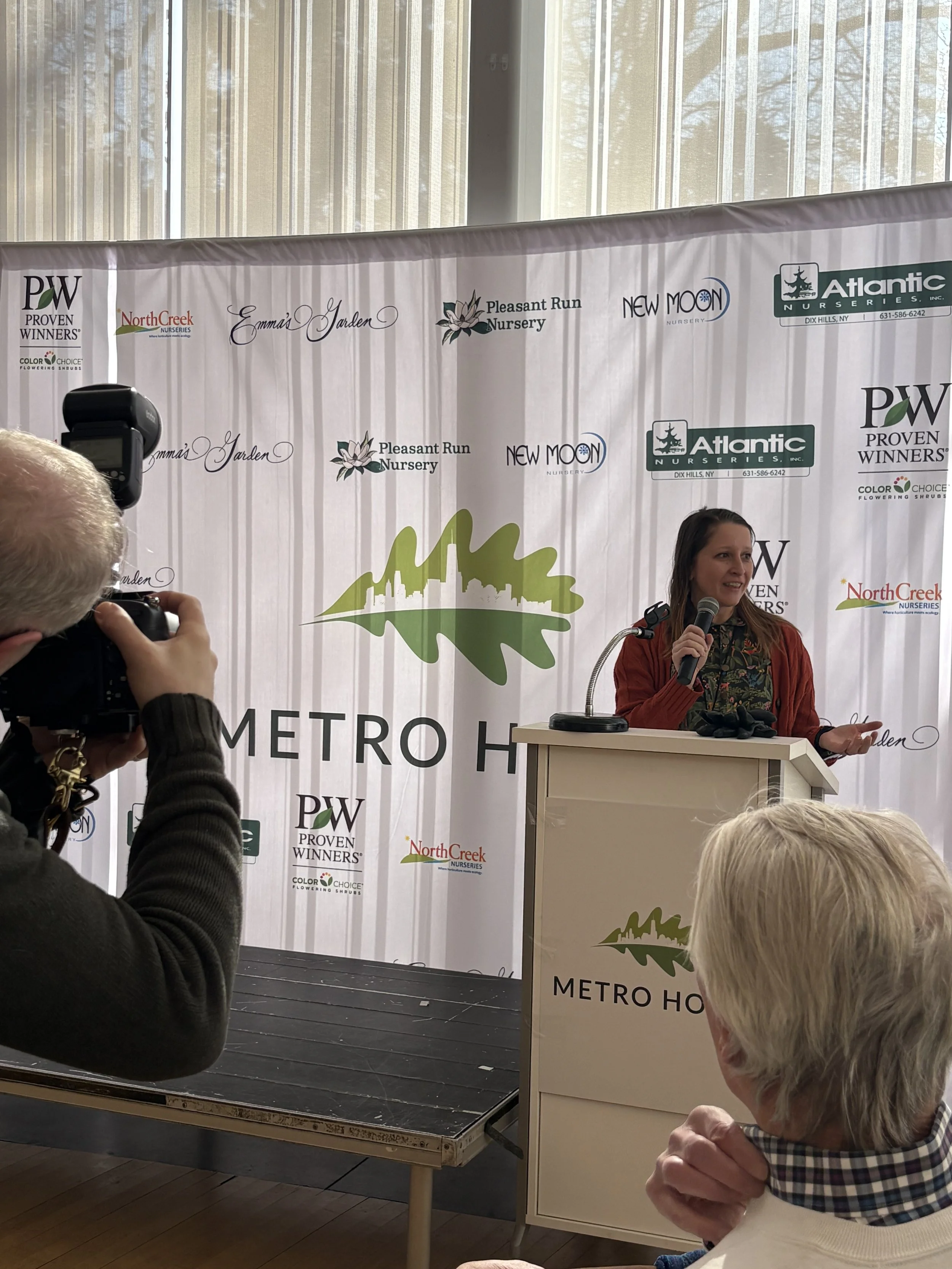
Metro Hort President, Stephanie Lucas, noting the organization’s past ~ & future
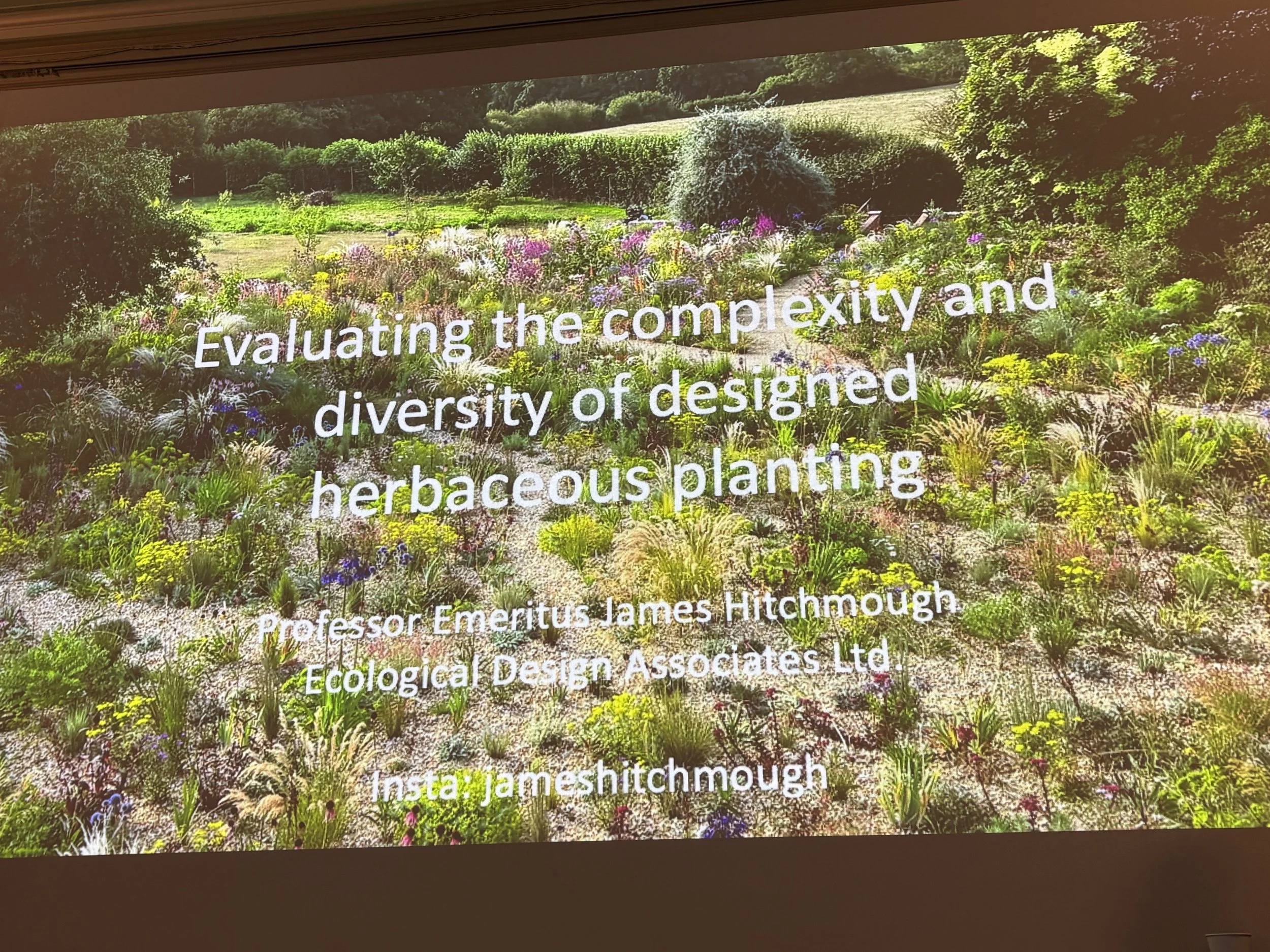
The theme this year, Evaluating the Complexity and Diversity of Designed Herbaceous Plantings
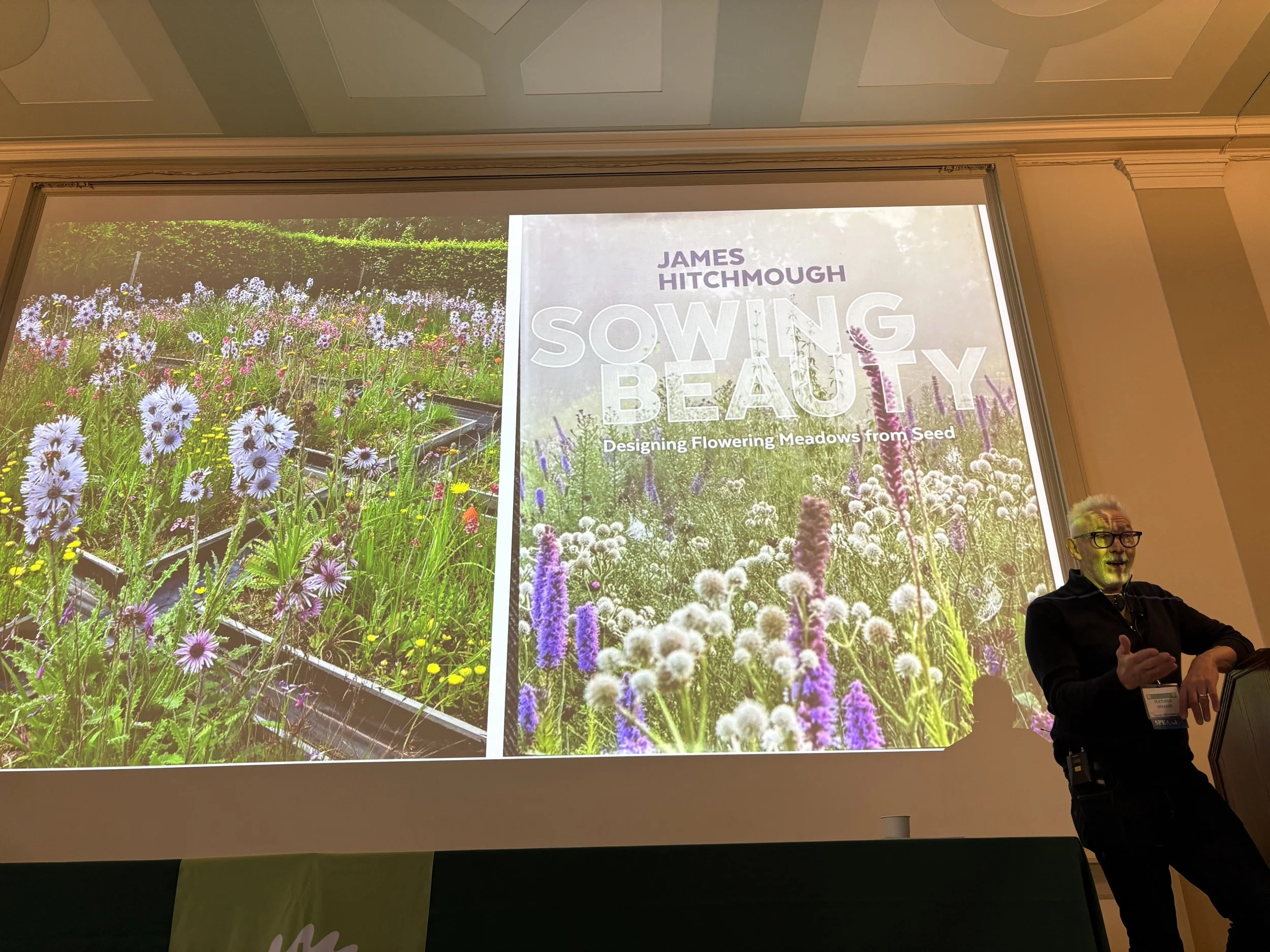
This yeart’s POR Keynote was presented by the renowned, respected, and seemingly wizardly James Hitchmough. As the Featured Speaker, James, demonstrated that he was an energetic, urbane Englishman as he walked us through his talk on biodiverse gardening practices.
I love so many of his quotes, especially these: “Gardening is just disturbance” or maybe better yet: “Planting is a process. Not a product.” This is a way of saying to think of gardens not as serving us with their pretty blooms and privacy-providing shrubs, but rather as part of a biodiverse community. We can encourage an entire world of interconnections. We can design garden to provide both Moments of Drama for us humans and for nature’s creatures.
He also advocates: “Low productivity soil is best.”
In making these sometimes bold and provocative statements and strategies, it’s important to remember that James has the chops! He possesses the horticultural science and design gravitas to steer us in a new and different perspective.
James is a British horticulturalist and author of many books, the most recent is Sowing Beauty: Designing Flowering Meadows from Seed
James is Emeritus Professor of Horticultural Ecology at the University of Sheffield. From James’ first job post his PhD was a lectureship in Environmental Horticulture at Burnley College, University of Melbourne, where he worked for 10 years and commenced his research into naturelike plant communities as an urban form to being named the Professor of Horticultural Ecology at Sheffield to becoming head of the department before he retired, heading the Department
According to James’ bio, “In parallel with his academic career, James worked as a consultant on landscape projects around the world, often using these to translate his research into practice and policy. With Nigel Dunnett he was lead planting designer at the London Olympic Park (2007-14), following the publication of the first edition of The Dynamic Landscape (2004) a seminal text on the application of nature-like planting to the urban realm.
After 2010 he focused on projects in China, often in collaboration with Chinese Government agencies to advance the use of local native species in large scale nature-like design projects, including the acclaimed “New Silk Road Garden” at the Beijing International Expo, and very recently the planting of the Monet Garden in Chengdu. He was recently appointed to the Council of the RHS.
James has continued to use his extensive travelling, design, and urban project management, sharing his inspiration and ecological insight-understanding. When not working for others, he continues to develop a 2.5 acre garden and woodpasture-native meadow in rural Somerset
He continues to speak and write on landscape and horticultural issues ~ which is how Metro Hort was able to get James on our roster.
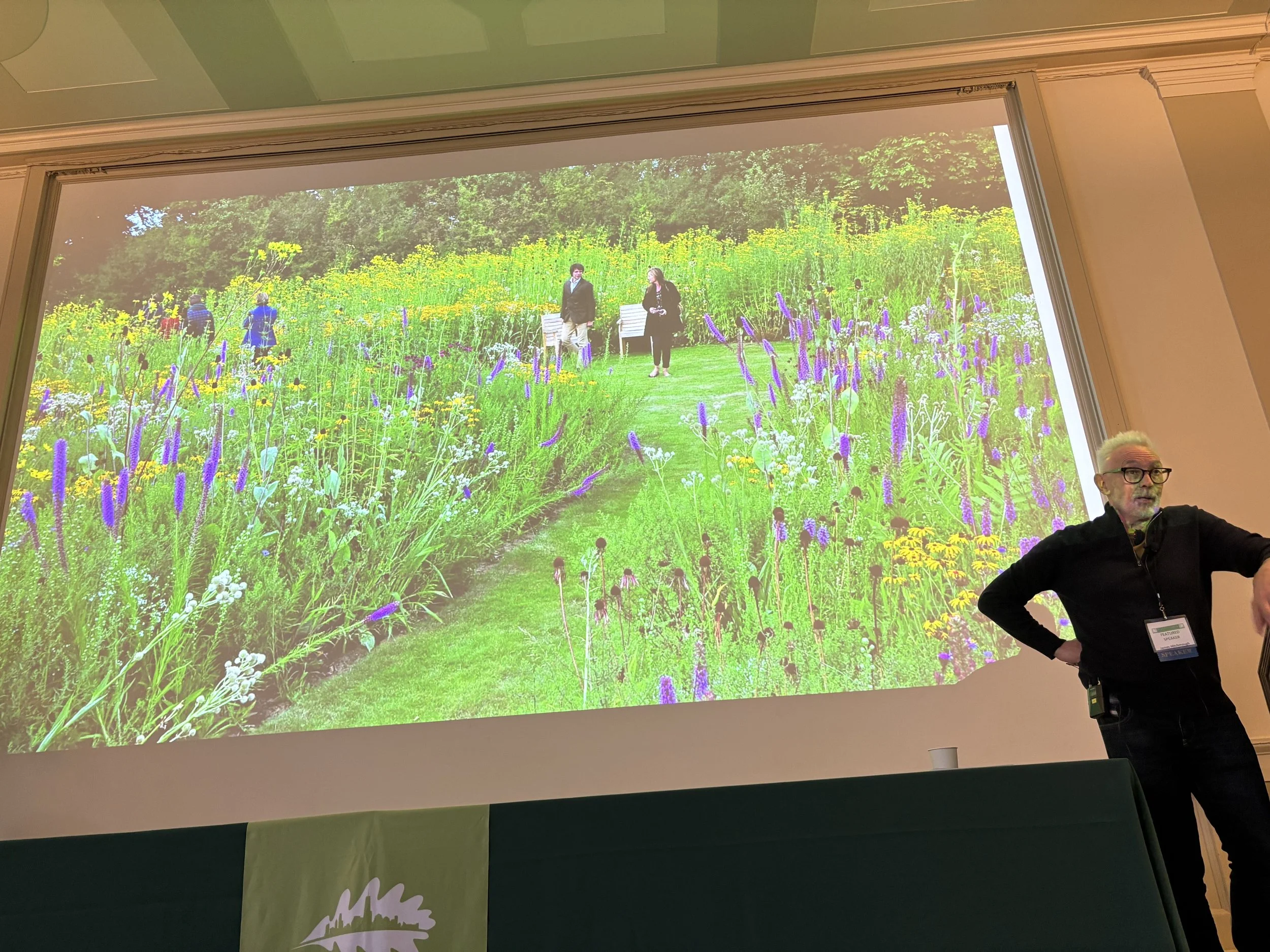
James’ diverse meadow design
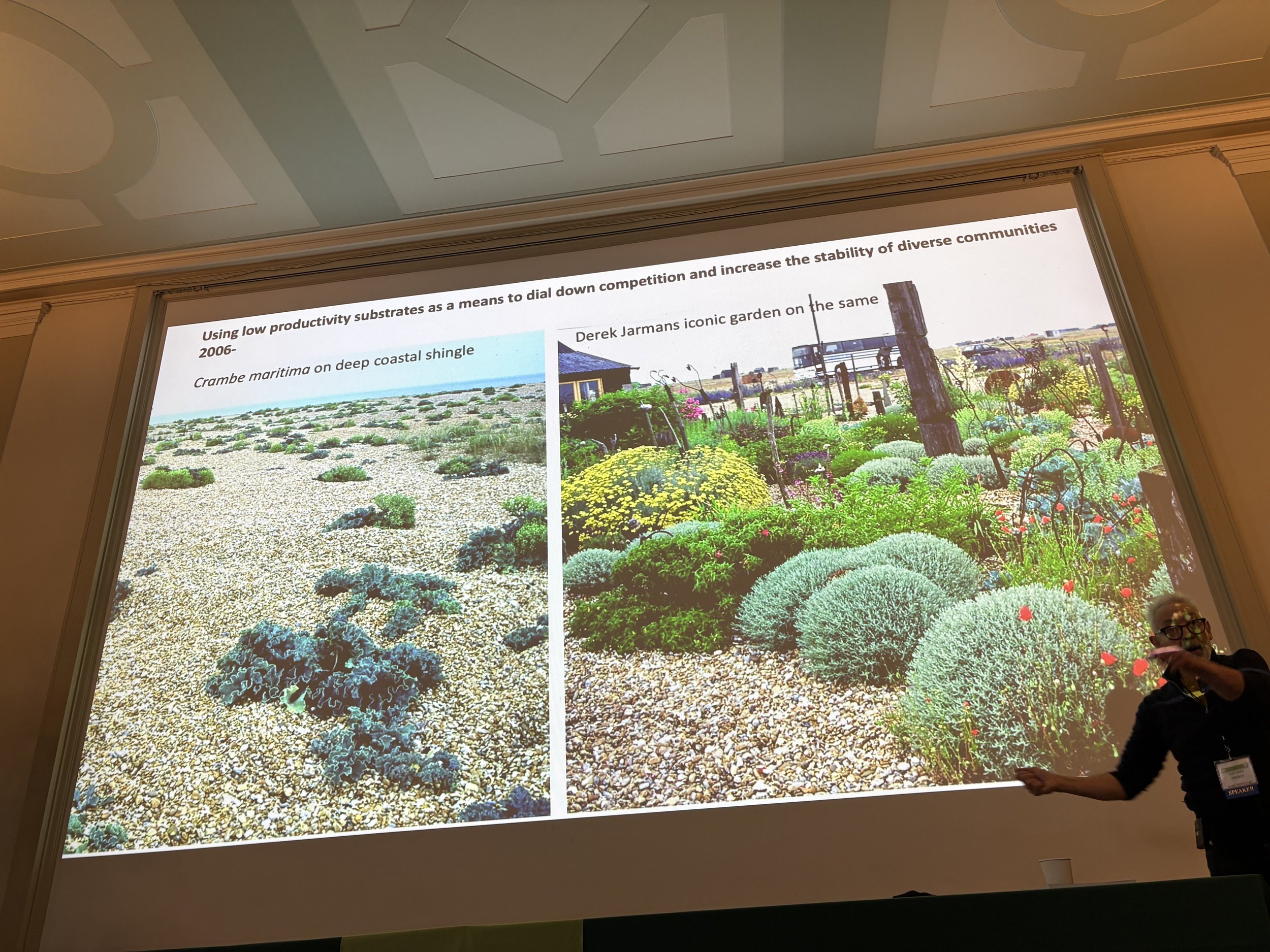
Low Productivity substrate shows growth bonus in “poor soils”
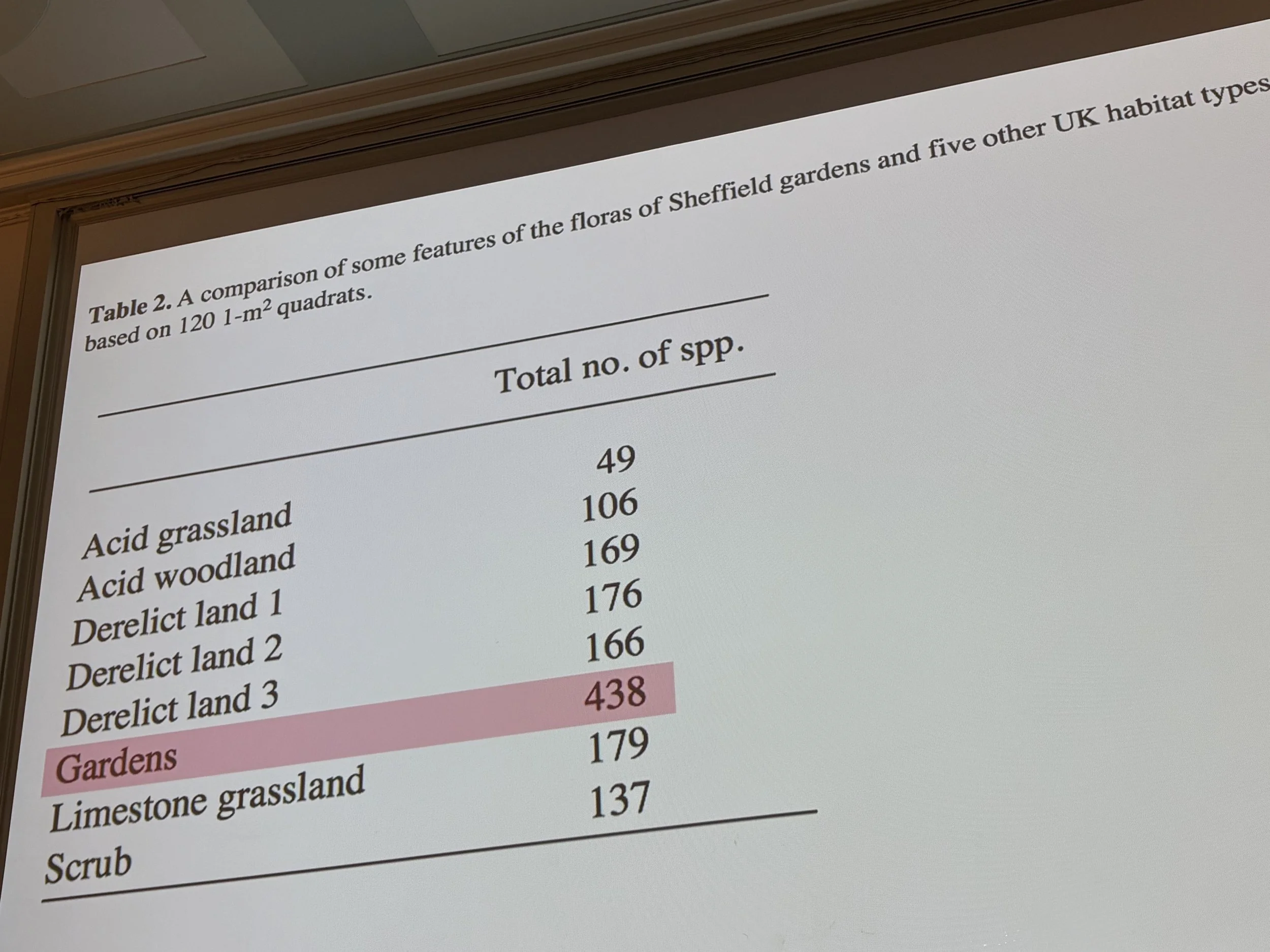
Garden taxa diversity
Big Takeaways
Native Species are not exempt from climate chaos or environmental degradation
Home gardens ~ and cemeteries are hyper diverse plant communities. His own garden includes more than 700 taxa
Home Gardens are a haven for pollinators
Helps feed seasonal hungerings for farmland pollinators
Mono cultures are not good
Key is to Maximize & Maintain higher plant diversity but don’t demonize our non-natives.
Pollinators don’t practice specificity; they are attracted to the chemicals found in their host plants.
A cultural construction needs to learn to be like the natural disorder of Mother Nature.
We need to find the sweet spot between Competition vs Diversity
Design control needs only two things: Diversity and Density. He developed an algorithm to aid in this planting design concept.
Layering is key ~ Nature has layerings everywhere. With a smile, James said, “One layer is so last year!” 😊 He has three layers in his own garden. The more productive soils use layering
Low productivity soil is best
Use low-productivity materials as substrates, including crushed building sand, limestone, gravel, crushed concrete, crushed minerals from buildings. He reuses the construction detritus to create healthier gardens.
James advocates creating stress in the soil! I know this goes against all that soil science about loamy, rich, compost… (But he is super successful. Over time, too.)
And the gardens and parks that follow his strategy need maintenance.
Diversity Gardening depends more on skilled & thoughtful managers than even
its designer.
He showed examples of his pond and process for degradation and diversity.
This strategy can be considered a kind of productive, smart tool in our climate
chaos / environmental tool box arsenal.
James said, “Ecological disturbance gardeners are apex herbivores ~ we have agency!” I love this. 💚
And his presentation. Thank you. (He’s also posting his autograph to me to insert in his book to add to my home library. Special thanks, James!)
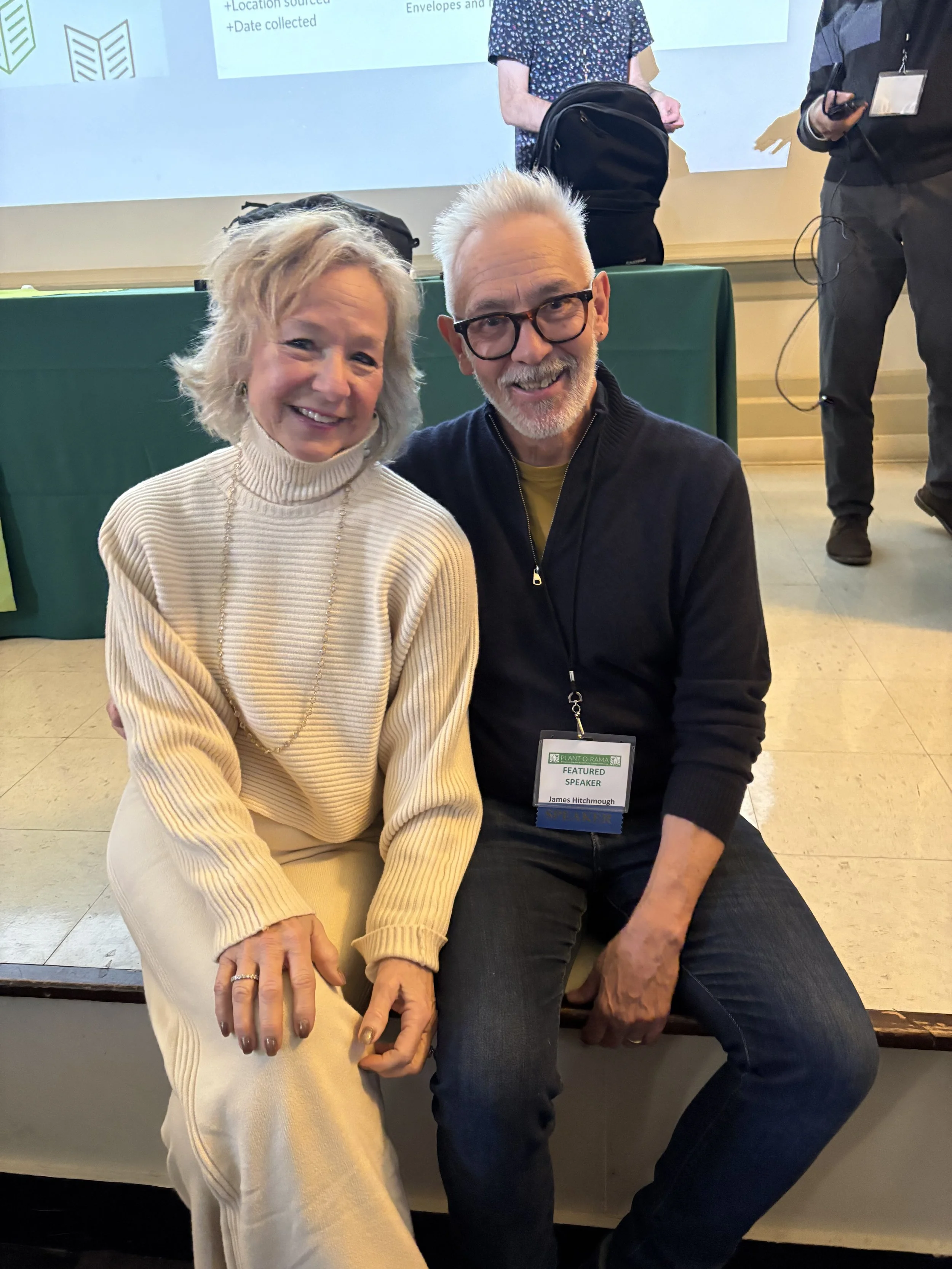
Me and James Hitchmough, after the talk
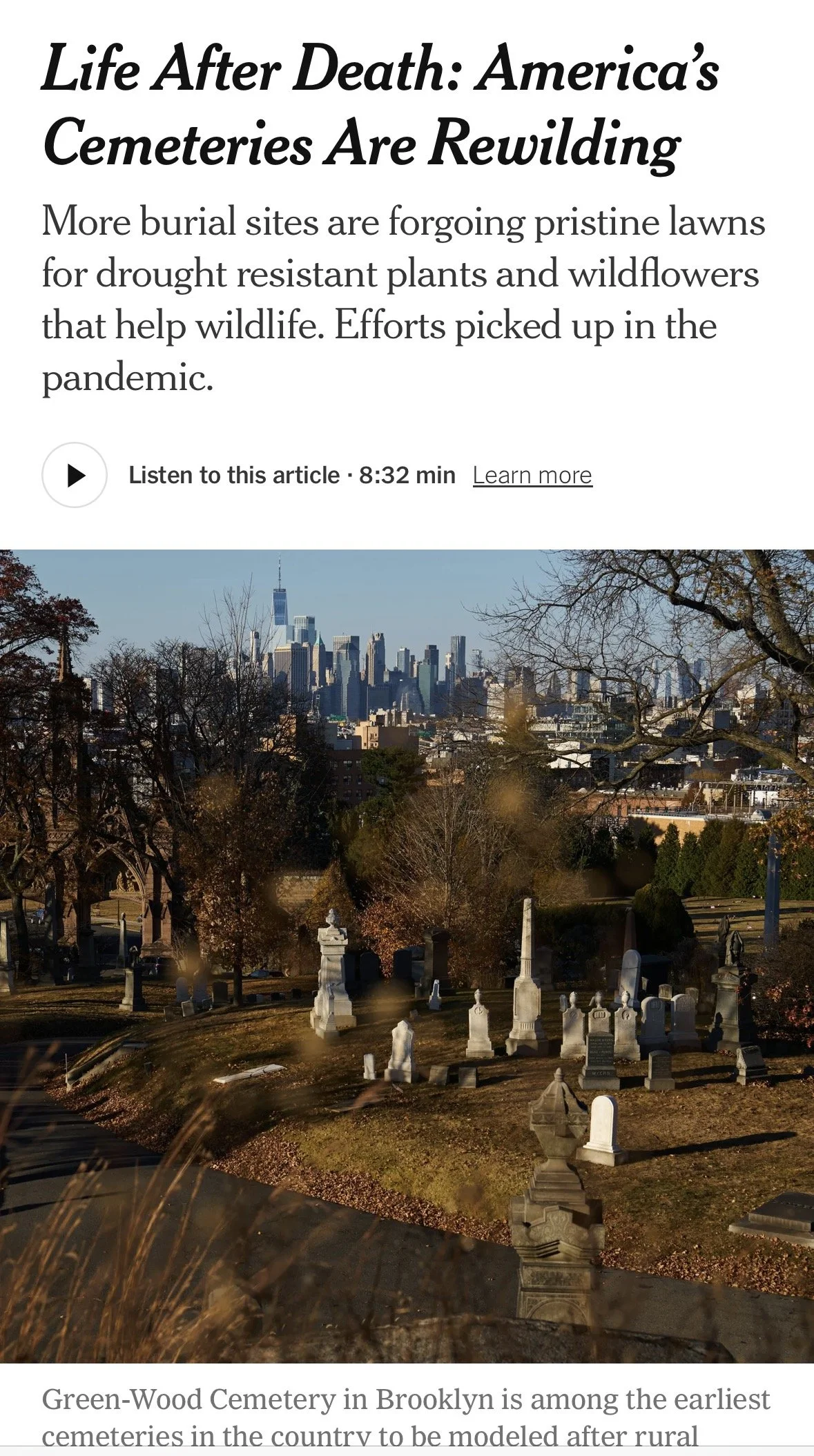
The Graveyard Shift: Choosing Curiosity over Control
This is a catchy title because the speakers work at the world-class Brooklyn Green Wood Cemetery. 😏
Joseph Charap and Sara Evans, Featured Speakers
For generations, Green-Wood maintained the lawn -dominated landscape most Americans recognize -neat, controlled, unchanging. But it came at a cost.
This presentation examined how Green-Wood has begun choosing curiosity over control: disentangling our historic character from harmful 20th-century landscape practices. Through memorial meadows, reforestation, and reconsidering invasive plant
management, we’re discovering that honoring the dead means protecting the living world they left behind. Their newer, wilding look overcame some families’ skepticism, and was triumphantly featured favorably in a recent New York Times piece.
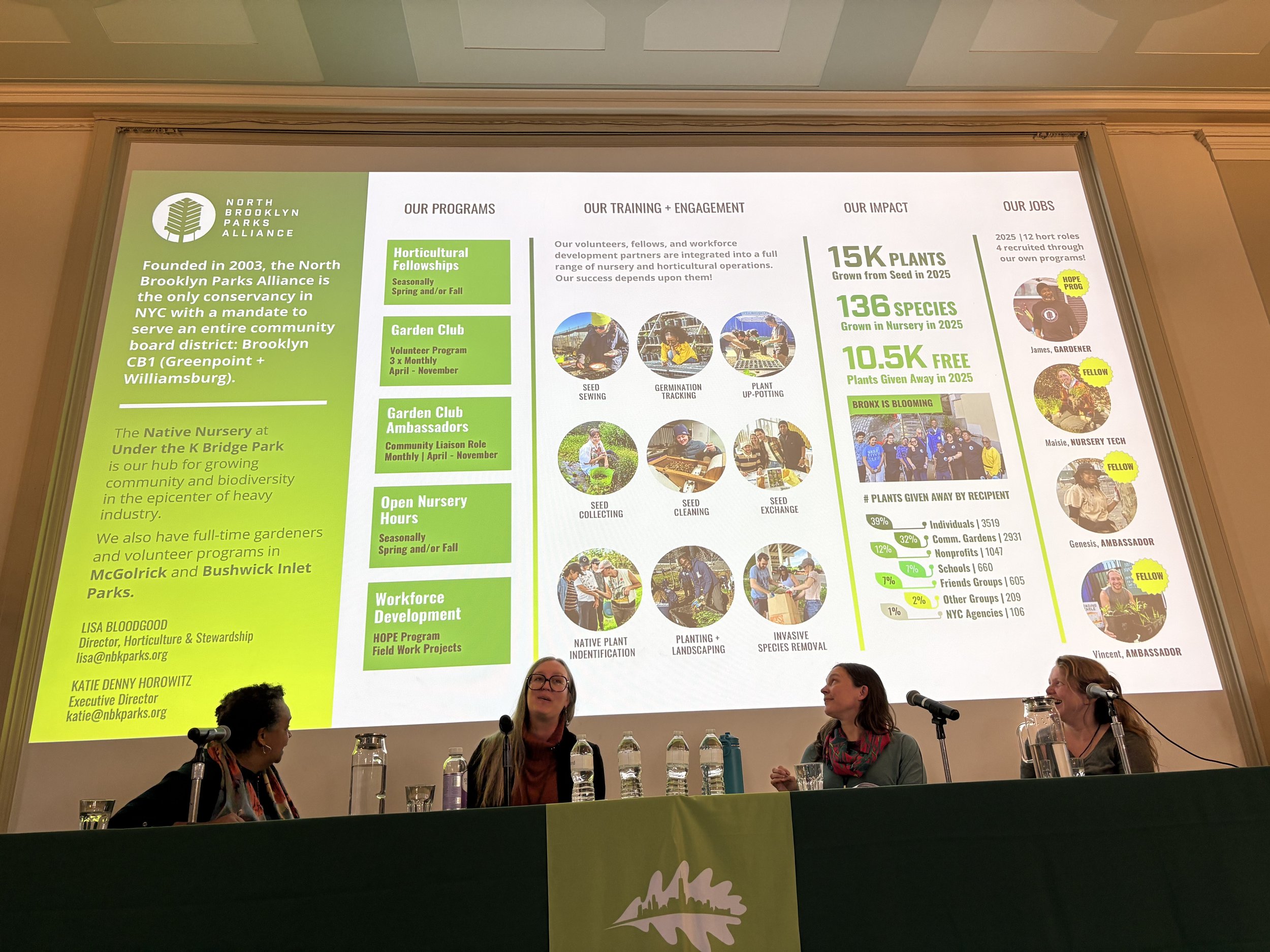
Gardens: Nurturing Plants, Communities, and People
Panel Discussion
Moderator: Andrew Sliwa, Vice President of Horticulture, Southern Land Company
Panelists: Andrea Parker, Gowanus Canal
Conservancy, Jennifer Beaugrand, The
Bronx is Blooming, Lisa Bloodgood, North
Brooklyn Parks Alliance, and Tonya Gayle, Green City Force
Over the past 30 years there has been much progress in imagining and creating plantings that are spatially, temporally, and taxonomically complex; and in some parts of the world these plantings have become the zeitgeist.
Though exemplary for supporting biodiversity and delivering high levels of aesthetic appeal, they can also be more demanding to design, implement, and successfully manage into perpetuity. James will explore where we are with these planting genres and how we can maximize the benefits and minimize the potential negatives.
We were blown away by the passion, dedication, commitment of the panelists and their organizations.
They are the silent warriors who are driving success in our communities; our world.
They and their teams work so hard to ensure that urban green spaces remain community focused, accessible to all, and provide pathways to meaningful employment in the green industry. These challenges are daunting, but New York City nonprofits are tackling the issue and developing strategies for success. Thank you.
Thinking about the environment that’s right in front of us: be that our yards, window boxes, or community gardens, will help us live better, while impactfully helping the global situation. While starting small may not seem like it could make a difference, James tells us we can do it. We are the changemakers,
As Dorothy said as she clicked her heels, “There’s no place like home.”
Home is for all of us ~ the web of life includes the plants, the pollinators, the animals. Let’s all commit to being good stewards of our own little piece of green space.
It’s truly Garden Glamour …