

Every botanical masterpiece starts with an intimate "conversation" between the artist and the plant.
My Conversation with Wendy Hollender, the Botanical Artist, & Author for my Ladies Who Lunch Conversations videocast is a revelation; a must-watch to understand how Wendy finds inspiration in plants and nature.
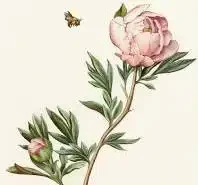
Wendy Hollender botanical art
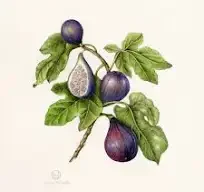
Wendy Hollender botanical art
I am a long-time, card-carrying Wendy fan and thought I knew most everything about Wendy's art and professional work, as I shared in the Conversation’s opening welcome; yet I too (delightfully) discovered so much about her. Wendy’s enlivened storytelling has us feeling keenly engaged and downright rapturous as we take in the beauty she creates while also learning about nature and the plant world.
You’ll be rendered rather amazed at her artful talent, no doubt, but also with her business acumen.
With regard to her masterful creations, Wendy explains in the Conversation how she doesn't have a preconceived, refined visual in mind, per se, as she begins to create, but rather has a "conversation" with the plants as she artfully renders them in paint and/or pencil.
I also asked about the business side of her work because Wendy has created an astonishingly successful career that surely is the envy of most every maker ~ especially those “starving artists.”
Wendy details to us how she migrated from her studies at the Rhode Island School of Design (RISDE), to a textile design firm in NYC, to botanical art classes to earn her Certificate & eventually teaching at The New York Botanical Garden (NYBG), and eventually to expanding her botanical art portfolio to include scarves ~ for Echo Design
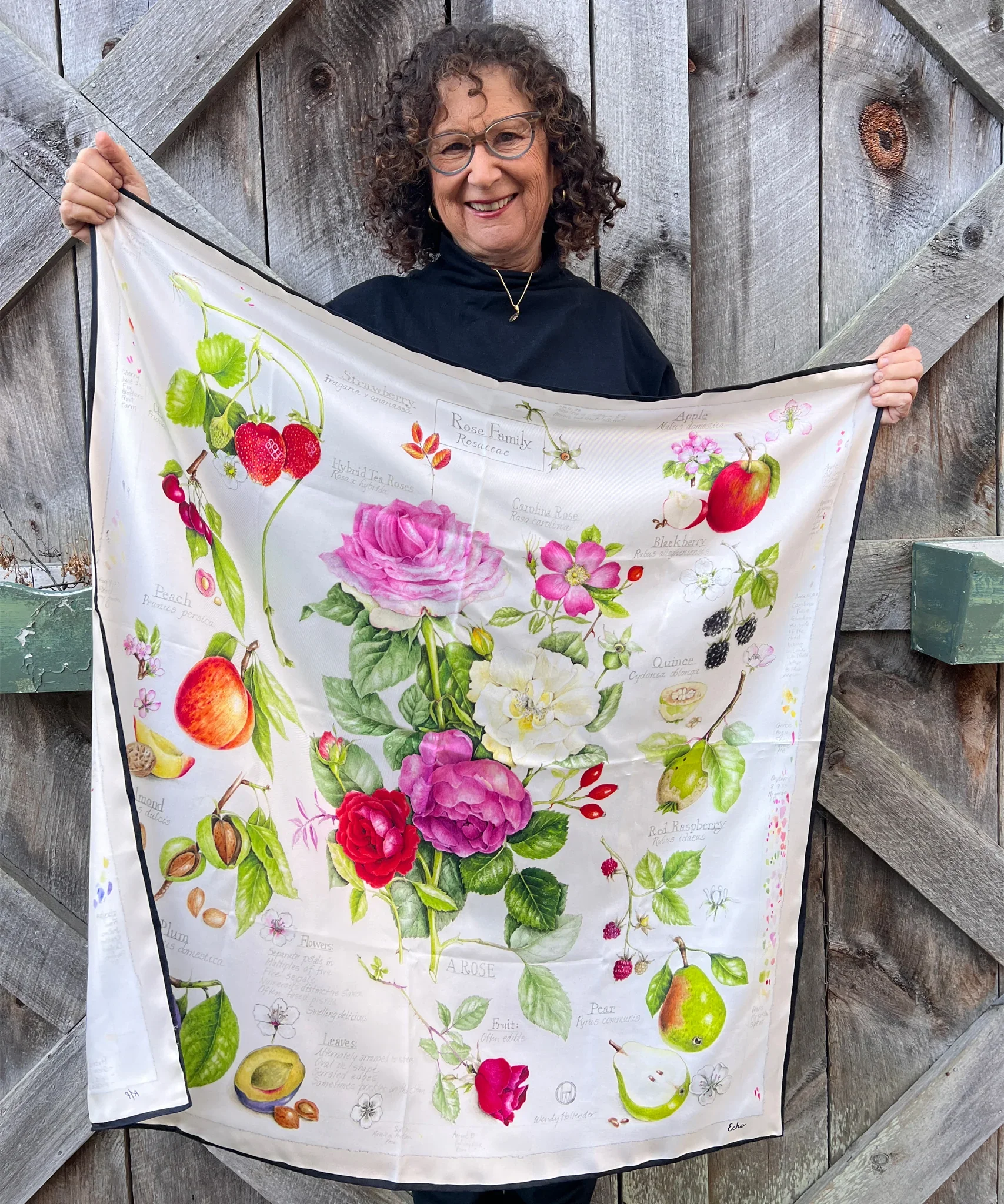
Wendy’s botanical art design for Echo Scarves is a garden dream (Photo: Echo)
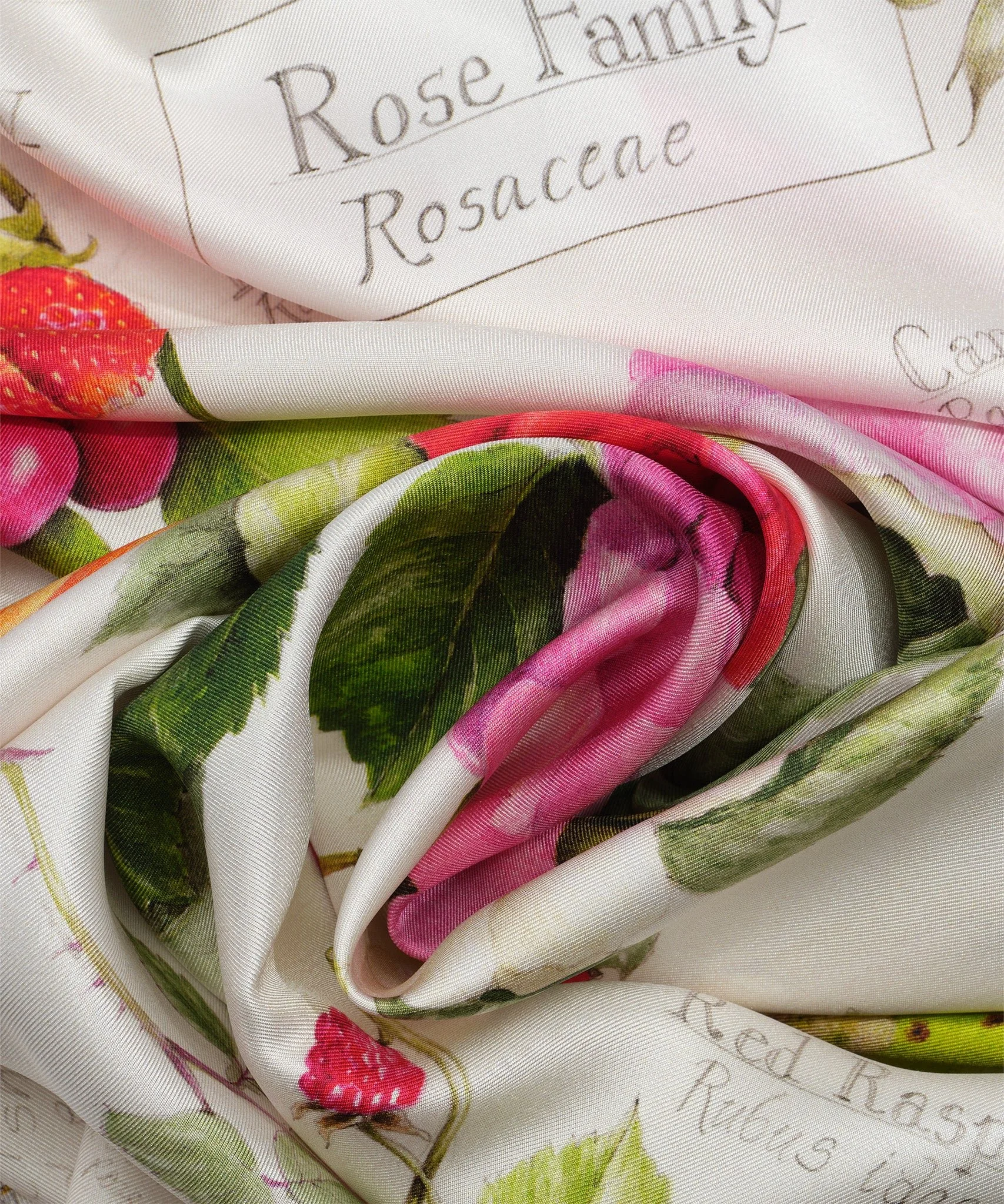
Wendy’s botanical art design for Echo (Photo: Echo)
Wendy also features art supply collabs, creates logos and labels and signs for commercial products, product designs for the home ~ from dinnerware to serving trays (click to her website to shop), and travel tours to fanciful, fairy-tale locations for botanical art classes, online and in-person classes, and of course, prints and cards and so many books. You'll love the story about how she got her book publishing deal with Random House 🥰
Wendy is rightfully proud that she is a full-time botanical artist who makes a living with her art! While at the same time, she has the otherworldly ability to ever-so-sublty beguile us to appreciate the nobility of plants. In all their permutations. 💐
Not surprisingly, Wendy’s art is in high demand, especially with botanical art enthusiasts eager to learn from this master. She has led workshops at many botanical gardens and has a program called Draw Botanical that teaches botanical drawing and painting techniques in a variety of locations around the world and online. She motivates and supports her students in a very special way.
As a watercolor art student myself, I very much appreciate how Wendy structures her classes ~ you can Zoom classes and workshops, join others for an online community that is supportive and fun, learn at your own pace with a package of recorded video instructional lessons, live/in-person classes.
There are also Subscriptions ~ that is pure genius. You can access PDF, upload your work for feedback, join a Community and … more. Learn more here.
You go at your own pace and style.
Here are the promised links to links to Wendy’s upcoming destination classes ~ Hawaii 🌴is sold out (naturally) and there's only three spots open for June’s immersive classes in France. 🇫🇷 So as we say in French, vite, vite, click here to sign up. And only five spots left for April in Spain 🇪🇸🍋
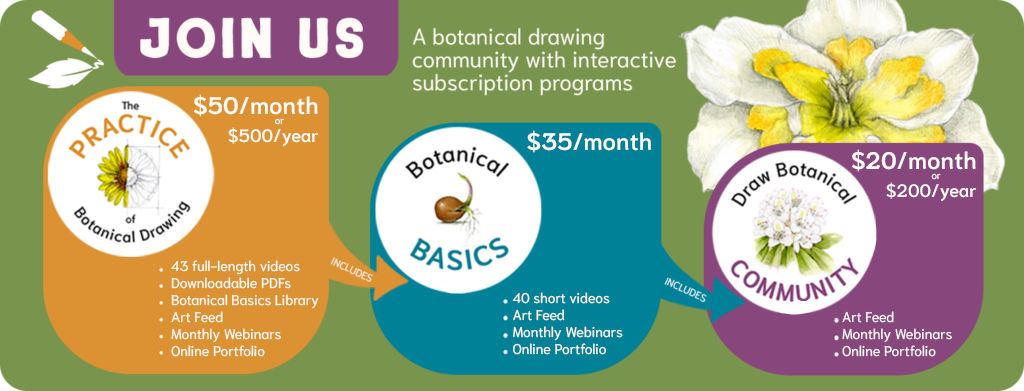
Some of Wendy’s Draw Botanical options
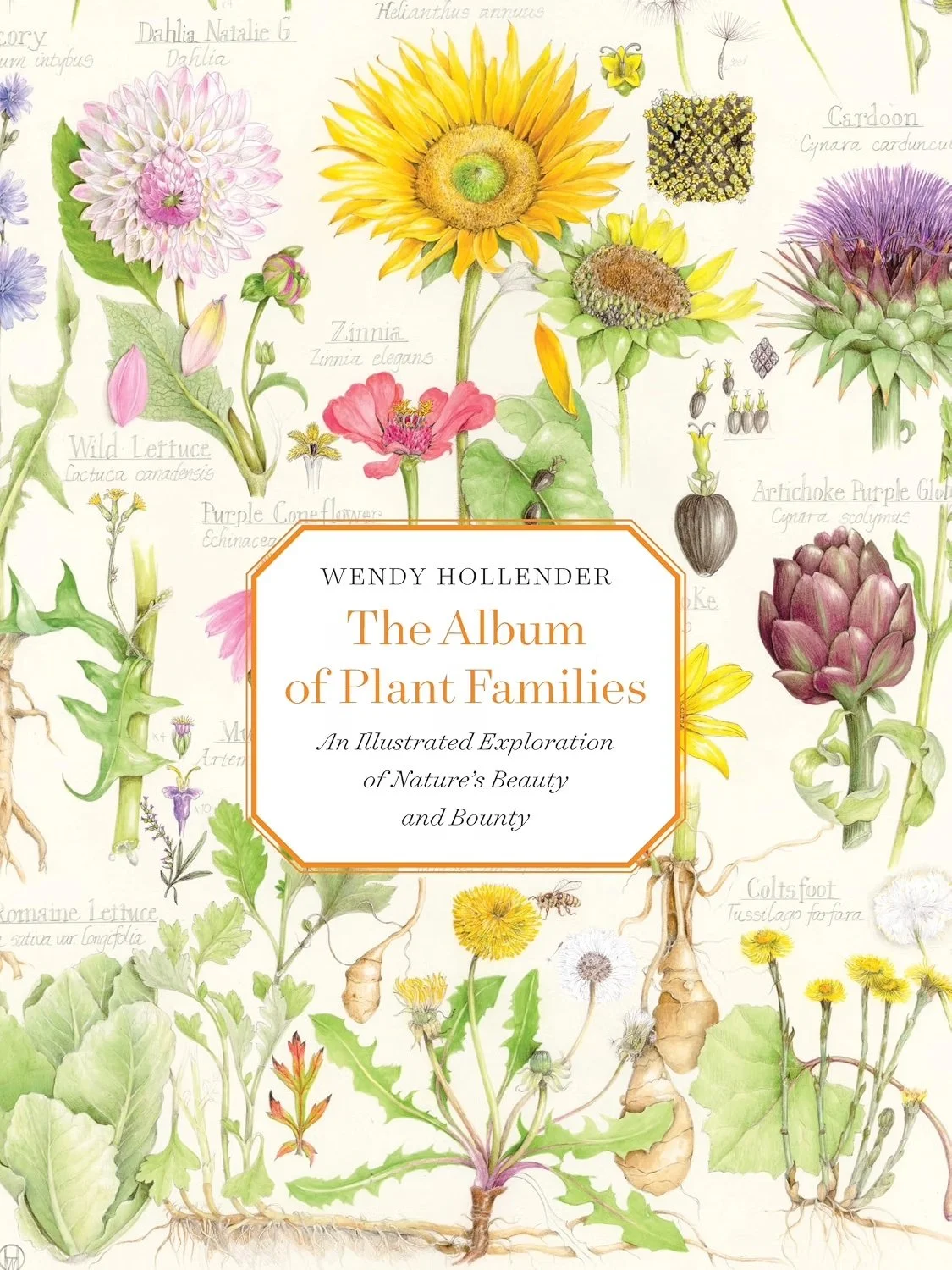
In addition, Wendy has written and illustrated several books. Her newest is The Album of Plant Families. Her other books include The Joy of Botanical Drawing, Botanical Drawing in Color, Botanical Drawing: A Beginner's Guide , and the “beloved” Hudson Valley favorite foraging guide Foraging & Feasting by Dina Falconi which Wendy illustrated.
Back at the, ahem, “office,” Wendy readily admits that she’s created a little paradise for herself in a renovated horse barn. Her studio and organic farm are located in Accord, New York, where she lives among the plants she documents. And she invited me to visit!
In our Conversations videocast, I asked Wendy what a “Day in the Life” would look like and with great enthusiasm, she gives us a kind of tour of her studio world ~ an aperture to her gardens just beyond the bank of windows, along with the front row seat to her prints and works in progress.
It’s exciting to see some of her exquisite drawings that have graced the pages of The New York Times and O, The Oprah Magazine, and have been displayed in prestigious collections at the Smithsonian and the Royal Botanic Gardens, Kew.
Wendy writes that her work is “Rendered from life using colored pencil and watercolor…. (that) celebrate the striking visual and biological connections shared by the plants in our gardens and from the wild.
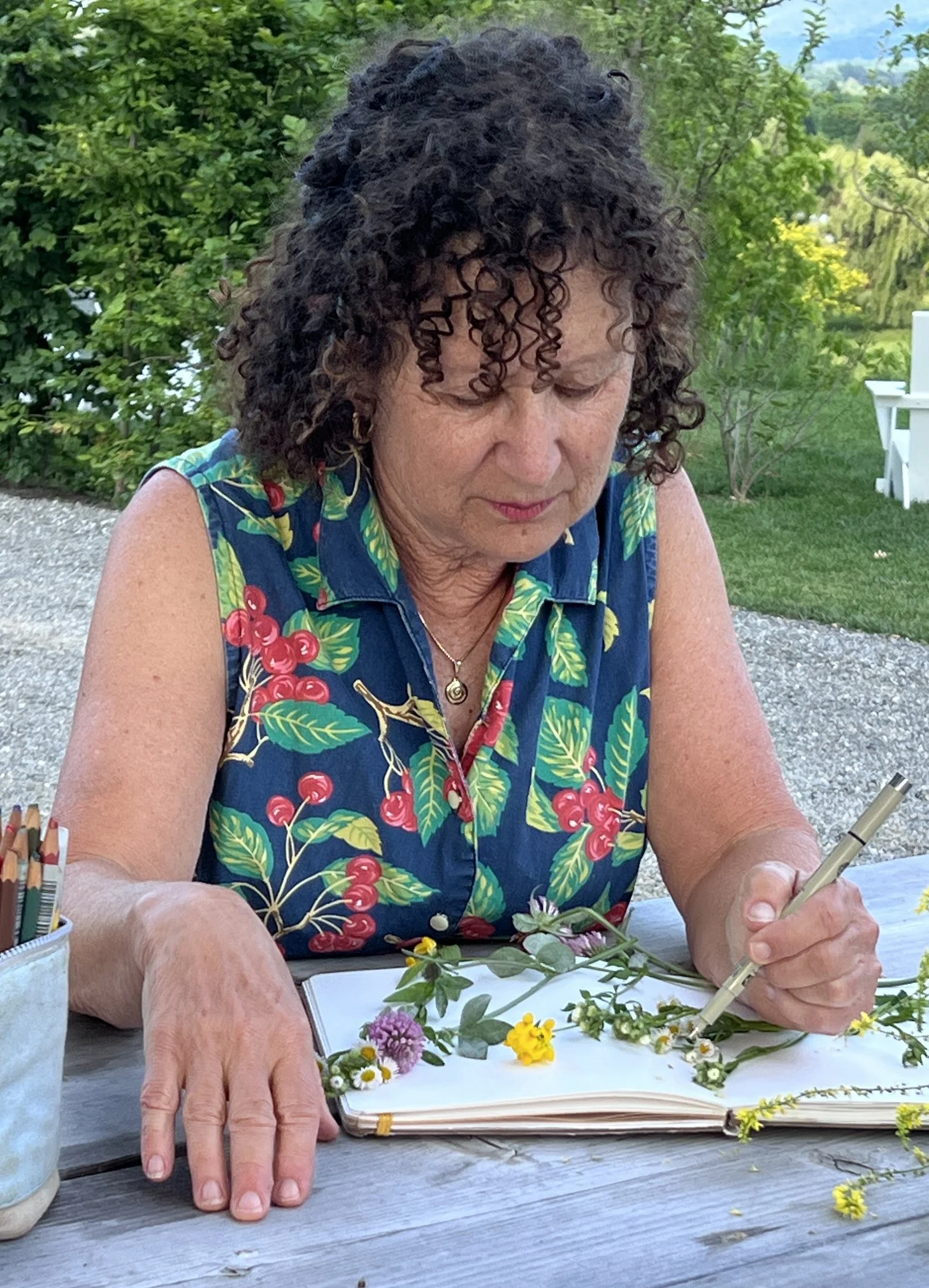
Wendy at “work”
My Wendy Stan, SuperFan Devotion
I’ve known Wendy from my days studying to earn my Landscape Design certificate from The New York Botanical Garden in addition to when I worked at NYBG in Communications, where she was the Coordinator – i.e. head – of the esteemed Botanical Art & Illustration certificate program. I was so taken with Wendy’s botanical artistry I just had to write a feature piece for the NYBG Garden’s Member Newsletter -- and as you can see– I can’t seem to stop writing about her botanical art. 😊
For the NYBG Members’ newsletter, I focused on her illustrated contributions for the Foraging & Feasting book, which I think had just been released in 2013. For the newsletter I wrote:
Foraging & Feasting, Illustrated by Wendy Hollender
In terms of the book, Wendy’s botanical art opens the hardcover, 230+ pages of the Foraging & Feasting book.
From Amaranth to Violet, the botanical art's plant ID’s are there for you to locate, and the plant that will be used as the main ingredient in the recipes that follow. The authors suggest the plant IDs are best referred to as plant “maps.” They write: … “Plant maps will help you navigate your way around the 50 wild edible plants “ featured in the book.
The full-color, full-page foraging plant pages are rendered in full, glorious, botanical illustration – meaning you can readily see the leaves, fruits, and explanation – just like those intrepid plant hunters. But here, your value-add is the bottom-of-the-page bar, noting the plant’s Habitat and its Culinary Uses.
Wendy explains “Botanical Art are plant drawings that are scientifically accurate. Botanical illustrators draw what they want you to see - It’s my job to kind of lead the viewer around the plant and allow you to see what the artists want you to see,” she explains. Dina says Wendy’s art offers a kind of bold, rich soulfulness to the book.
Writing that story in 2014, I learned how she was able to put the images directly onto fabric, creating scarves with botanical art by running the textiles through her printer. Later, when I worked at Brooklyn Botanic Garden, we worked with Wendy to have her create a special cherry blossom scarf to mark a 25th Anniversary milestone of the cherry blossom celebration.
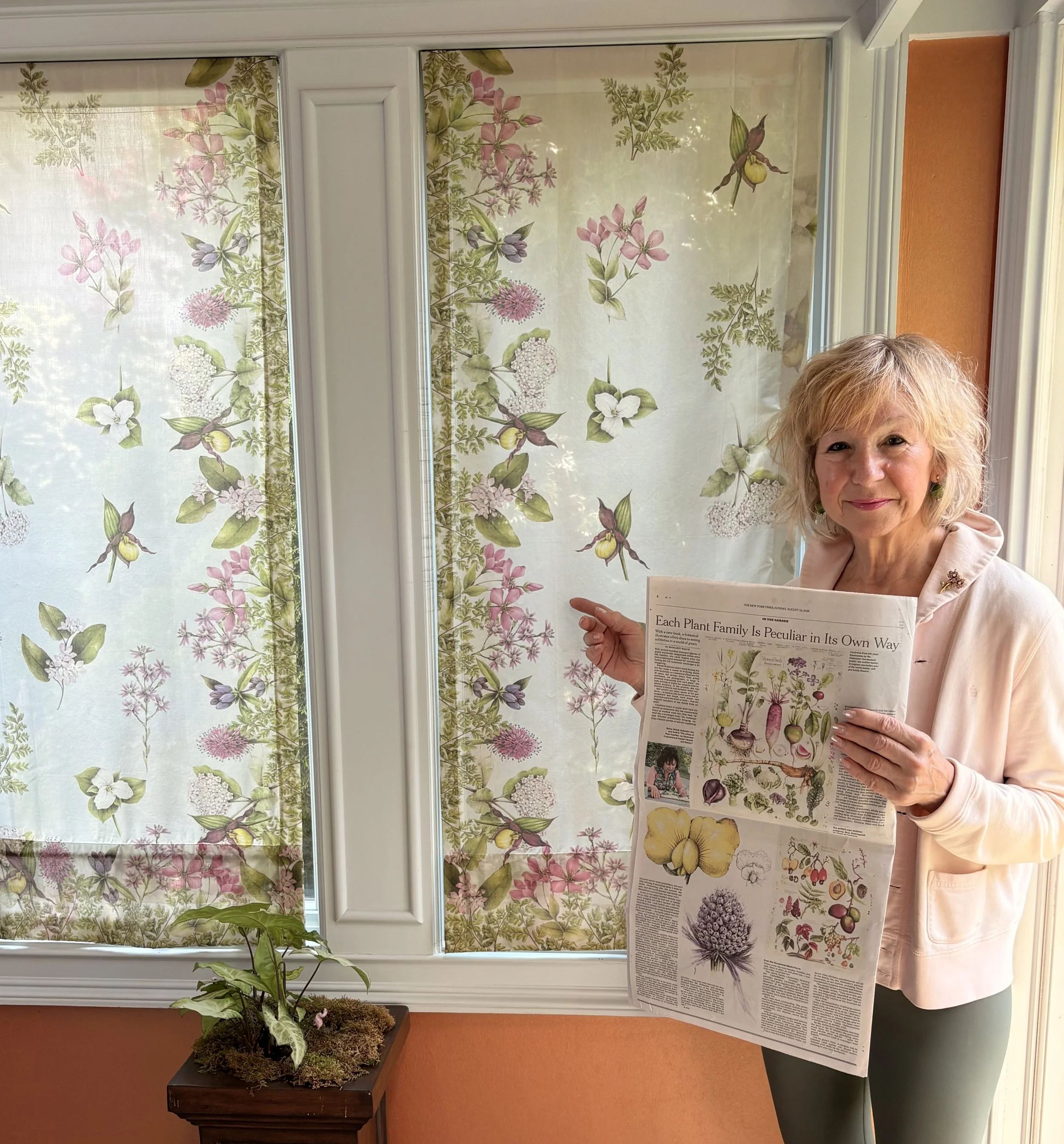
Me with my artful Wendy window treatments highlighting Native Plants & her NY Times feature
And then later on my Garden Glamour blog, as part of a garden book review round up (Read here), I wrote, As a card-carrying Wendy Hollender fan, when it came time to create window treatments for our Garden State country house, there was never any doubt that I would simply have to have Wendy’s artful work accessorize our home. 🌼
I wanted to create a very light scrim for a relaxed balloon window look, while showcasing the Garden State’s local, native plants. I researched the plants I wanted to feature, including shore mallow and orchids and herbs and then collaborated with Wendy, selecting the botanical art from her portfolio. She suggested we use Spoonflower fabrics. I loved their whisper-light fabric and the near-perfect soft blue/white that almost was too good a match to the window molding. And this was a full year or so before Spoonflower earned/won a American Made by Martha Stewart Award
And of course, when Wendy was featured in Margaret Roach’s August In the Garden column celebrating the release of the astonishing oversized The Album of Plant Families: An Illustrated Exploration of Nature’s Beauty and Bounty, (click on link to read/listen) with its select members of 22 plant families and Wendy’s upcoming lecture at NYBG, titled, “An Artist Uses Plants As Her Muse.” I was overjoyed! Bill slid the newspaper piece across the kitchen island for me to see, and as I relate in our Conversation, I didn’t even have to read the lead to know it was Wendy’s art! It’s just that recognizable. I couldn’t wait to share the good news on social media. I’ve kept the Times’ feature in the big book, which sits regally on our living room’s coffee table for all to enjoy.
In addition, you’ll appreciate that Wendy and I also discuss how, over the years, she’s managed to balance her passion, work, family and community. Big talent/Big heart.
In the end, I’m not in the least bit fretful that the Conversation may be our longest interview with one guest! It was just that good ~ it just flowed ~ so much so that I didn’t want to stop. But honestly, Wendy is so compelling. So fascinating. And when you tune in, I think you’ll agree. You can view the Conversation on the Ladies Who Lunch Conversations Facebook page, my YouTube channel and in a minute, my Substack ~ that I’m honestly utilizing just for my Ladies… (puff, puff 🙂)
Wendy Hollender botanical art
Thank you so much for sharing your passion, your well-lived life brimming with nature and art that you created, Wendy. You are so inspiring.
