
Book Recommendations to Help You Find Your Next Great Read

My latest book reviews are a potpourri of hot-off-the-presses, recent best sellers and some terrific, overlooked or underappreciated finds that deserve a read. And a few that have been acclaimed but I found are unfortunately, not all they’re hyped up to be. Please read on and enjoy the Duchess Reads book reviews.
When Everything That’s Old is ~ Not!
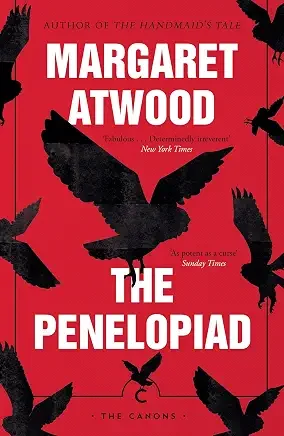
Because it was the summer of all things “The Odyssey” it may not be a total surprise that The Penelopiad came across my radar screen. It was practically free on my Kindle monthly book offers and when I clicked into the details and saw it was authored by the iconic author, Margaret Atwood, I couldn’t click “yes, please ~ order” fast enough. I have read a number of Atwood’s books, taken her Master Class courses on writing, and listened and watched her talks at the Sun Valley Writer’s Conferences. In summary, I’m a huge fan.
That said, I approach each book reading and review gimlet-eyed. And that has absolutely no reference to a gin-gimlet cocktail! 😆 Rather it’s with an intensely observant eye, looking for the details in the story.
It’s no secret that Atwood, author of The Handmaid's Tale (1998) writes in a brilliant feminist point of view. The Penelopiad (2008) continues her brilliant storytelling in this vein. The Penelopiad is not a dystopian fiction, even though it takes place in Hades, the underground realm where all dead souls go. I found the story a cheeky take on the Greek classic, The Odyssey. Told from the devoted wife of the glorious Odysseus, the unscrupulous conqueror and trickster, Penelope has a few tricks of her own to manage the homefronts while her husband was off dealing with ransacking and gods.
We learn how Penelope schemes to ward off the despicable would-be suitors with the weaving of the tapestry ~ that she and her maids unravel each night so that, in effect, she can hold off on choosing any of them until she decides. She’s in control.
Oh, that Chorus Line! With her chorus of maids, she runs Ithaca with a strong matriarchal benevolence and strong hand, turning the once forlorn island into a prosperous kingdom, waiting for her husband to return from the decade-long sojourn back from the Trojan war. Penelope kept the home fires burning in a most successful way. She spins her narrative to set the record straight. While giving new meaning to the act of patience for a faithful wife.
It’s a delightful and wondrous take on the classic. The book is peppered with poetry too.
I don’t believe I’m offering any spoilers here ~ after all, The Odyssey is an ancient poem classic and used to be required reading in most curricula.
Therefore, I was all the more astonished to glean from this reading another, new element that sparked a curious surprise for me.
We know of the grizzly demise of Penelope's beloved twelve maidens at the hands of Odysseus upon his bloody return. Those “twelve maids a-dancing” was ringing in my head. Plus, as my birthday falls on the 13th, I’ve long been tethered to the fallacy of triskaidekaphobia. Why do I bring this up?
Atwood points out at the conclusion of the book that Penelope’s matriarchal rule led to the western’s culture of fearing the number 13! More as a fear of women. Oh, that tricky Margaret ~ linking the legend to the myth for us to uncover.
Penelope selected exactly twelve young maidens to help her with her secrets—most notably helping her weave and unweave the shroud of Laertes to hold off the suitors. Penelope uses the twelve maids as her inner ring of confidantes and spies. Her inclusion with the chorus of maids makes the out-of-order 13 metric. Their association as a group of 13 ultimately breaks down in disaster. When, upon his return, Odysseus commands the execution of these twelve maids, hanging them all together. Plus Penelope. In numerology and ancient myth, 12 represents completion, perfect order, and a closed, stable cycle (like the 12 signs of the zodiac or 12 months). In The Odyssey, 12 is perfect order, according to the Greeks.
So you see, Penelope disrupted the patriarchal peace of twelve, and so, had to be punished for it, along with her maids. Heaven forbid that women should rule…
Look at the world in a new way. The Penelopiad is a fun, interesting, must-read.
Remarkably, all of Atwood’s books read like they are new releases. They never get old.
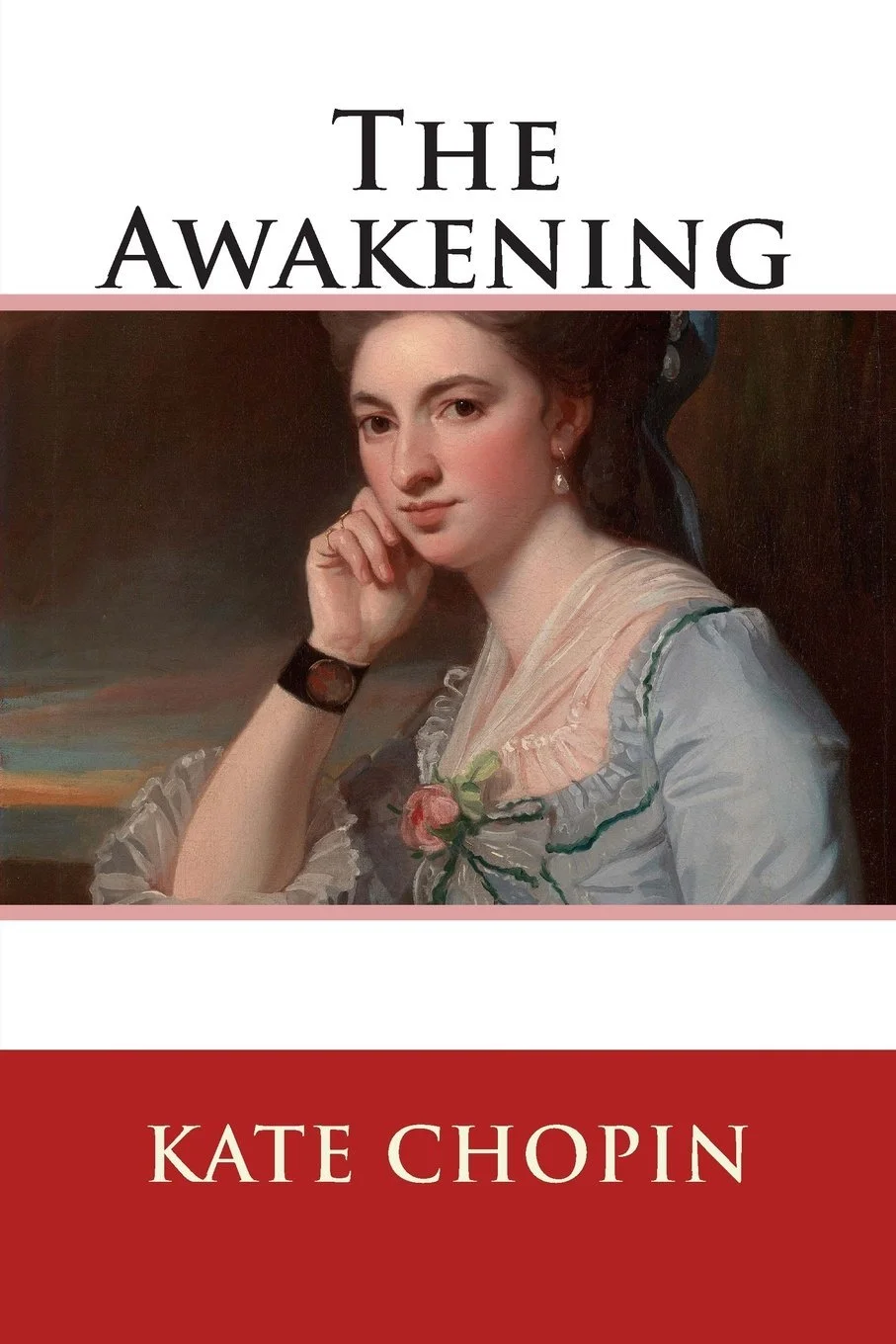
The Awakening by Kate Chopin
Likewise, another oldie that has not yet gotten to its expiration date is the 1899 novel, The Awakening, by Kate Chopin. The Awakening is nothing short of a revelation, especially when one considers the era in which it was written and banned. Told from the protagonist’s first-person point of view, this Gilded Age tale is written with surprising confidence and assurance, in a personal way…
The story takes place in New Orleans, where the protaganist, Edna Pontellier, determines her married life and motherhood is far too constraining ~ she longs for freedom, and so she not only establishes her own residence not far from her and her husband’s ~ who is away frequently on business ~ but she takes a lover, a younger man.
The story takes on women’s issues using a narrative style. Long before feminist writing was a thing. That it was originally condemned and banned is tragic but not surprising, given the taboo subject, not to mention that female authors were as rare as hen’s teeth. The few that were brave enough to pen a novel, often had to use pen names ~ i.e. Mary Ann Evans as George Eliot, The Bronte Sisters, Amantime Lucile Aurore Dupin as George Sand and Louisa May Alcott as A.M. Barnard ~ to name just a few.
I think I became aware of The Awakening in a book review for another novel that referenced The Awakening as a kind of antecedent for excellent feminist writing. I was intrigued. When I located the book, I dove in. Later, when I recommended the book on our weekly family zoom, my brother’s girlfriend told me she too loved the book back when it was required reading in her school. How had I never read this, I wondered more?
I suggest that even if you have read it back in school, to pick it up again. The writing is so pure, so sparse, yet so intimate and rich. It hits the mark with such breathtaking precision and sensuality.
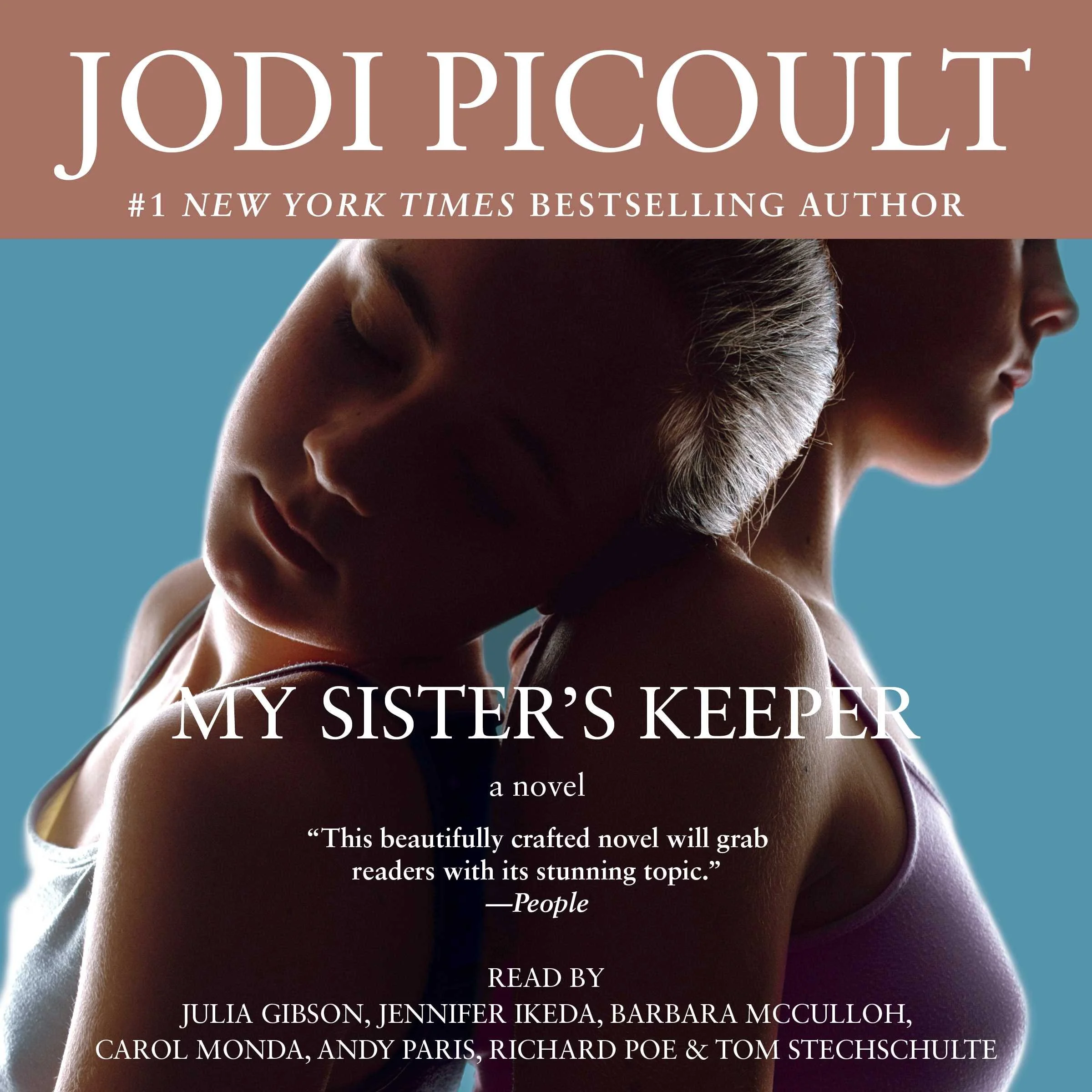
My Sister’s Keeper is eerily compelling. The author, Jodi Picoult, is one of my favorites. She is an award-winning writer and New York Times Bestselling author of nearly 30 novels including, Mad Honey, Wish You Were Here who consistently delivers compelling stories.
My Sister’s Keeper is a 2004 release yet its blistering, complex character-driven story swings from messy confusion to tense drama and suspense, to a despairing love that can’t be made whole.
Driven by a desperate love and hope for their first-born daughter, Kate, who developed and battled acute promyelocytic leukemia. The parents conceive another child, Anna, that they've engineered via preimplantation genetic diagnosis (PGD) to be a genetically matched donor for her older sister, Kate. (Preimplantation genetic testing is a laboratory procedure performed during an in vitro fertilization (IVF) cycle to screen embryos for genetic or chromosomal abnormalities before they are transferred to the uterus.) Diagnosed as a perfect bone marrow match, Anna is a kind of gene-source for Kate; her body rendered as a reliable resource to keep Kate alive. Talk about the “heir and the spare” ~ Anna’s spare parts are what comes to define the family. All the hospital visits, the doctors, the surgeries ~ it’s all a protocol of the strange familial landscape in the novel. What is so good about the book is that Picoult’s style not only grabs you and brings into the saga in an intimate way, but you find yourself rooting for both sides of the drama after the teenage Anna decides to sue her parents for the rights to her own body. With riveting delicacy, the author creates a page turner as the drama unfolds. You’ll find that you are rooting for the parents ~ especially the Mother who’s holding it all together and making this peculiar dynamic work, but then you find you're all team-Anna, supporting her and her quest to stop being a spare body part warehouse. This novel is truly a nuanced, complex conundrum ~ even Anna changes her mind a few times. The reason it’s so compelling and not a soap opera is because the controversy that is the heart of the novel is that the family's story is told in all its conflicted, raw truths that, like a prism, change and refract the love, conflicts, and context.
You will enjoy this book if you like drama, ambiguity, depth of character, exploration of moral lines in the sand and all the heartbreaking messiness of life, love, and trying to be a good person given the pursuit of a Solomonic decision.
How the author confronts medical ethics, family relationships and their complex dynamics is a remarkable work of literary art.
The ending is a twist that I did not see coming. It’s shocking. Yet believable. Too often, authors can take a tidy wrap to sum up their novel’s story that ends too abruptly, but this slam will hit you full-on and leave you reeling. But it so works. Wow. The controversial issues and consequences will haunt you…
The book was so rich in detail, it’s no surprise it was tapped as a movie: a 2009 legal drama film directed by Nick Cassavetes, starring Cameron Diaz, Abigail Breslin, and Alec Baldwin. Writing this review, I was prompted to watch the film that I’d never seen and, it too, was good. Except for the ending. I had to “rewind” to make sure I hadn’t missed something. While films often change a book’s narrative, I found this change too perplexing and wrong. I researched this and found that the novel's author was devastated and not surprisingly, strongly opposed to the script change, stating that Cassavetes secretly altered the ending after initially telling her he would stay faithful to the book. Picoult argued that the book's tragic twist anchored its core themes about the randomness of life and whether Anna had value beyond just being a medical spare part for Kate. While the movie ending is a tender, five-tissue tear jerker, the book’s ending is much more winning; Read the book.
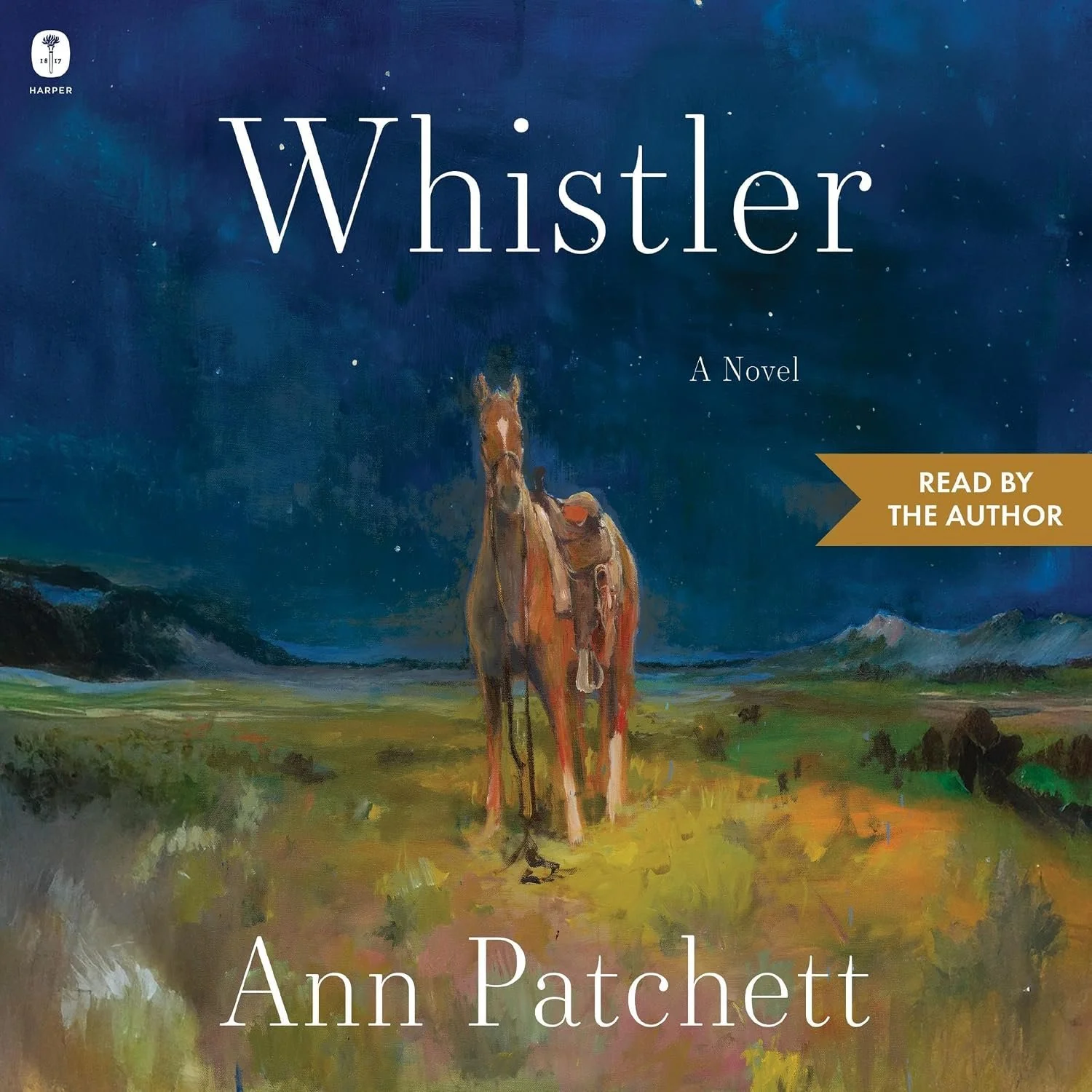
Whistler: A Novel, by Ann Patchett
Continuing on in the themes of impermanence of life and how love endures is Whistler: A Novel by acclaimed author Ann Patchett. The author is a darling of the literary set and was seemingly everywhere I turned this summer, promoting the novel. I waited quite awhile to get a copy from the library. I was keen to listen to the audiobook, read by the author.
Big sigh to start my review. I love Ann Patchett ~ her books, her Nashville bookstore, her support of all things literary… Therefore, I couldn’t wait to dive in. Especially as New York City and art and the Met Museum play such wonderful roles. Prior to reading, I’d watched the video of Ann with the curator from the Met exploring the setting (I’m a loyal, happy Met Member). It was so lovely.
And the story line is so tender, so charming. The Gotham couple, Daphne Fuller and her husband Jonathan, are strolling the Met Museum when the husband ~ he’s a much-older-retired medical doctor, she’s a working English teacher. Jonathan notices a man following them. As unlikely as that is, he’s right. Turns out it’s her former step-father and the one of her mother’s trilogy of husbands that she and her sister Leda favorited. She hasn’t seen him since her mother threw him out when she and Leda were young. The story warmly wraps around the daughter Daphne, and Eddie, the father figure, getting to reacquaint, putting back the pieces of the puzzle of their lives since they’d been a family, and making some new memories. The emotional getting-to-know- you journey of Daphne and her long-lost stepfather (her blood father died years earlier after a long illness and an emotional last flight for him and Daphne ~ because the memory haunts her ability to get back on a plane. This father /daughter episode resonates within the complete story because it’s so sweet and touching and helps explain why Daphne doesn’t accompany Jonathon when he needs to travel to his childhood home in Wisconsin to dispose of his recently-passed mother’s things. This absence gives Daphne more time to spend with Eddie, making up for lost time, attending dinners, the theater. Why she couldn’t have done this with her husband home is not clear…
Anyway, the writing is crisp, funny, simple in a straightforward style, snarky in a good way. Further, the narrative ambles along well enough that you want to see where this is all going. But therein lies the issue for me. It wasn’t compelling enough. I didn’t feel a strong connection to the characters. While I greatly admired the writing and the pace, I often wondered why Daphne felt such extreme affection for Eddie, even when the plot device to explain this link is the accident in the snow, trapped in the car overnight together when Daphne was nine years old. On more than one occasion I scratched my head wondering why she didn’t look him up while visiting her sister in New York City, or online if she loved him so much. After all, Eddie became a renowned literary editor at a big publishing house in the years since he and Daphne’s mother worked there together before their divorce ~ and her learning he was gay.
The book checks all the boxes; it’s certainly a very pleasant read and certainly oozing with contemporary family love, but it just could’ve been more. Many claim Whistler is autobiographical, but Patchett swats those comparisons aside, to no avail. What IS true is that in 2020, Patchett wrote a piece for The New Yorker with the title “My Three Fathers.” The autobiographical piece was about the three men her mother married over the course of her life and her mother’s very different relationships with each of them. Near the end of the article she wrote, “What’s so easy for me to see now that all of them are gone, what was so impossible for me to see at the time, was that they were only occasionally thinking of me, and I was only occasionally thinking of them. From each of the fathers I took the things I needed, and then I turned them into stories.”
What I did find most/more interesting was Daphne nee Ann’s relationship with her mother and her sister. Much more telling and introspective than those with the fathers or men in her life.
Also true is the story behind the cover image of the horse and the connection it has to dead people and loved ones coming back to save you. It is an artful, tenuous link but nevertheless beautiful. Which is what this book is for me ~ a beautiful story but no enduring connections.
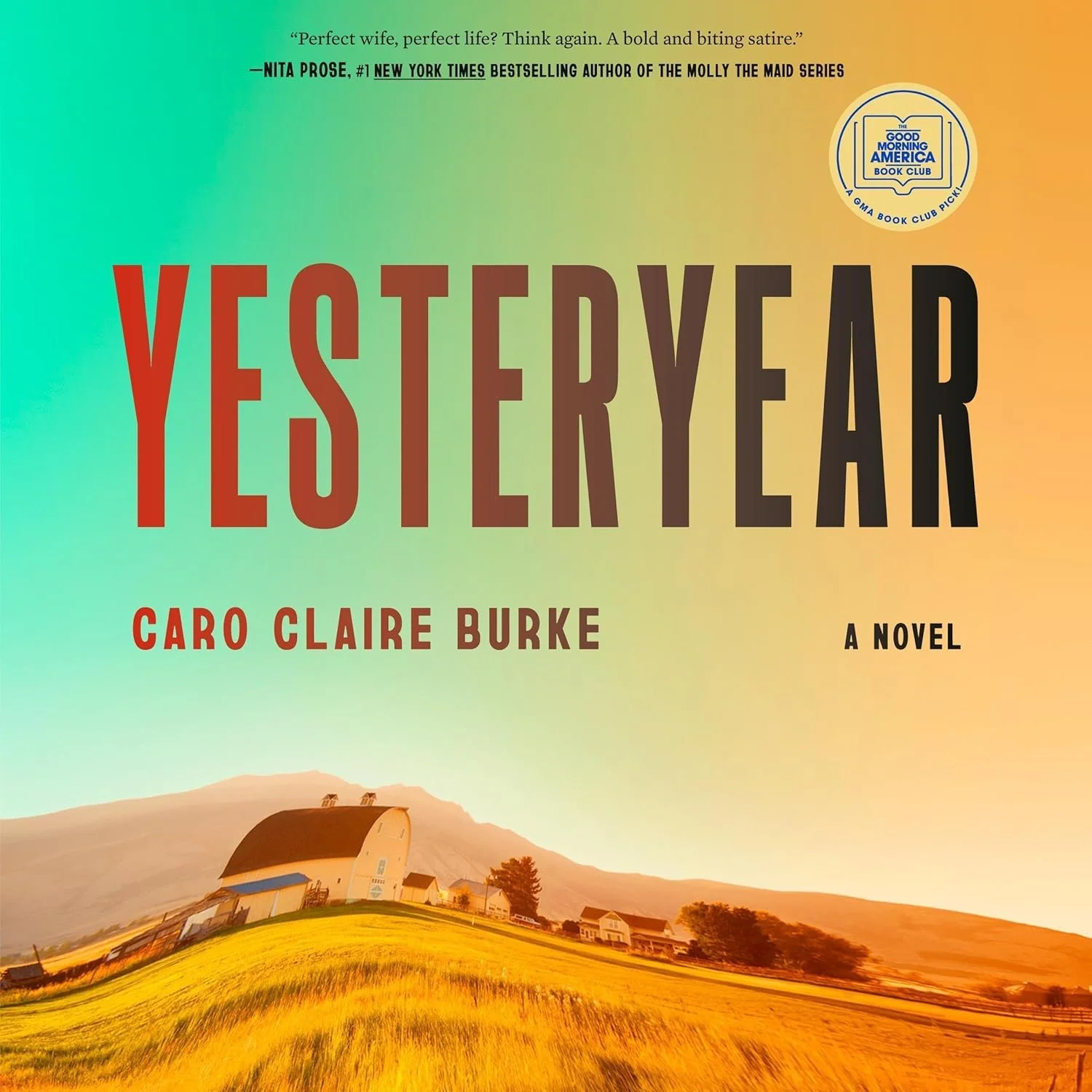
Yesteryear, by Caro Claire Burke
Speaking of family dynamics, Yesteryear is a hair-on-fire family saga. Just not the kind we’re used to. The author has created a world that expertly captures the zeitgeist of social media influencers and the tradwife phenomena.
The protagonist, Natalie, has become the perfect homemaker having married way up from her poor family origins. Her husband’s family is a wealthy, prominent, political dynasty that wields power and influence. Natalie learns fast from them, especially her father-in-law. Both realize that her husband is somewhat of a loser but his ability to play-act as a kind of modern-day cowboy on their rustic, fully-outfitted studio stage of their Yesteryear Ranch, and a devoted father to their brood of kids, and as the dedicated, loving husband, works brilliantly for her money-making online image and business empire she’s built at the Yesteryear Ranch. He’s a set piece just like her six “perfect” children. That there is a team of nannies and producers and managers behind the image is never the caption on her perpetual motion machine-like posts to her nearly 10 million, loyal, breathless, followers, always hungering for more. Simmering through all this success is Natalie’s anger. She’s mad at her former Ivy League girlfriends who seemingly snicker at her capitulation to homemaking even if it is a brand-building behemoth, her angry resentment of her husband’s weakness, lack of contribution and real motivation, at her mother and sister’s lack of complete support, her exhaustion and self-importance. Natalie, we learn, is a “mean girl” fueled by her money and fame.
That she somehow ends up in an 1855 real-world life of a frontier mother and wife is a nightmare. No more pretty homegrown vegetables neatly laid out for a photo shoot on her kitchen island, no more designer jams. Now she has to wash clothes until her hands bleed, her fireplace is the only source of warmth (no electricity) and her children are dirty and her husband is a ruthless, almost savage animal, especially when it comes to sex.
You’re all in for this crazy change of a frontier life, not knowing where this is going. Was she hallucinating? Was she in a reality TV show as she so desperately believed?
The author has us living Natalie’s double life. Unlike other reviews I’ve read, I did not find this confusing. Rather, it propelled me to know how this was all going to end up.
Yesteryear is a chunky, full-serve meal of emotion, character, location, dialogue ~ spiced with eerie tragedy, real-world feminist issues and the choices women and their families are forced to make. I was on-board.
The ending is a twist that was a surprise, albeit a creepy one. One whose consequences stayed true to the story line. It delivered on the dark side of the story’s psychological thriller. No mere time travel narrative for the reader. No, it’s like the end of the fireworks display where we all think that’s it. But then, you look up and say, “wait, there’s more.” Same here. There are surprises galore for Natalie and her unhinged psychosis… Thank you, Caro Claire Burke.
Yesteryear was optioned by the award-winning actress Anne Hathway, who reportedly read the book in one night and immediately snatched it up.
Ms. Hathaway knows a complex, topical story when she sees one.😉
I recommend Yesteryear. You won’t like the characters but there’s a reason it was on every celebrity book recommendation and best seller list: it's a page-turning, hair-raising adventure you’ll be talking about for many a yesteryear…
Trust by Hernan Diaz
Trust is on almost every bestseller list ~ from being a Pulitzer prize winner to a Goodreads Choice to a New York Times’s 100 Best Books of the 21st Century So Far, and one of their Best Sellers, named one of Obama’s Favorite Books of 2022, Oprah’s Daily, Literary Hub, and longlisted for the 2022 Booker Prize and mine: Duchess Reads and Duchess Picks!
Trust is a revelation. The novel positively sparkles. It’s not so much the story, which is fascinating, but the way the story is written. The author’s voice makes it skate across your emotions like a shooting star. Diaz’s writing is astonishing.
At its core, the plotline is about a wealthy 1920s Wall Street couple's rise to power, told through multiple competing narratives that explore truth, deception, and the influence of wealth. And from the wife’s point of view. On this point, I watched a Sun Valley Writers interview with Diaz where he was asked if he felt this was cultural appropriation ~ which has become a literary bogeyman of late, where authors are shaded for writing about an ancestry or gender that they haven’t inherited ~ seemingly out of their wheelhouse. In my opinion as long as the author doesn’t deceive, claiming the cultural heritage as their own, then I don’t see the point. We'd have no Memoirs of a Geisha ~ written by Arthur Golden, a man, about the life of a geisha, or American Dirt by Jeanine Cummins or Jonathan Livingston Seagull, for that matter. And you just need to search author James Michener to learn he “built his entire literary career around writing about other cultures, foreign lands, and ethnic histories.” Diaz answered in his quiet, sensitive style that made you respect him all the more.
Because Trust is, in fact, so much more than the core plotline ~ it embraces the themes of ghosting women who never got to tell their stories from that time, or whose influence was diminished or covered over. In its brilliance, Trust also illuminates the undeniable elements-as-character Diaz explores in money, greed, power, class, human relationships in marriage and family, and the fragile lattice-like value of trust, and the destruction that betrayal yields.
Trust is a very smart book. It delicately balances these emotions. It's a dazzling journey.
I highly recommend Trust.
The Hat Trick of What Could-Have Beens
I very much liked these three books but I wished for a wee bit more. Or less…
Theo of Golden by Allen Levi
I first came across this book as I stumbled upon an Oprah interview with author Allen Levi while looking for something interesting to listen to while doing my core and weights exercises. I found the author possessed a tender nobility. And Oprah is well, Oprah ☺️and was extremely bullish on Theo.
I very much loved the back story of Levi’s road to literary success: it’s his first book, he originally self-published it and then when his niece offered to help him promote it, it took off. (Any PR honchos out there ~ hire this woman!) While it’s not the kind of book I’m usually attracted to, the word of mouth and book list recommendations were off the charts. Therefore, I feel a bit curmudgeonly to note that while I found the book heart warming and oh-so-charming and a much needed helping of hope and love in these tempestuous times, I found its profiles a bit predictable with the ending just too darn tidy. It felt like Mr. Levi got to a point and then just needed to wrap things up.
If you’ve been living under a rock or were otherwise engaged recently, here’s the overview: Theo ~ never a last name, settles into the sweet, small Southern city of Golden. He’s an older, dignified gent, with an air of kind mystery about him. We later learn he hails from Portugal but he is crafty at not revealing anything about himself while he seeks to know the story of the denizens of his new home. The author describes a gentle place that I imagined was a lot like Princeton ~ nice shops owned by locals, including an overstocked bookstore, a homespun, authoritative lawyer watching out for folks’ affairs, and a cafe where regulars gather. At the coffee shop, Theo discovers the intriguing pencil portraits that the local artist renders of various townspeople.
Theo is an art connoisseur pondering why they haven’t all sold, especially as they are reasonably priced. Soon, he conjures a plan: he’ll buy all 90 portraits, one by one and gift them to the portrait sitters. His plan involves sending them a hand-written invitation and asking them to meet at the town fountain. Lest any of the recipients think he possesses less than honorable intentions, he meets in daylight, and assures them that he is an 86 year-old senior who has pure intentions. His plan works like magic. He not only has the help of the town attorney but also his cautious secretary is soon Theo’s reliable assistant in what becomes a ritualized schedule of art gifting and story telling.
Theo also manages to convince the attorney to allow him to live upstairs from the offices, in a charming apartment overlooking the main street.
As the reader, we learn about the lives of the people in the portraits. The artist has captured their soul. They amplify their innermost struggles and fears and joys.
Theo responds with great generosity and compassion. For example, when one man’s daughter is in need of medical care, Theo provides a top-tier doctor, visits the child and brings gifts. He befriends Golden’s bike-riding crazy lady and bestows her with dignity and respect. Each person and their story grabs your heart.
Just when you think this is getting a bit tedious, mercifully, the author has Theo leave Golden for business in New York and we get some much-needed back story.
I don’t want to spoil anything so I won’t describe the details of what his own story is and what happens except to say that Theo has suffered much tragedy despite his fame and fortune and that he deliberately chose Golden because it holds the promise of family, and a connection to the love of his life. Then there is that all-too-tidy ending.
Theo of Golden holds religious undertones that one would be hard-hearted to object to. A few other nit-picky points: lack of understanding to demonize some woman’s issues, and a question of why no one wanted to search for a background on this world-famous artist, Theo but in the end, I can assure you that the take away is one of love and kindness and tender compassion for life’s little wonders despite the heartache and tragedy that we all endure…
Not a surprise this novel has also captured the eye of Hollywood. Word is that Theo of Golden is optioned by Tom Hanks who also may play the lead. We’ll see. In the meantime, enjoy the book.
A World Appears: A Journey into Consciousness by Michael Pollan
I so respect Michael Pollan. I have read most, if not all, his books. In fact, early on his career, I reviewed The Botany of Desire. (I researched it after so many years. See my/ ”Leeann Lavin's review published on October 23, 2009, in The Wall Street Journal covering The Botany of Desire Read the full review at The Wall Street Journal.”
So when A World Appears premiered and I was relegated to a very long wait list at the library, I bought the book. I couldn’t wait.
A World Appears is pure genius. Pollan explores what it means to be conscious; to possess awareness and intelligence. He considers how life itself is sentient, including our beloved plants. And even single-celled organisms. Evolution itself. It’s like you’re peeking into the next unexplored frontier and Pollan is our guide. A very good sherpa.
He takes us through his journey via meditation and psychedelic drugs, including LSD, psilocybin and 5-MeO-DMT, a substance in the venom of the Sonoran Desert toad.
I found the journey and the explorations fascinating and illuminating. Pollan is a master researcher here. However, I found the bounty of citations and credits that make up so much of the book distracting and tedious. There are just so many and included extensively at the conclusion of each chapter (rather than the conclusion). You can’t get away from them.
A World Appears is a lot of work to read. You have to make the commitment. You will be rewarded but look before you leap.
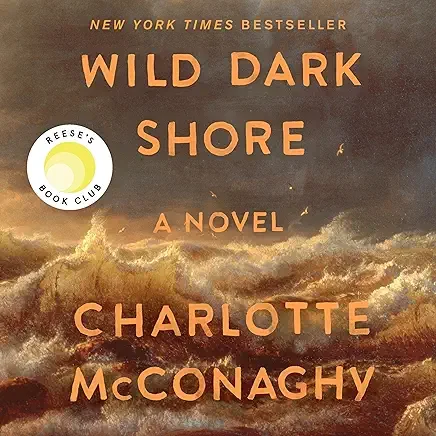
Wild Dark Shore by Charlotte McConaghy
My love of nature ~ nature at her wildest ~ along with respect for the growing climate chaos crisis and excitement that the topic is now a burgeoning literary genre: climate fiction, had me in excited anticipation for Wild Dark Shore. That the novel was on multiple recommended lists, including The New York Times, Amazon, and Reese’s Book Club Picks only heightened the expectation.
The author’s descriptions of the plant life of the fictional Shearwater Island near Antarctica delivers, you’ll feel her deep love for sea creatures and rare birds - the whales, seals, gentoo penguins, and albatrosses that are the natural inhabitants of the island. I was in simpatico with her respect and reverence for the natural world.
The characters in this thriller start off well and are plausible enough that I continued to be drawn in. The plot’s twists and turns are compelling enough. Until they are not.
So much of the plot’s narrative relies on what the family reveals to one another. But I couldn’t help but wonder in the end, why they just didn’t tell the truth. Too much intrigue hangs on their falsehoods and manipulations rather than events or the coming cataclysmic force of the rising seas ~ which holds much more drama. I felt like, “sheesh.” While lots of folks note the family’s complications and twists interesting, I found them rather distracting and exhausting after some time. I wished McConaghy had utilized more of the climate crisis for greater effect.
See, the island has been mostly abandoned by the scientists who used to live there. However, Dominique Salt and his three children, Raff, Fen and Orly are working hard to save as much of the native plant seeds as possible. One day an unconscious and severely injured woman, Rowan, washes ashore. The Salt family has dark secrets and so does Rowan. They are lying to each other. But it all seems so banal when the real danger and jeopardy is gonna render their very survival a lost cause…
You’ll enjoy all the nature descriptions ~ they are beautifully written, along with a lot of the family intrigue. At times it’s so gripping and the topic is relevant that I so want to recommend, and I can but with a caveat…
Fun and Interesting Books
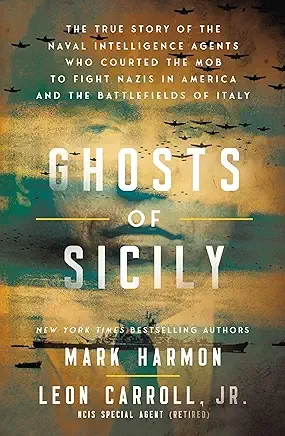
Ghosts of Sicily: The True Story of the Naval Intelligence Agents Who Courted the Mob to Fight Nazis in America and the Battlefields of Italy came to me as a Net Galley review opportunity. I always enjoy history so the story of the alliance of WWII US Naval intelligence asking for help from the Cosa Nostra to help protect New York Harbor’s waterfront from U-boats that were sinking ships and to penetrate the Nazi’s plans in Italy. Who better than the Mob to team up with? What could possibly go wrong?
Frenemies. “Who you gonna trust?!”
The Navy’s alliance with Charles “Lucky” Luciano and his organization ~ the Mob ~ sheds new light on this long-buried chapter of the coordinated war effort that sent New Yorker Tony Marsloe and his fellow ONI officer to assist the war efforts in Sicily and New York. With great success. Keeping it under wraps all these years was, to me, part of the intrigue and added to the spy and covert planning drama. With a cast of knowns from Meyer Lansky, George Patton, US presidents, along with J. Edgar Hoover and an assistant director of British naval intelligence, Ian Fleming, was an all-star cast. No need for Central Casting.
It’s an untold element of the great war that I’d never heard about, despite my roots in Manhattan and Brooklyn and interest in war mythology. We have the authors Mark Harmon and Leon Carroll, Jr. to thank for their excellent research and story telling. Yet, I did not put two and two together until I finished reading the book and discovered that Harmon is that Mark Harmon ~ from TV’s NCIS. You could argue that he’s got the Navy cred. But it’s Leon Carroll, Jr., a native of Chicago, who was a commissioned officer in the United States Marine Corps, attaining the rank of major before he began a twenty-year career as a special agent with the Naval Criminal Investigative Service (NCIS). Carroll is the real deal.
The Ghosts is a fact-filled narrative that had me hooked. If you enjoy history and the “I never knew this” joy of learning, you’ll enjoy this discovery.

Deadly Melody by Keith Lindenburg is s a contemporary murder mystery that takes place in Newport, Rhode Island ~ where we honeymooned back in the 80’s ~ the very decade the novel is set in.
When a star high school basketball player ~ a boy (back then, no girl teams) washes up dead on beach, it sets in motion the search for a killer even though some locals think it might have been a suicide.
The hot nightclub DJ’s best friend is the local detective who gets seriously injured while pursuing the case and the DJ gets drawn in to help his only true buddy. There’s a drug running bad guy and his henchmen, the sex and drugs of the nightclub, a possible love interest. The novel is fast-paced, the dialogue is great, and you’ll find yourself pulsing along with the nightclub’s music to find out how this murder case is solved and who gets it in the end.
Deadly Melody came to my attention because the author is a man I worked with on a few accounts at one of my favorite public relations agencies, Dorf & Stanton. Keith posted about his soon-to-be-released, self-published novel on Linked In. Of course I wanted to support Keith’s first book and ordered it straight away. It’s really good! Congratulations, Keith. I can enthusiastically recommend Deadly Melody. It captures the 80’s era of pop culture and iconic music, big hair and the launch of MTV, along with a true love of maritime culture and boats that was, and is, Newport, a jewel of a destination in every season. (I also love Christmas in Newport ~ I was thoroughly enchanted on a press junket there not too long ago.)
Enjoy Deadly Melody ~ it’s like a trip to Newport. And would make a terrific Christmas gift.

All of my Duchess Reads recommendations offer a transporting, illuminating journey into other worlds that only books can do. Books are magic.
I provide links to the books as a convenient courtesy but please support your local library and book shops.
With Love,
Leeann
