
Roy Lichtenstein: “Like New” Opens at The Whitney Museum ~ Preview to Plan Your Visit & Shop the New Gap Collab Fashions
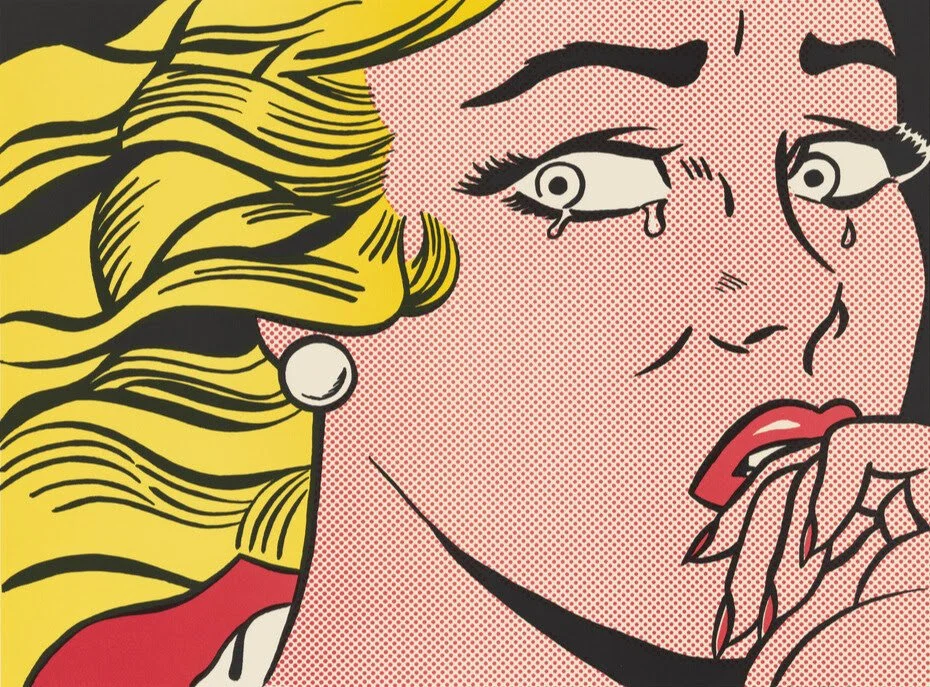
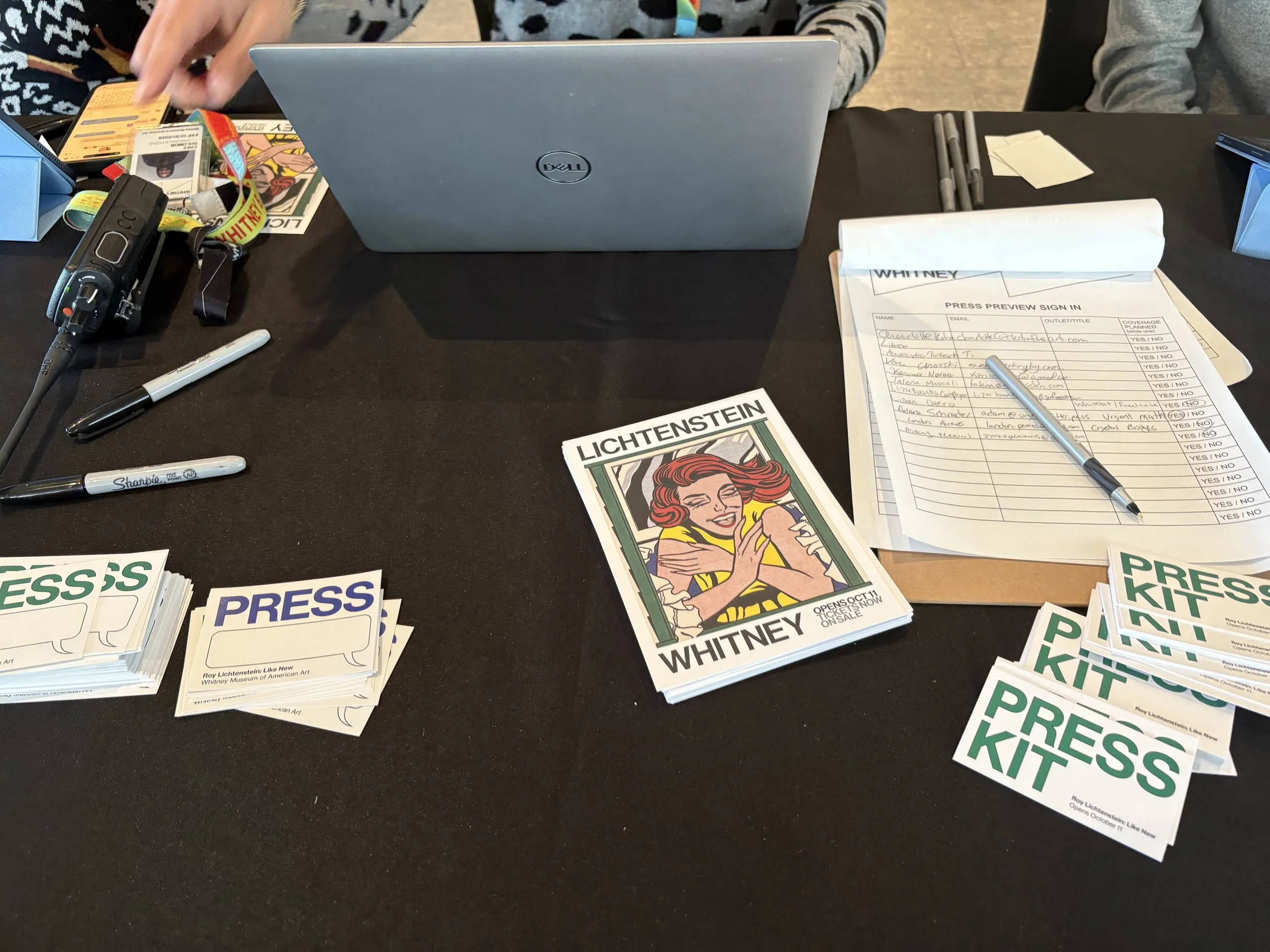
There couldn’t be a better day to herald the opening of Roy Lichtenstein: Like New feature exhibit at the Whitney Museum of American Art. I was excited to attend the Press Preview, October 6; therefore I can tell you, first-hand, it’s an exciting, must-see show. During the press conference, one of the co-curators noted that because Lichenstein’s art is rather ubiquitous, we think we know all about the art ~ the man, and the era within which he created his oeuvre. But we don’t know the half of it. Hats off to the curators and the museum for putting together a most compelling show. Their unbridled enthusiasm and joy in mounting the show ~ from their research in unearthing new materials, to their special relationship with the Lichtenstein family and foundation, to their love of the art, resonates. Viscerally, I could feel why this show is important to see and appreciate that it is a collection worth exploring. Over and over again. It’s a big, ambitious show, both in the number of works ~ over 130 the artist made from the early 1940s through the 1990s and offers a bold reconsideration of one of the defining artists of the Pop art movement and the twentieth century.
The Lichtenstein family has gifted more than 400 legacy donations, along with the artist’s former home and studio on Washington Street. Surprisingly, this is only the third exhibit of the artist there and is the first major retrospective in years. The last one was in 1993 at the Guggenheim. Laughing Cat hasn’t been seen for 30 years!
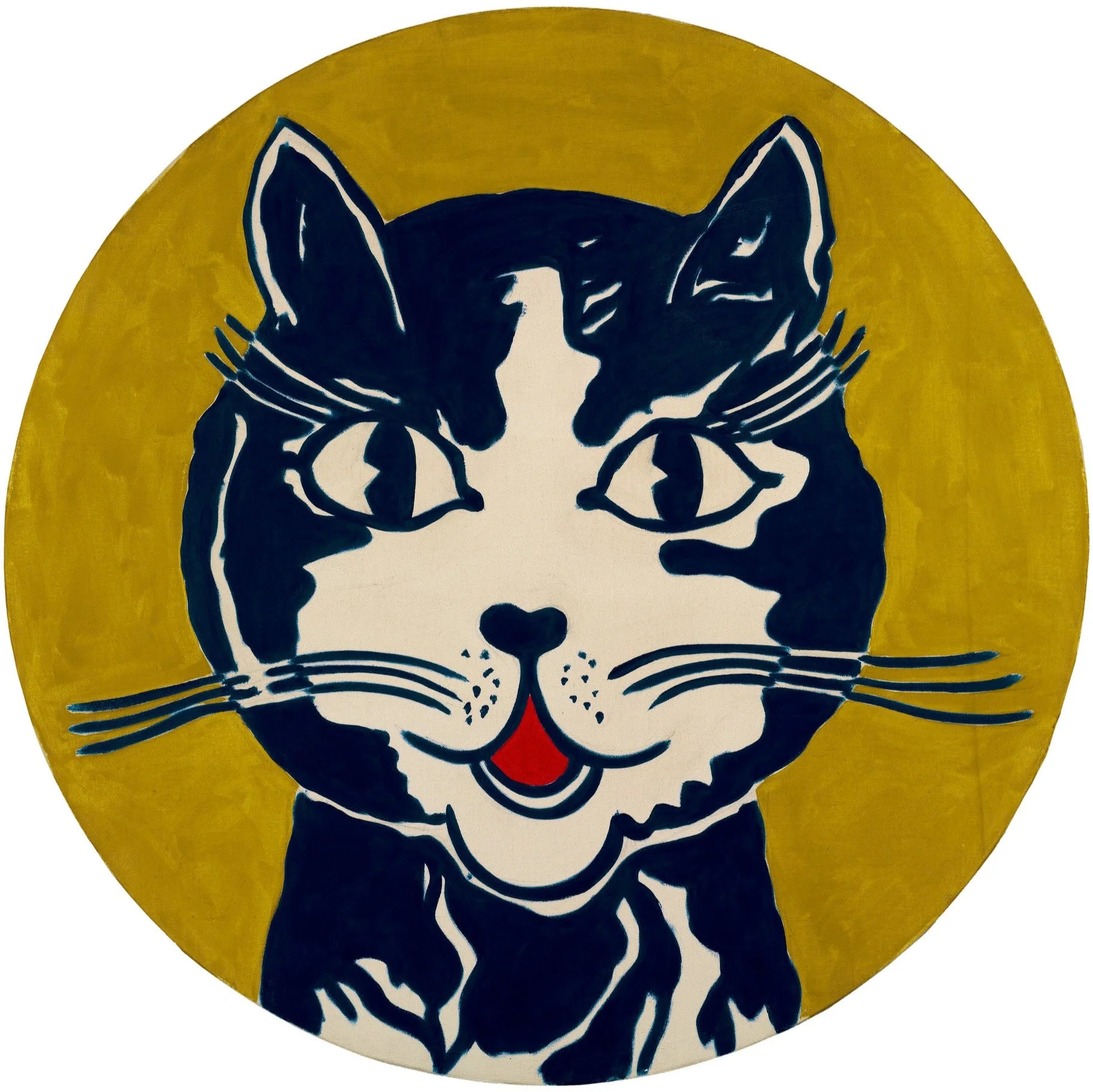
It was a week of Gotham Art, kicking off with opening celebrations for Roy Lichtenstein: Like New. Co-curated by Meg Onli, Nancy and Fred Poses Curator, and Alex Da Corte, artist and guest curator, this exhibition highlights the work of one of the defining artists of the Pop art movement. Lichtenstein turned the visual language of mass culture, comics, advertising, consumer goods, and commercial printing into some of the most recognizable images of the twentieth century.
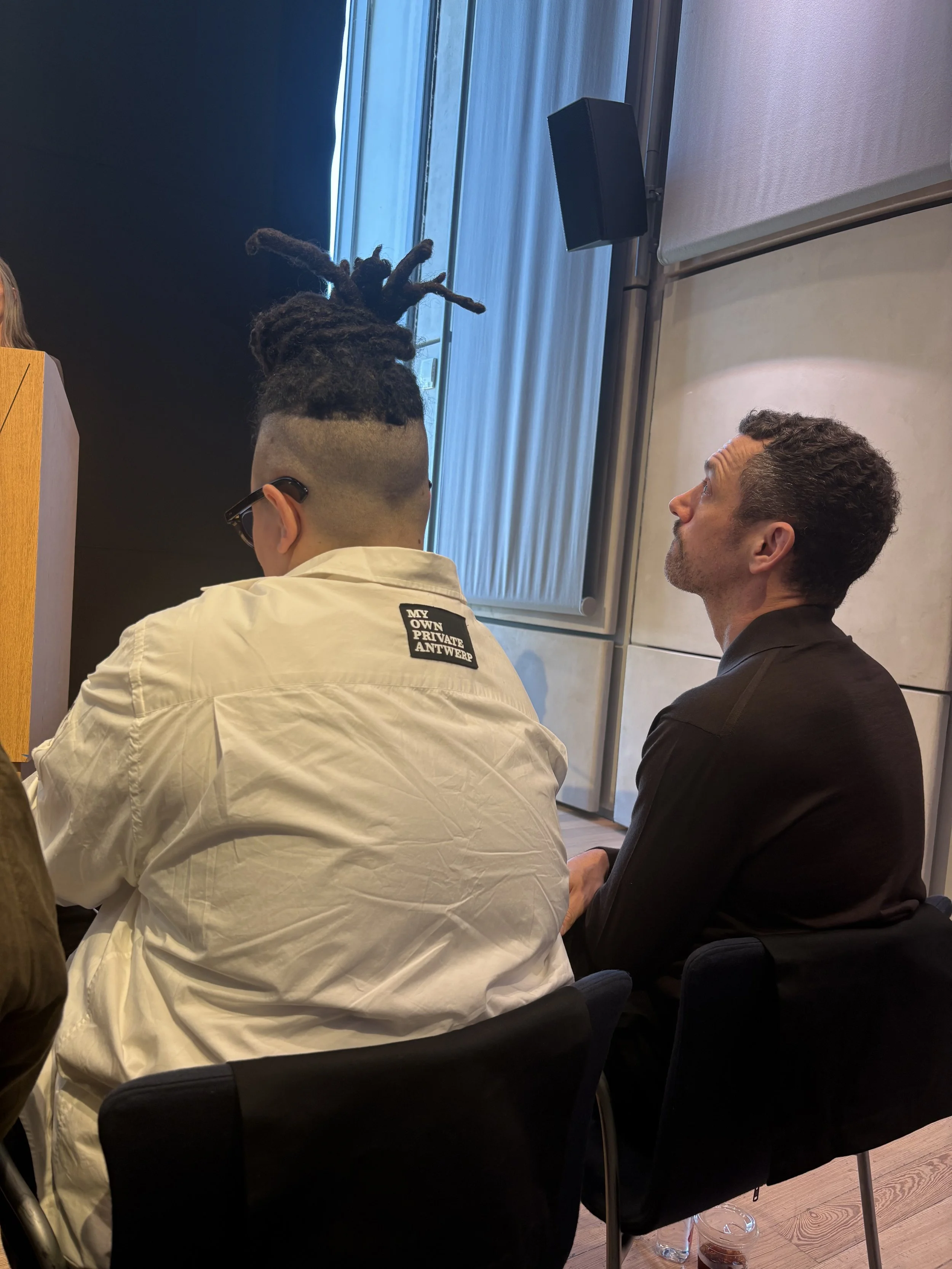
Onli & Da Corte ~ I was sitting right behind the curators…
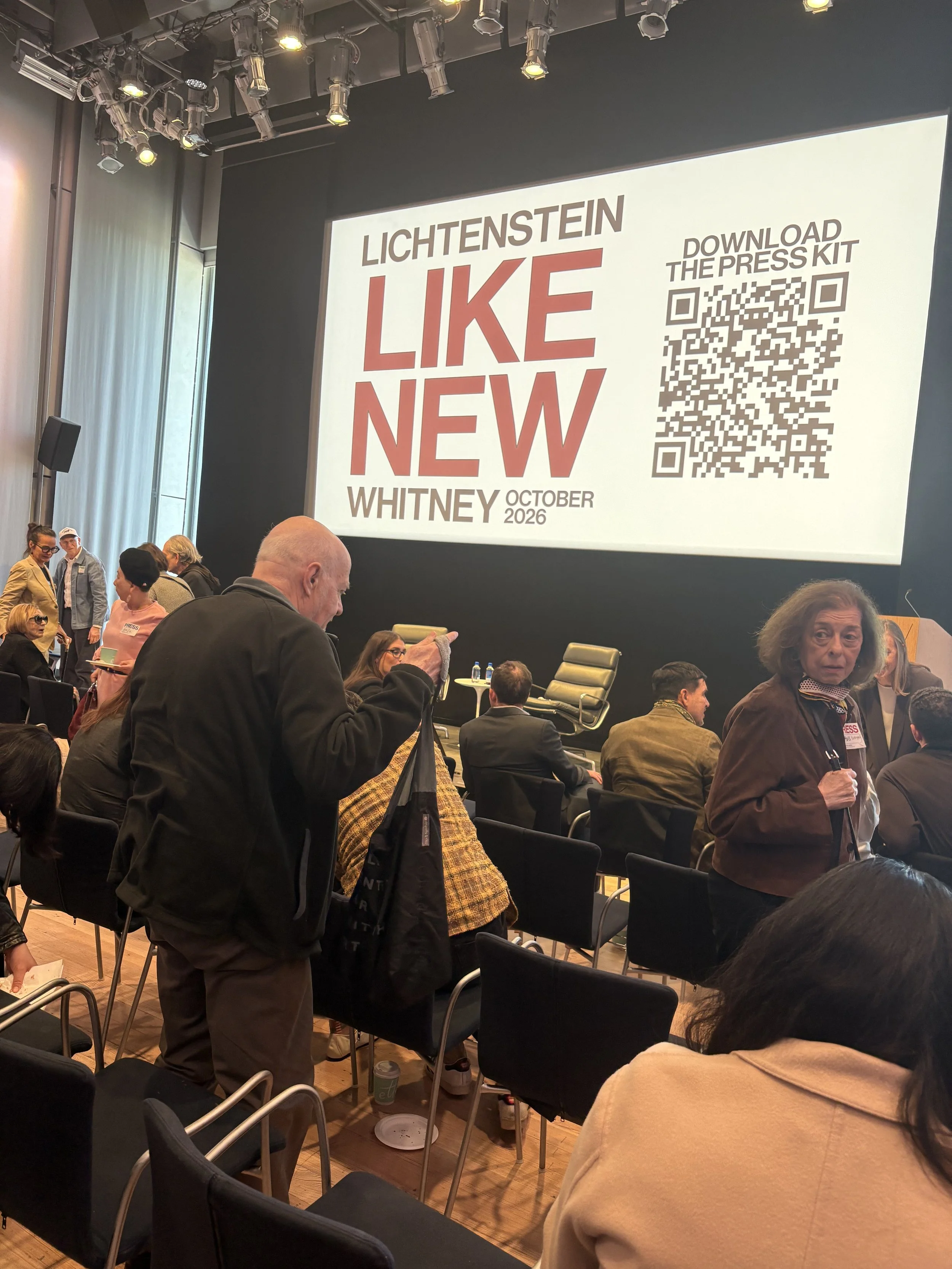
In a pitch-perfect presentation, Meg and Alex explained their approach and journey to mounting the show. They started the research ~ where else? ~ at the Library! They noted that all his art is hand-drawn ~ not created by machine. Lichtenstein was a prolific drawing artist ~ something that we don’t readily recognize. He loved drawing and art history ~ especially the Impressionist, Matisse. Part of his metier is he appreciated the graphic and the abstract that defined his unique art. The curators also pointed out that now, with the benefit of hindsight, we can appreciate how prescient Lichtenstein was for his time ~ “exploring the death of authorship.”
His work looked cool, crisp, and machine-made, but was meticulously handmade, revealing an artist fascinated by how images are built, copied, enlarged, circulated, and made new. In an era when pictures are endlessly cropped, filtered, reposted, and recirculated, Lichtenstein’s work feels newly urgent. The Like New showcase looks beyond the artist’s iconic surfaces to reveal the power and instability of images and celebrates an artist who understood, long before the digital age, that images change as they move through the world.
The art traces how Lichtenstein’s early interest in perception and visual recognition shaped a career-long investigation into duplication, simulation, and image culture. Across painting, drawing, collage, prints, sculpture, and film, Lichtenstein treated images as unstable forms that could be borrowed, translated, reframed, and transformed. He expresses his reverence through satire.
Roy Lichtenstein changed the way we see images. Turning the visual language of mass-culture comics, advertising, consumer goods, and commercial printing into fine art, he produced works that looked cool, crisp, and machine-made but were meticulously handmade. Roy Lichtenstein: Like New looks beyond the artist’s iconic surfaces to trace how his early interest in perception and visual recognition shaped a career-long inquiry into the power and stability of images.
The exhibition features many of Lichtenstein’s most celebrated works ~ many of which you may recognize, including Look Mickey (1961), Girl with Ball (1961), Masterpiece (1962), Drowning Girl (1963), Happy Tears (1964), Little Big Painting (1965), Rouen Cathedral, Set III (1968–69), and Artist’s Studio “The Dance” (1974). It also includes a recreation of three murals, including a nearly 96-foot-long iteration of the Greene Street Mural (1983).
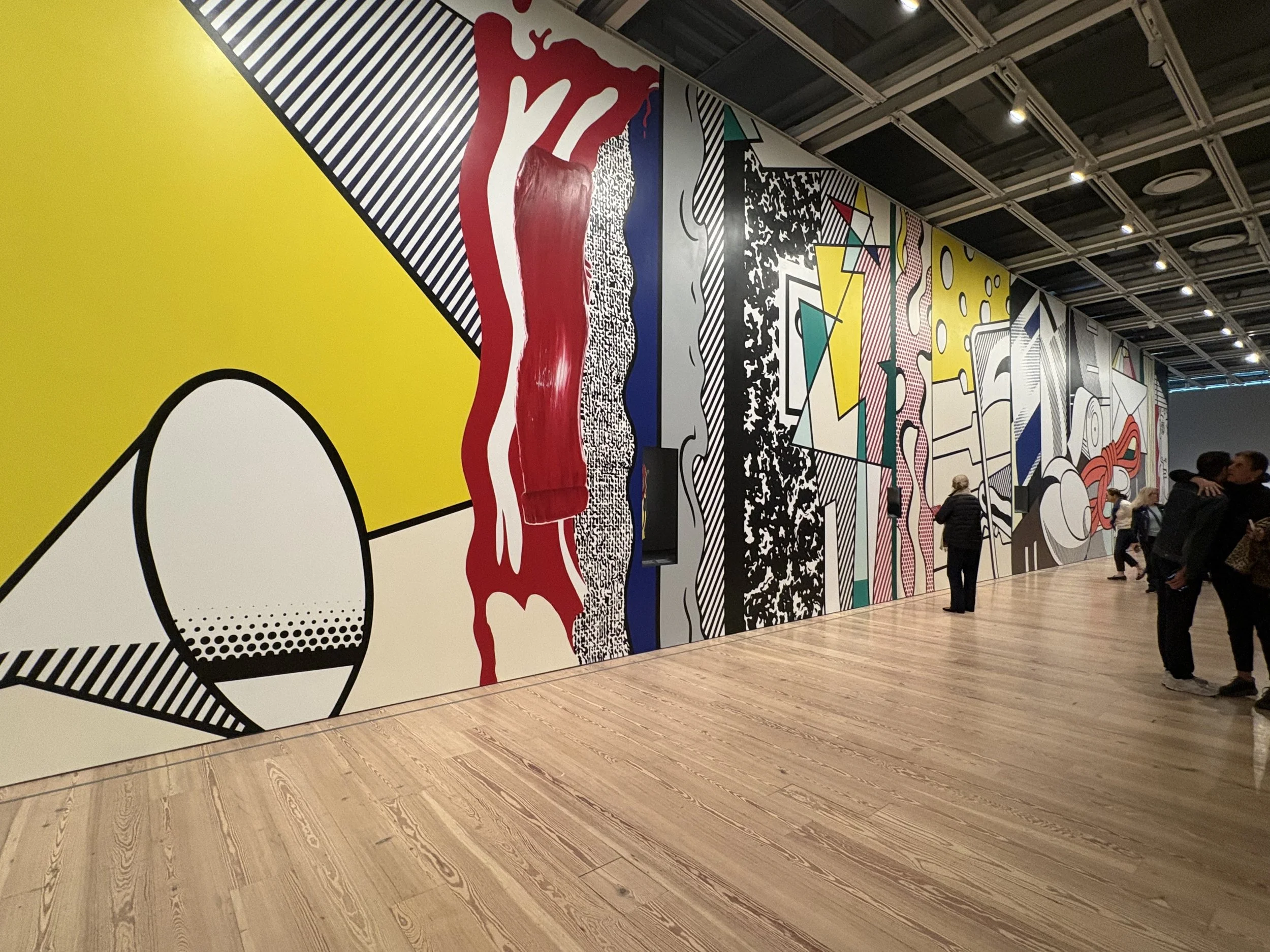
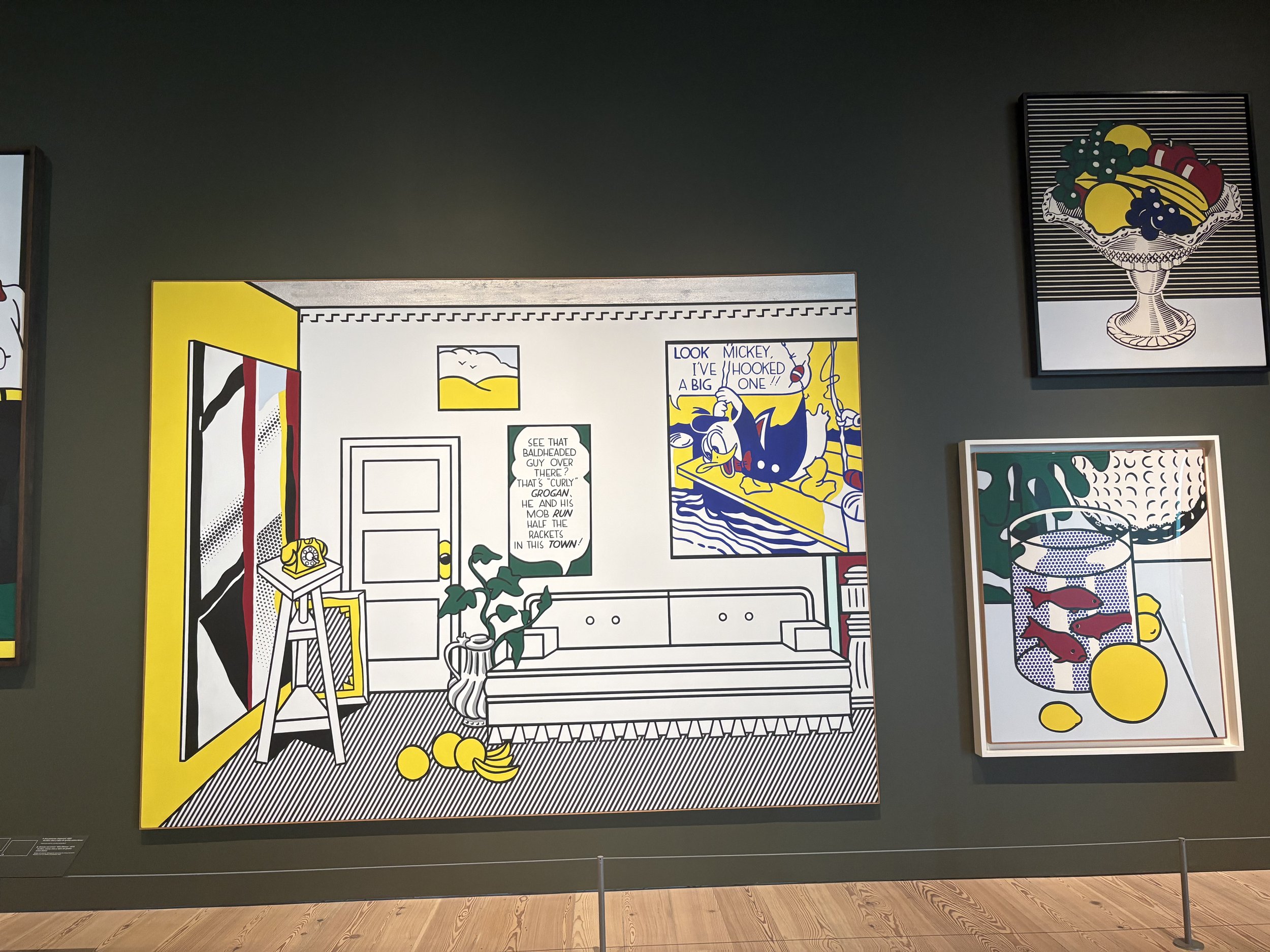
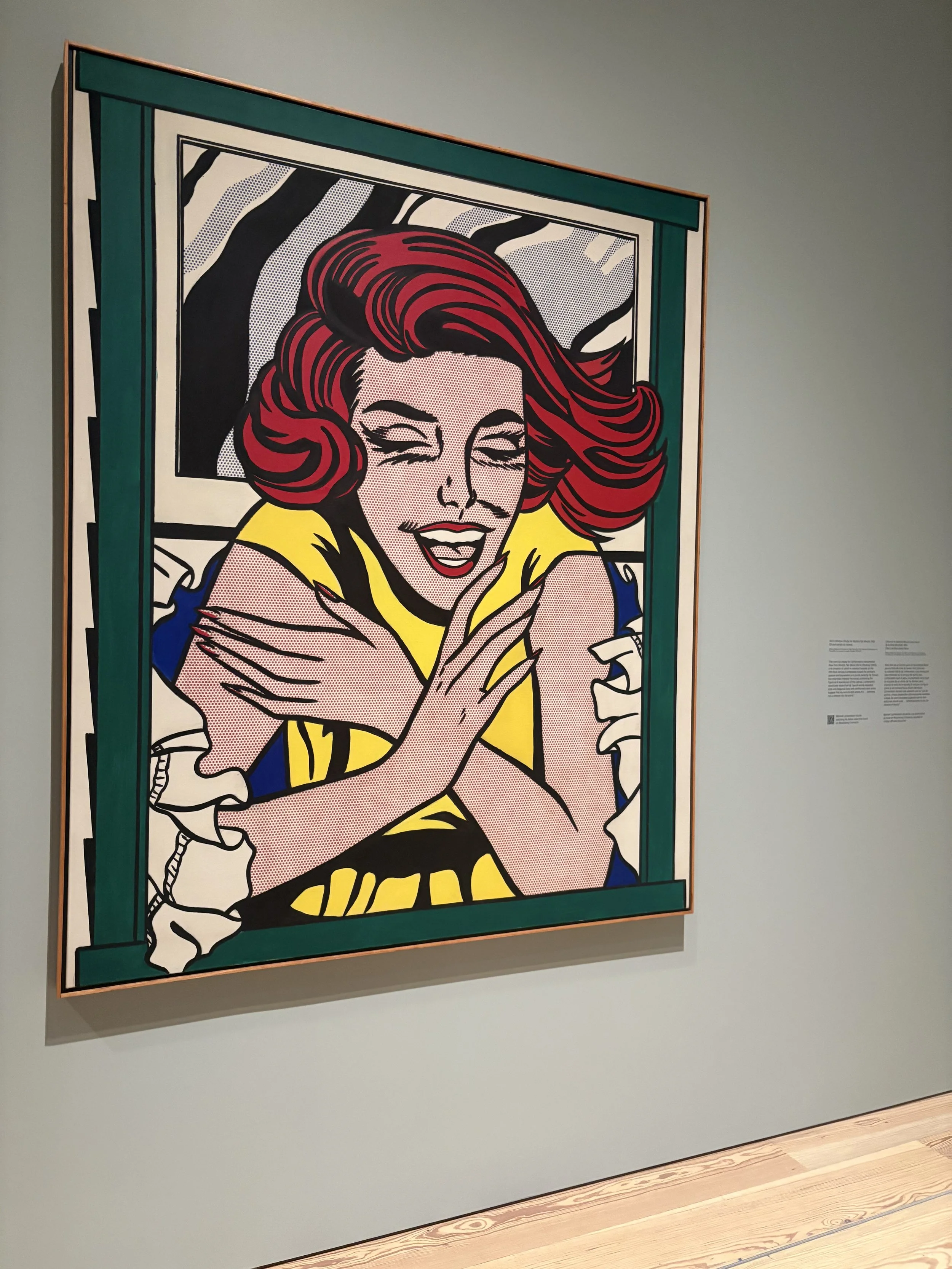
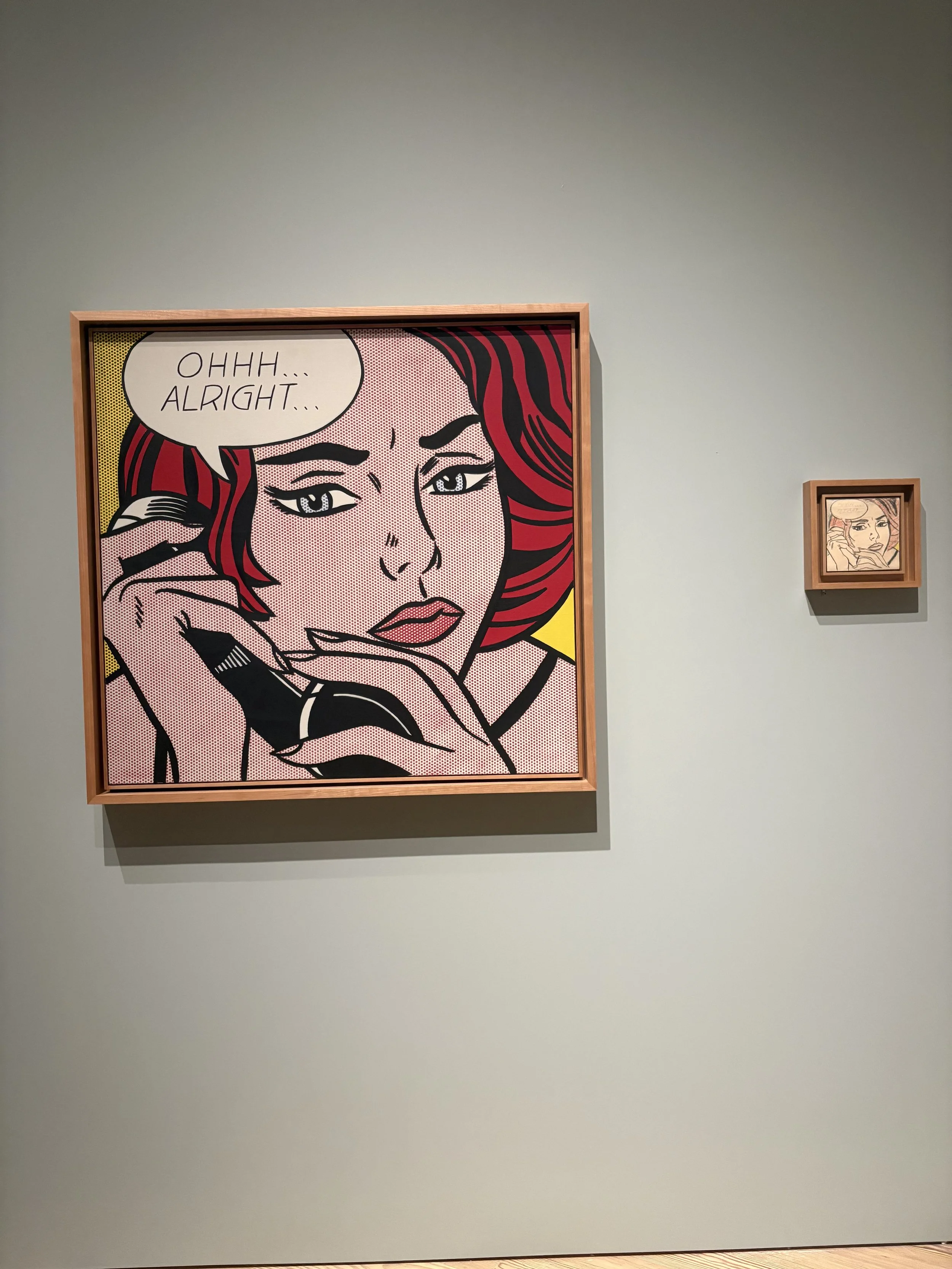
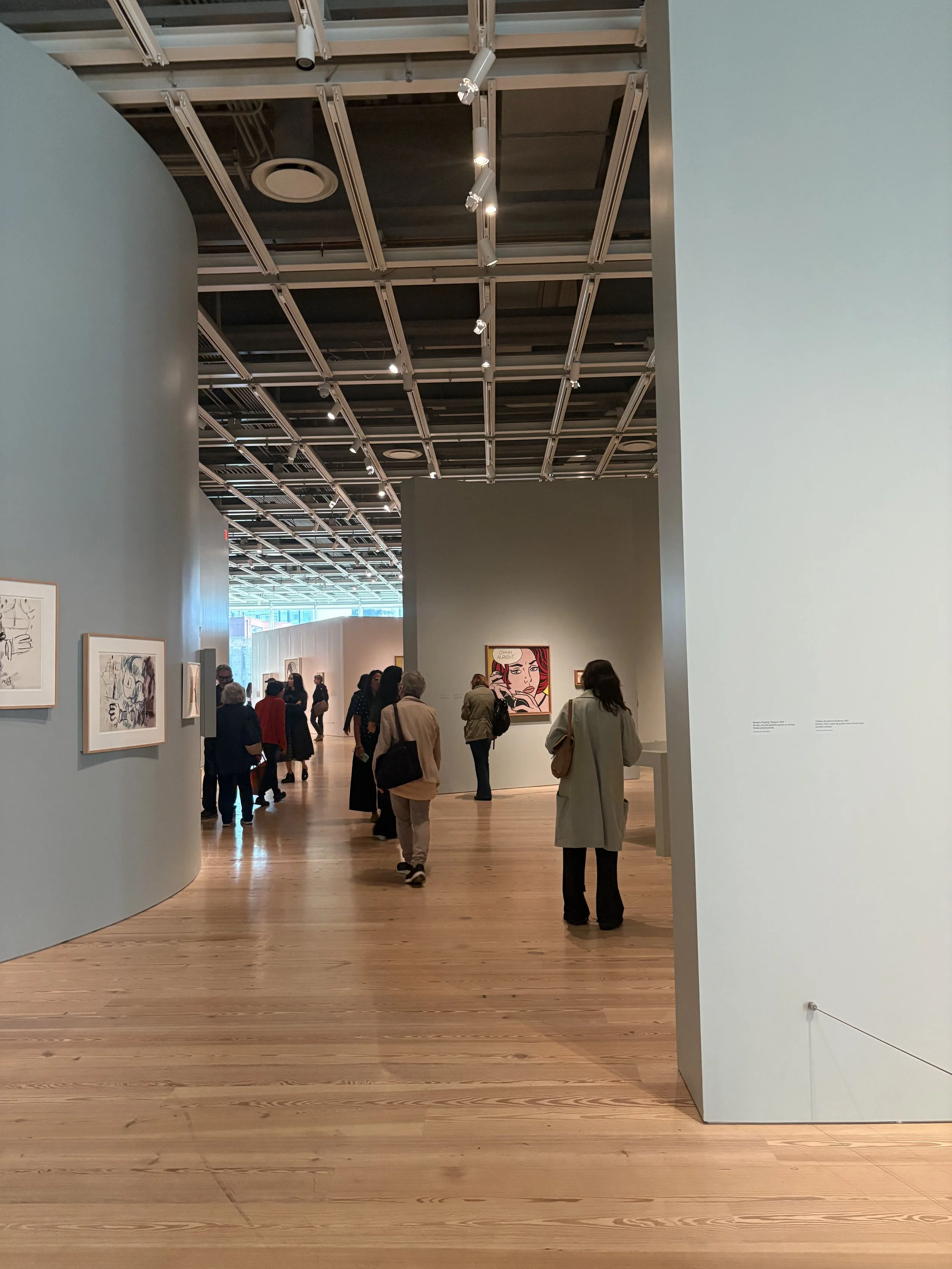
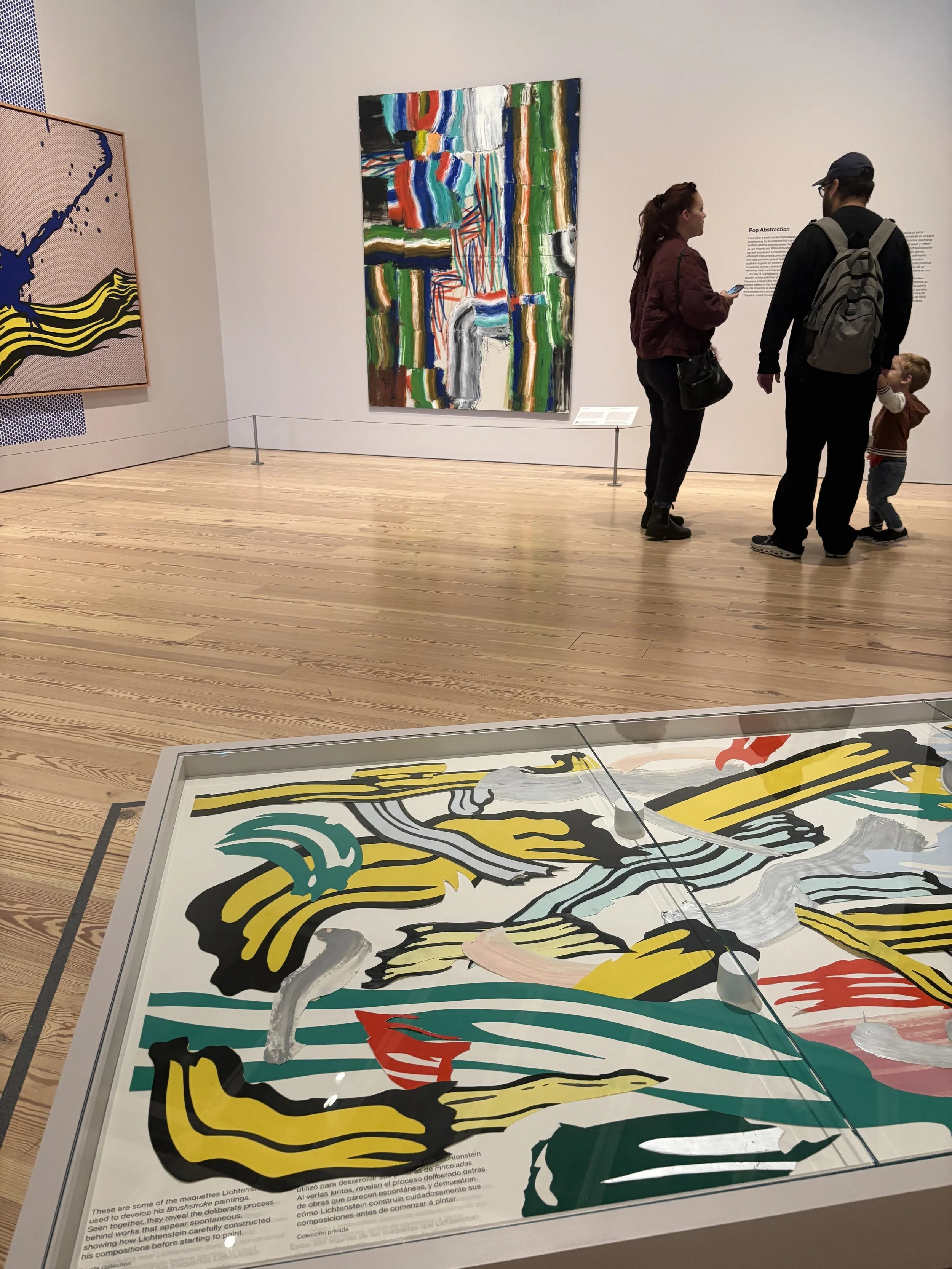
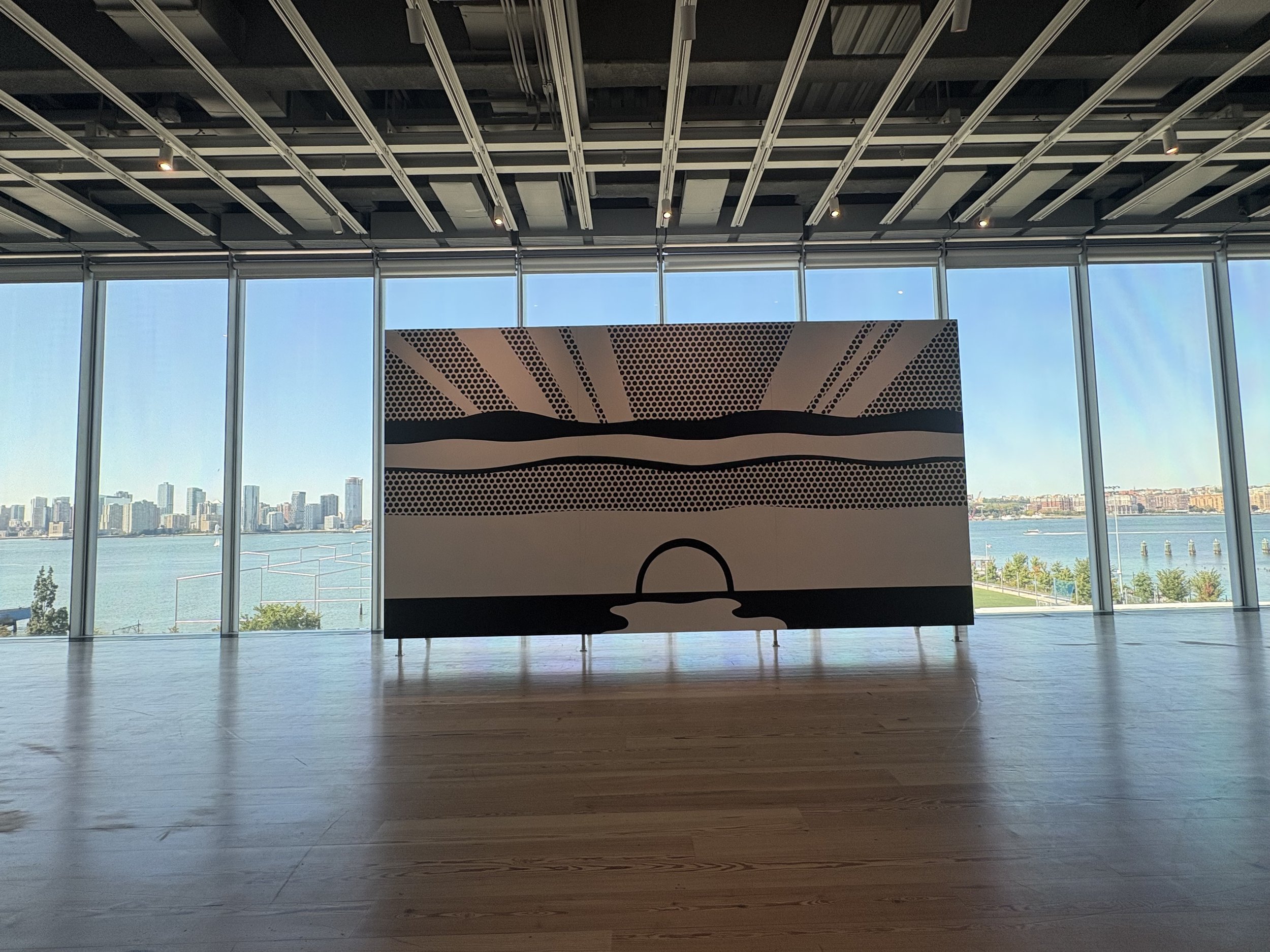
Roy Lichtenstein: Like New also reunites, for the first time, all the works from Lichtenstein’s first exhibition of Pop-style work at Leo Castelli Gallery in 1962. This pivotal moment for the artist would come to define an era, with its impact extending far beyond Pop and shaping generations of artists.
Arts & Culture, powered by Bloomberg Philanthropies
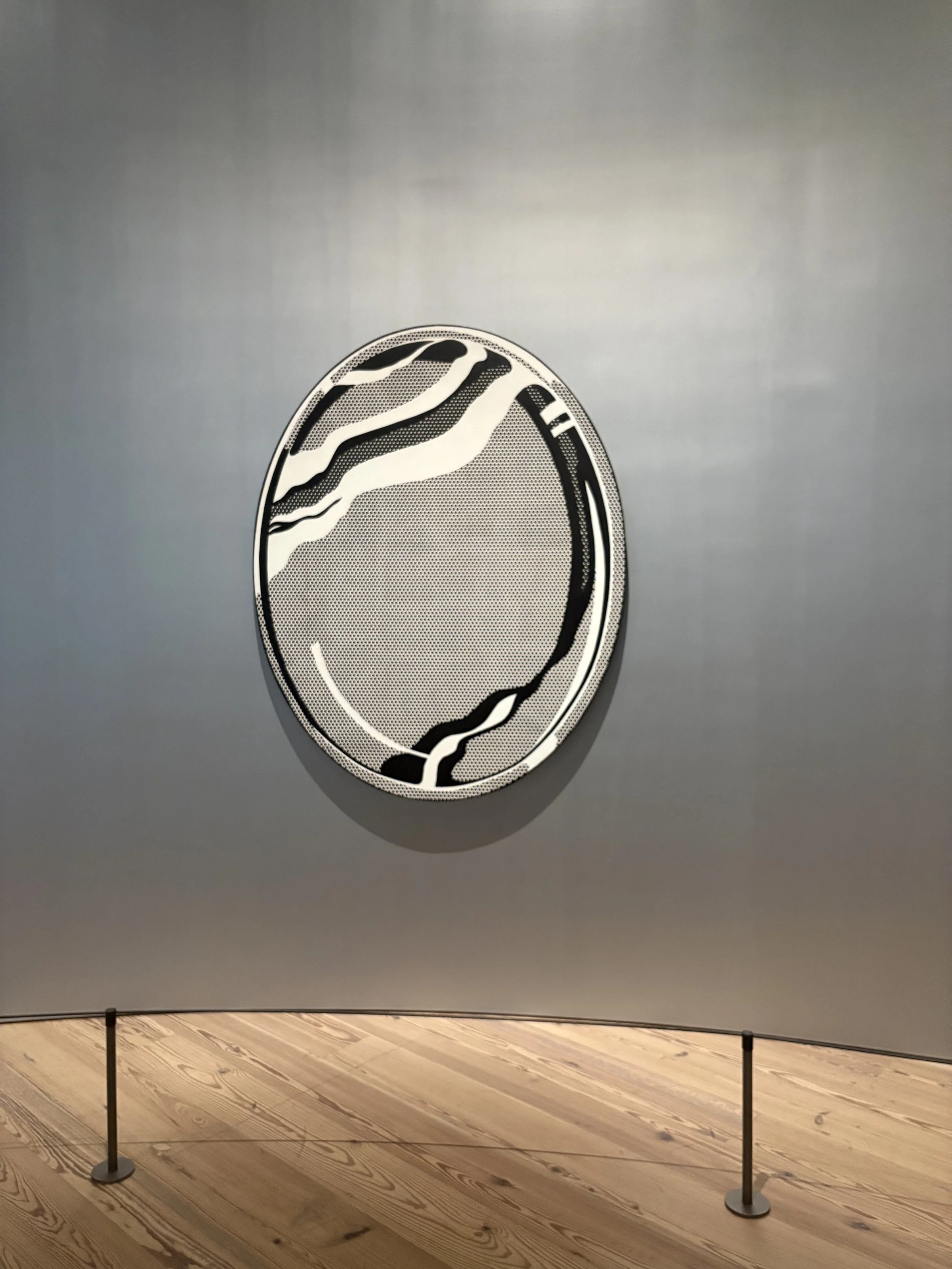
When you visit the Like New show at the Whitney, I suggest you use the QR code to access the audio guide. It provides an intimate, detailed background to the art’s themes of home, war, and love, that you might otherwise overlook. My highlights include: the recreation of the Castillo Gallery; the recreation of his studio, the Three Landscapes, The Tire and its intriguing story that celebrates maker; the Mirrors ~ the most of his Mirror art ever shown, and of course, the “Girls.” Here are three videos to highlight the “Three Landscapes,” “The Mirrors,” and the Studio.
The Three Landscapes
The Mirrors collection
The Studio
Regrettably, all too soon, it was time to leave. I departed the Whitney on a picture-postcard, romantic “Autumn in New York” day, (oh where was Mr. Sinatra?!) and as I descended the wedding cake steps to walk to a better juxtaposition photo location for the “Hot Dog” billboard mural that is behind the hot dog vendor I know is always there so I could showcase co-curator Alex Da Corte reimagined (and shown in the press briefing), a magic moment occurred.
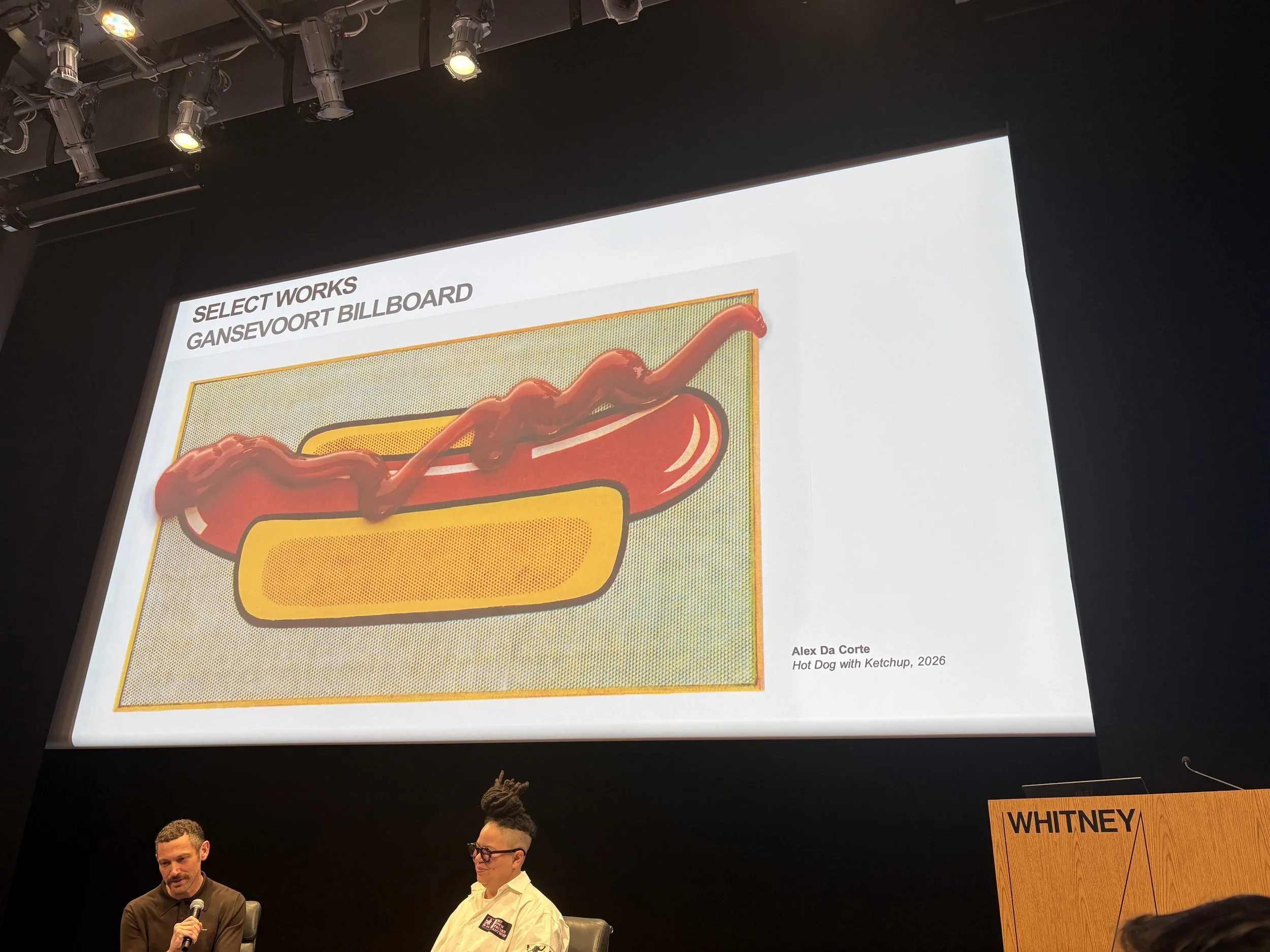
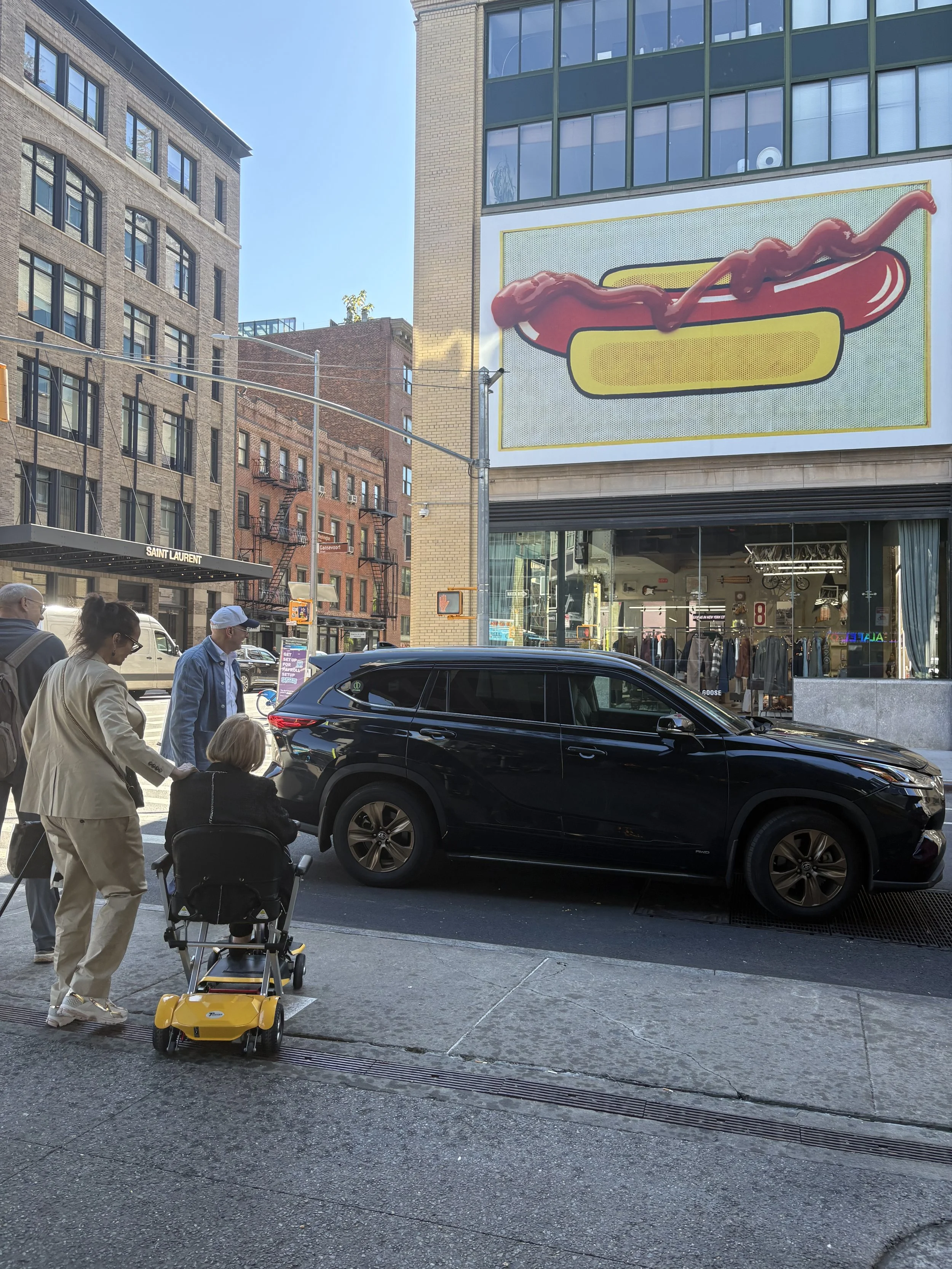
Da Corte’s Hot Dog art on Gansevoort
It was a kismet. I came upon students interviewing a handsome woman “la femme d’un certain âge” as the French say. Turns out, this celebrated woman is 97! I felt particularly drawn to their conversation and I’m so glad I was, because now I can also share with you another “New” element to the Roy Lichtenstein story that I’m sure you haven’t heard before. Turns out that this successful woman is Joan Kron, art patron and author. Joan and her friend and fellow art enthusiast, Audrey Sabol, were key advocates for Lichtenstein’s artful career, lobbying Philadelphia’s city father’s to allow fine art on billboard murals.
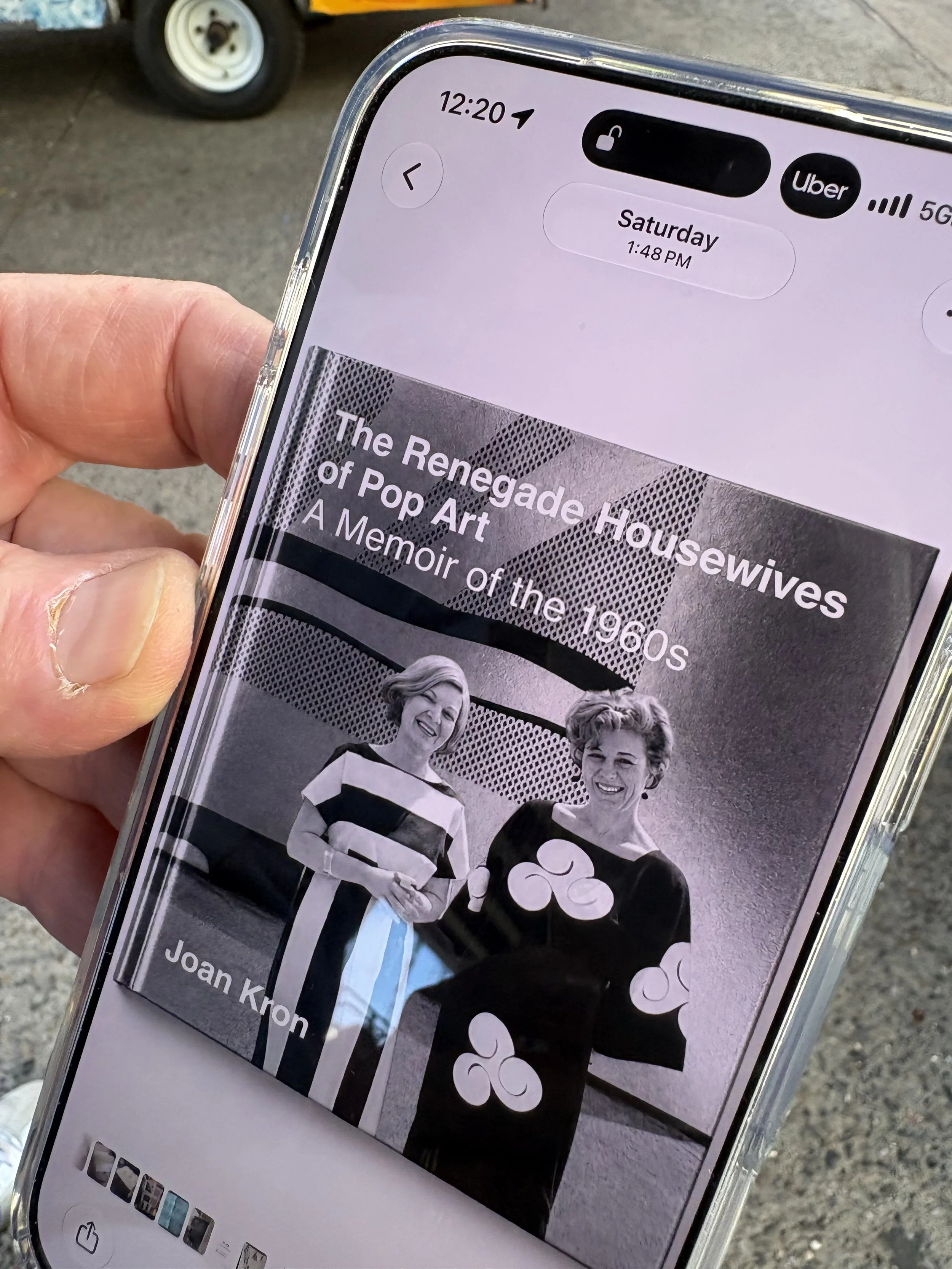
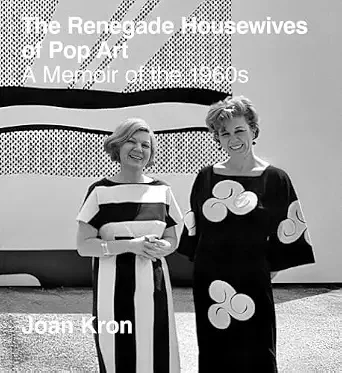
Book jacket: November Release
Her son proudly showed me the book cover for his mother’s soon-to-be-released book about the Pop Art era. See, even at 97, you’re never too old… Her book will be released next month. From the book’s overview:
Renegade Housewives of Pop Art, A Memoir of the 1960s.
In the 1960s, Joan Kron and her friend and business partner, Audrey Sabol, made history, collaborating with an emerging group of artists—Jim Dine, Jasper Johns, Allan Kaprow, Claes Oldenburg, Robert Rauschenberg, Ed Ruscha, Niki de Saint Phalle, George Segal, Jean Tinguely, and Andy Warhol, to name a few. In 1962, Kron and Sabol presented the first group show of Pop Art on the East Coast at the YM/YWHA in Philadelphia, beating museums and New York galleries. They also went into business, producing multiples with Robert Indiana, Roy Lichtenstein, and Marisol Escobar. Sabol and Kron’s swan song was the Museum of Merchandise; it had a storefront by an unknown named Christo and a trouble-making product for sale by rising star Andy Warhol. All of this took place before the pair pioneered art on billboards with Roy Lichtenstein.
An extraordinarily written visual history, The Renegade Housewives of Pop Art™: A Memoir of the 1960s, is an inspiring tale of invention and reinvention, relatable to many women. Through never-before-seen documents, Joan Kron’s memoir recounts how she and Sabol became two of the most daring and revolutionary “housewives” of the 1960s. This is a new eyewitness account of the 1960s art scene by one of its last living participants. With wit and verve, Kron shares a collection of personal stories and an extensive private photographic archive, from her early years in costume design to her mid- and late-career adventures as a local arts revolutionary and a reporter and editor at prominent New York publications.
What a compelling narrative! I’m looking forward to reading this artful account from the front lines of the Pop Art movement and learning what that pesky, trouble-making Warhol product was.
In the video interview here, you can make out Joan explaining how she and Audrey were advocating to erect and showcase billboards in Philadelphia ~ featuring Roy Lichtenstein. What a New York moment!
What an only in New York moment.
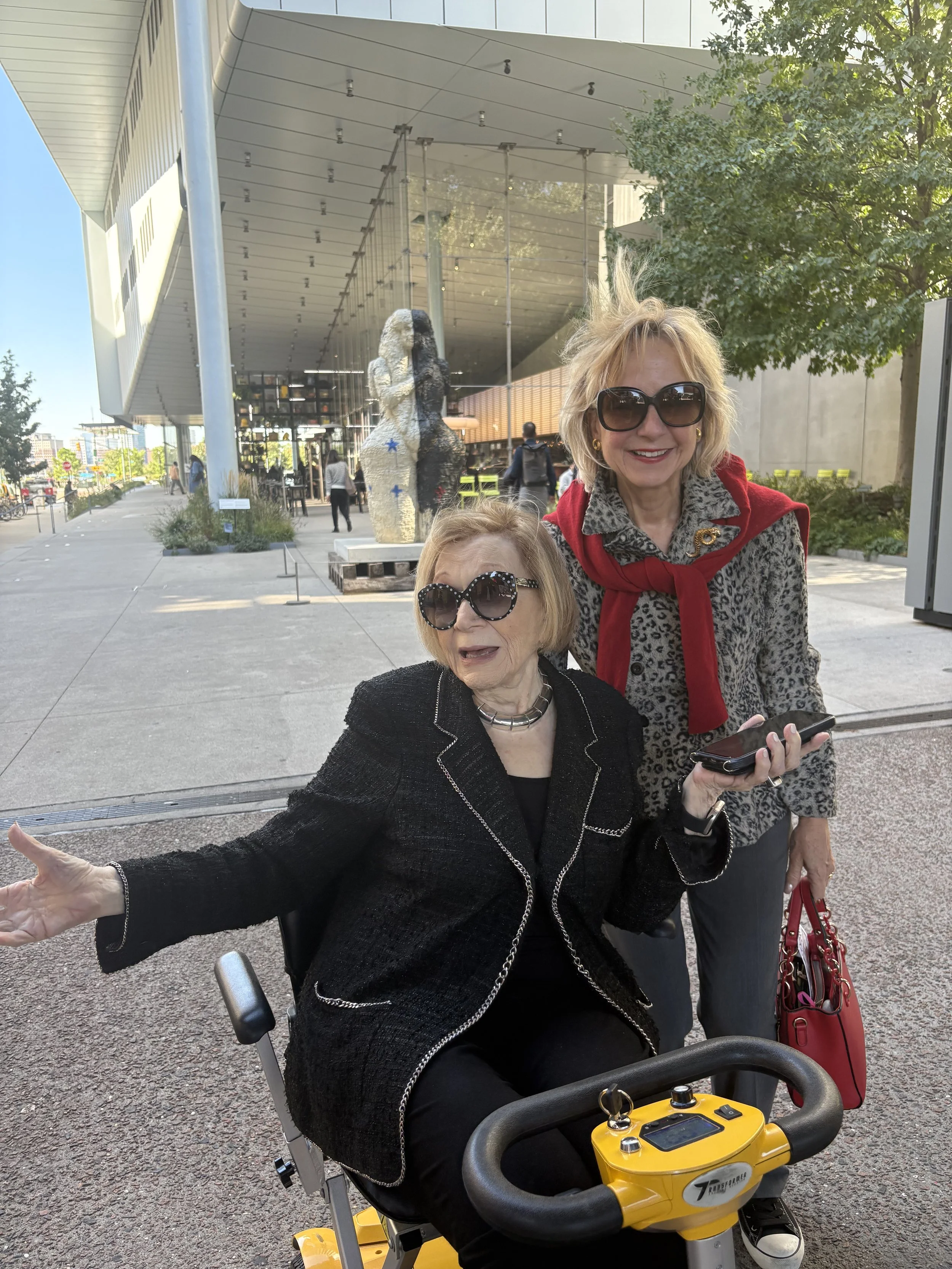
Irrepressible Joan Kron, art patron, author & me
Giving New Meaning to a Walking Billboard!
For those of you who are artful fashionistas, you’ll be overjoyed to learn that The Whitney Museum also launched an exclusive retail collaboration with Gap and the Estate of Roy Lichtenstein celebrating Like New. The “Gap –Lichtenstein – Whitney.” The collaboration brings together Gap’s longstanding connection to American culture and style with the work of one of the most celebrated and defining artists of the Pop art movement. Drawing from Roy Lichtenstein’s iconic visual language, which spanned four decades, the limited-edition collection reimagines his work across a wide variety of classic Gap pieces, including hoodies and sweatshirts, buttondowns, t-shirts, and accessories. The artist understood that images are never fixed but instead continually copied, enlarged, circulated, and made new.
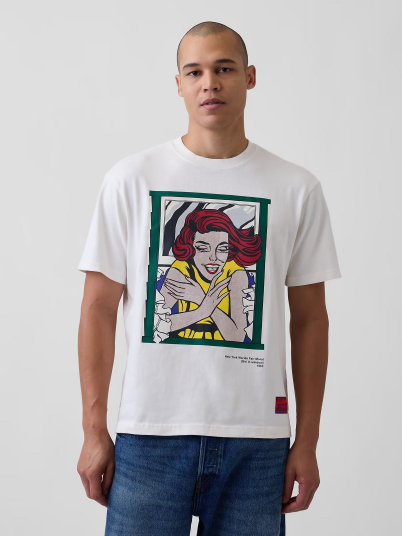
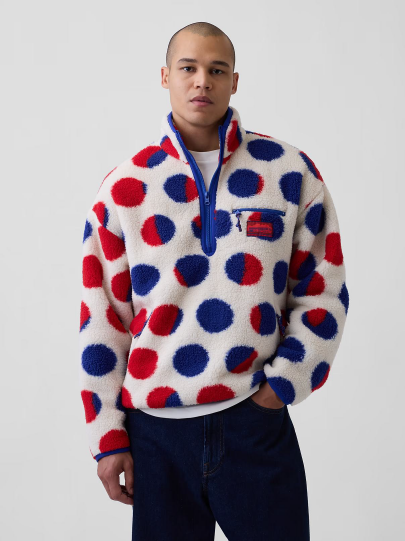
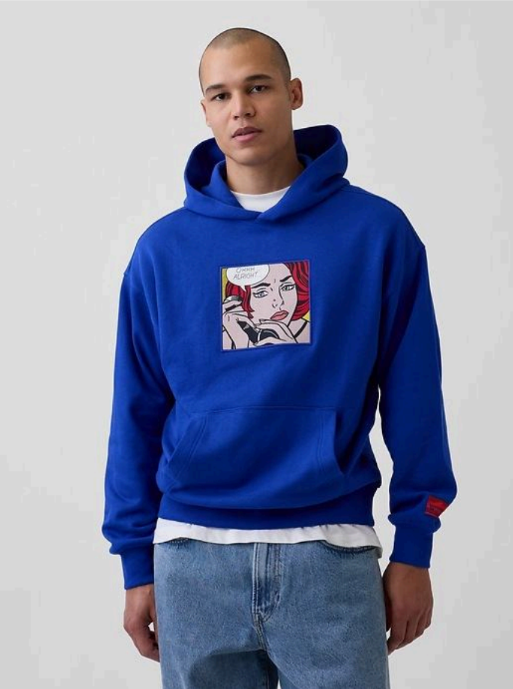
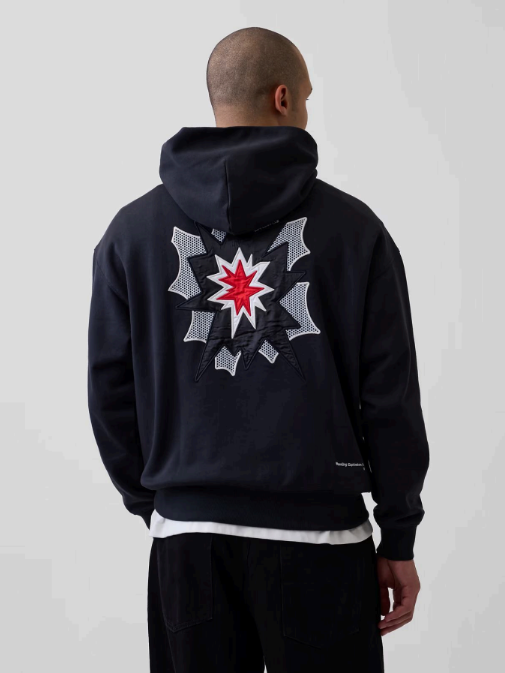
The 18-piece collection available at select Gap stores, Gap.com, shop.whitney.org, and at the store in the Whitney Museum.
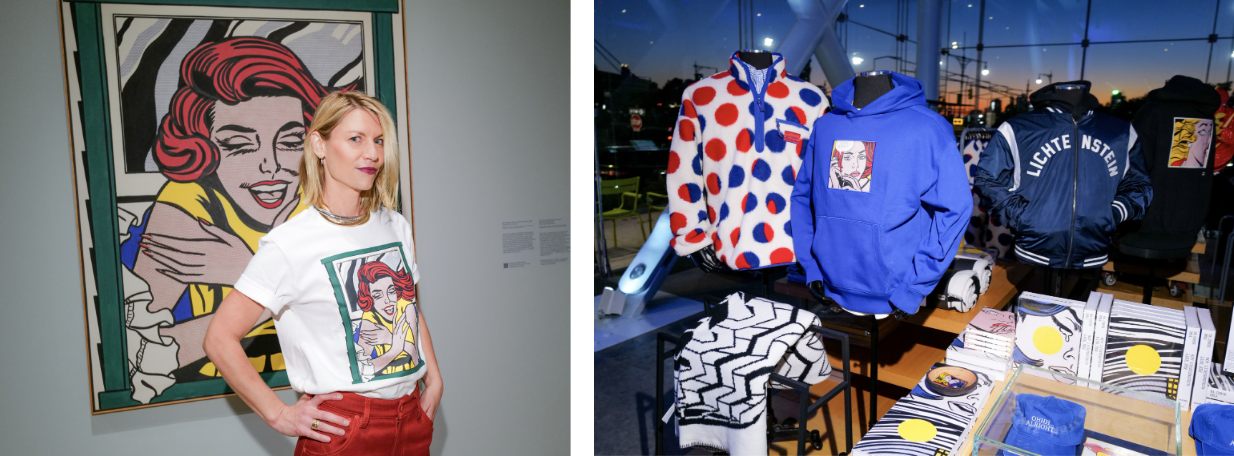
One of the “Girls” ~ Claire Danes wears Roy
Art elevates us. It changes us in profound ways. I hope you will enjoy the Roy Lichtenstein: Like New feature exhibit at the Whitney Museum of American Art. And to make your visit sweeter, you might want to take advantage of their many free admission opportunities. The director, Scott Rothkopf proudly claims the Whitney is “the freest museum in NYC.” I suggest you make a day of it, enjoying a meal at their restaurant’s Frenchette Bakery on the ground floor or the Studio Bar by Frenchette on the 8th floor. And then, take a walk on the High Line, the Garden in the Sky ~ it’s adjacent to the Museum! So much culture and art to see and do in Gotham.
I wear my heart on my sleeve ~ and “I ♥️NY” ~ I really do. And I imagine Roy loved that ad campaign…
With Love,
Leeann, Duchess Designs
