
A Native Plant Garden Tour
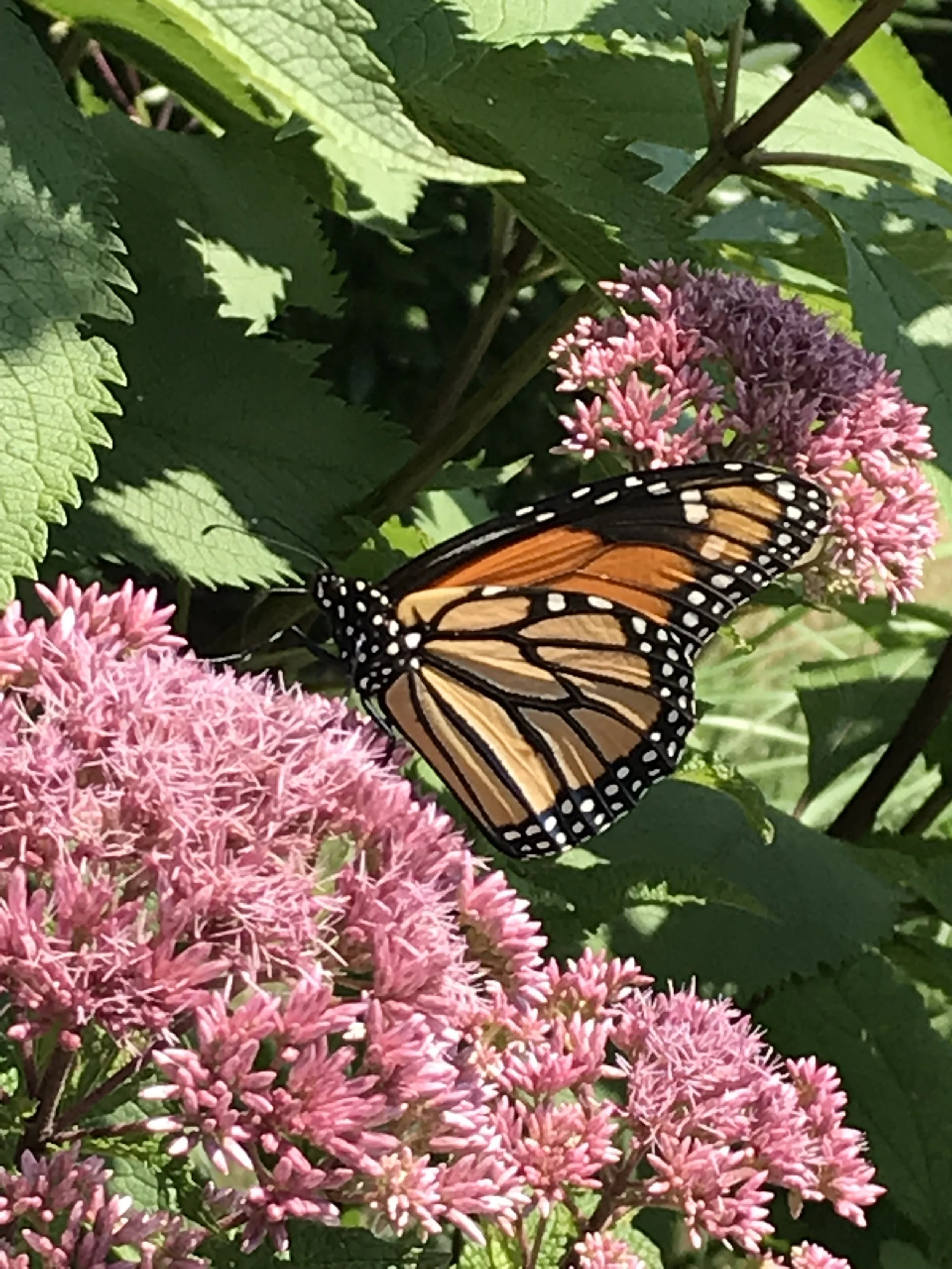
It was a cool autumn/post-harvest day in 2025 when I was first approached about hosting a spring 2026 June garden tour for the New Jersey Native Plant Society. I was, of course, honored when Marilyn, our beloved native plant “godmother,’ garden tour organizer, and champion for pollinators, first emailed me the ask. Afterwards, she suggested I write an overview or abstract about what I could talk about and offer for the tour, besides the gardens and plants, of course.
I wrote this:
The Ethos of Change in Our Gardens ~ Creating a More Artful Native Garden Culture (or Lifestyle?)
Today, we are as concerned with ecology as well as aesthetics. Consequently, the ethos of what makes a garden beautiful has evolved. Today we are increasingly as concerned with ecology as we are with a garden’s aesthetics.
As we embrace the science of sustainable gardening with our native plants, we can also manifest their “back to the future” inspiration to create a more modern landscape design and garden lifestyle. This requires a wider definition of what a beautiful garden looks like. One that offers a deeper dive into our relationship with gardens and all the creatures that call it home…
The beauty of creating a Native Garden offers us not only a unique portal to what pretty and elegant can be in the garden, but also guides us in how we can harness native plants to create and curate lifestyle essentials using native plants to embrace such “luxuries” as fragrance, beverages, including teas and simple syrups and garnishes, as well as our food. (Meaning, we don’t always need to rely on the exotic imports. I once had one of the celebrity chefs I interviewed for one of my books tell me excitedly that “We have our own stuff!” as he described the pivot away from French-focused gastronomy.)
Let’s look at how native plants work with our existing "cosmopolitan" plants that pollinators have come to rely on, and balance the aesthetics to bolster a beneficial and beautiful mix.
DIscover what we can cultivate to create a true modern garden brimming with wildlife that will be a bulwark to accommodate a changing environment and still give us the aesthetics that are at the core of good garden design and horticulture, with native plants now celebrated with a marquee status in their starring role.
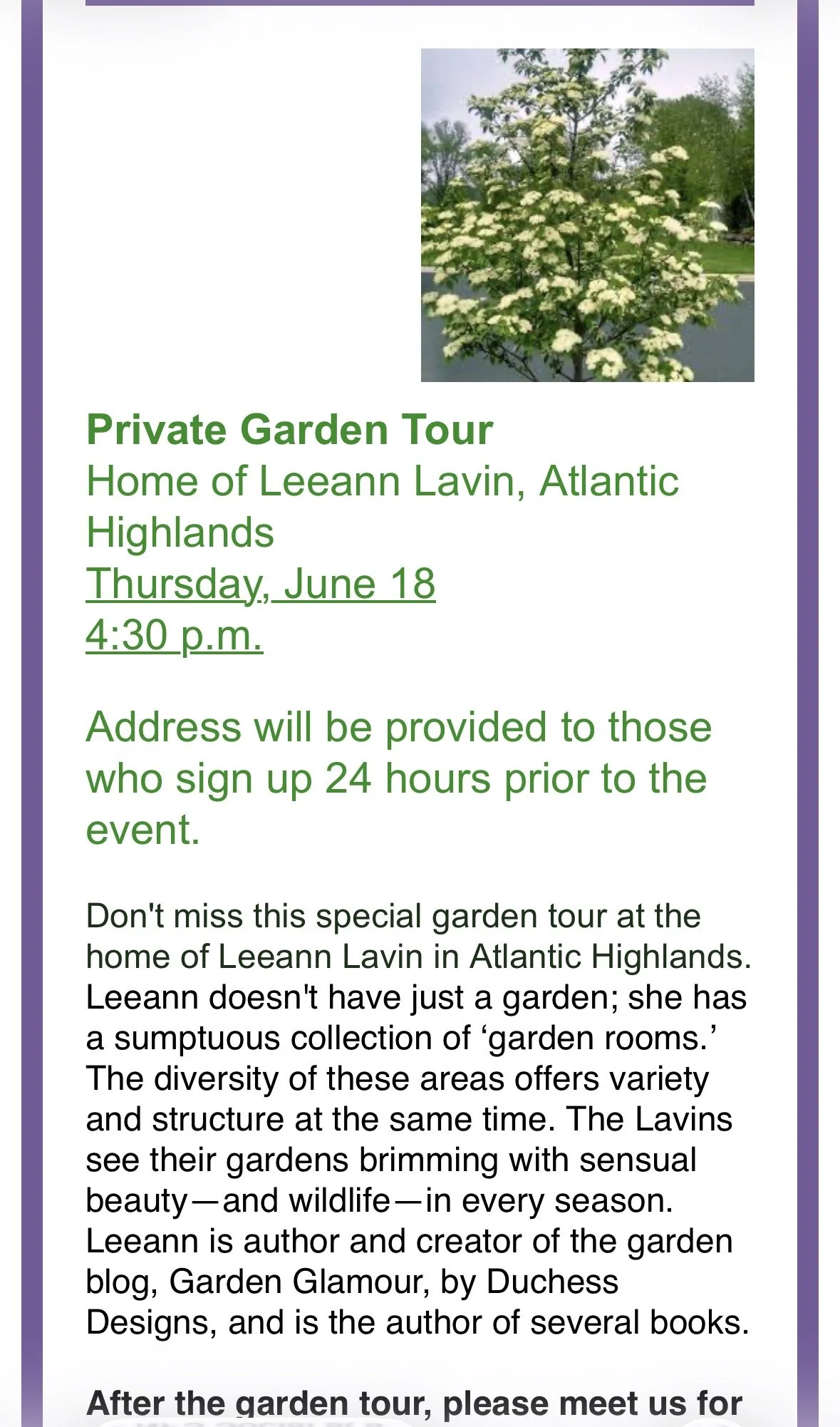
NJNPS Invite to Tour
By late winter, we were on! Preparations were underway. The invitation was in the NJNPS newsletter and I was working up our task timeline.
It was determined that June 18th was the optimum date for the tour, with a rain date scheduled two days later, just in case, as June is a rainy month despite its sunny image. Moreover, climate change has posited its own unique challenges in terms of scheduling things, not to mention “normal” seasonal garden timeline schedules. More on that...
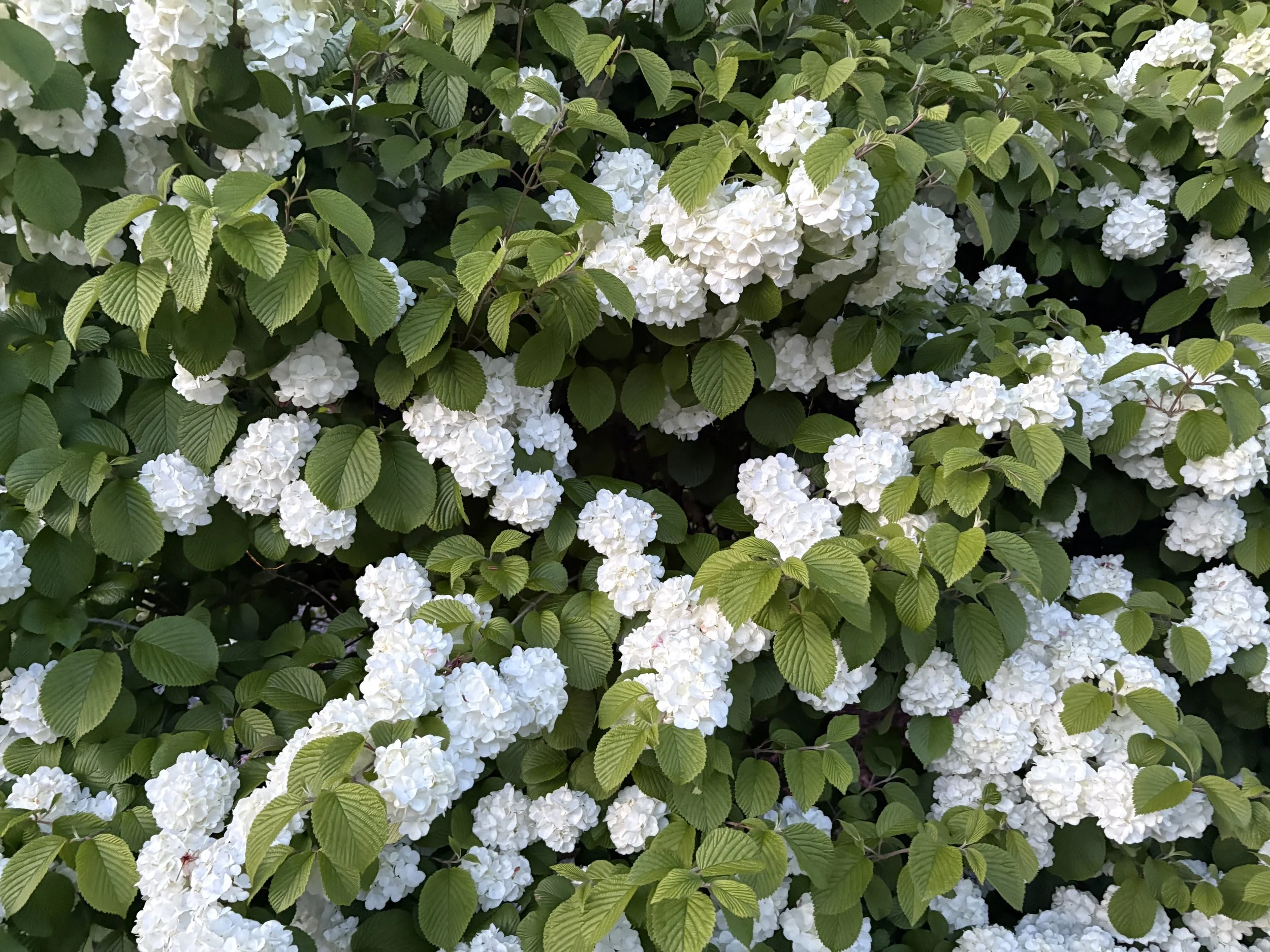
Spring blooming Native Viburnum
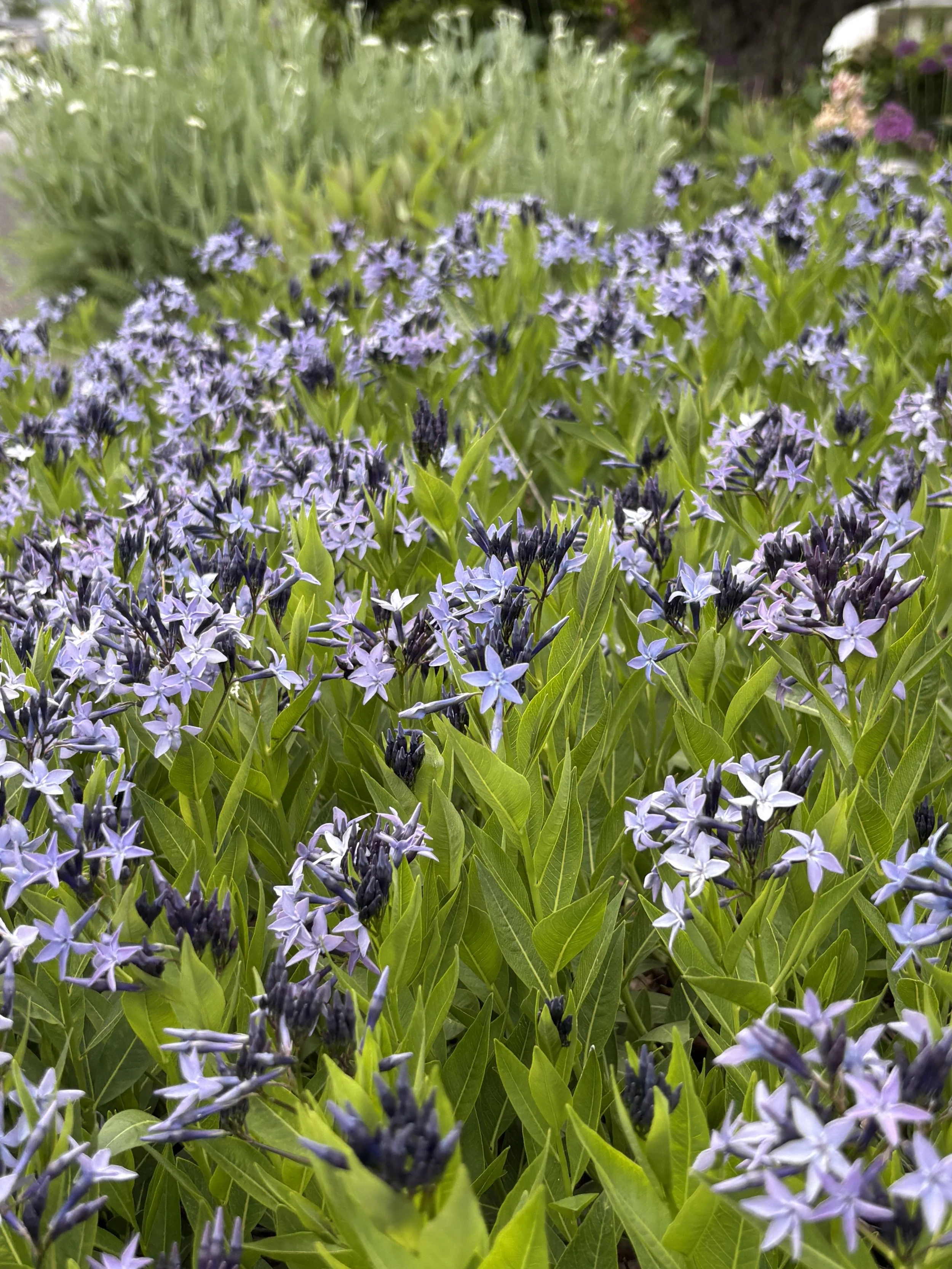
Spring blooming Native Amsonia
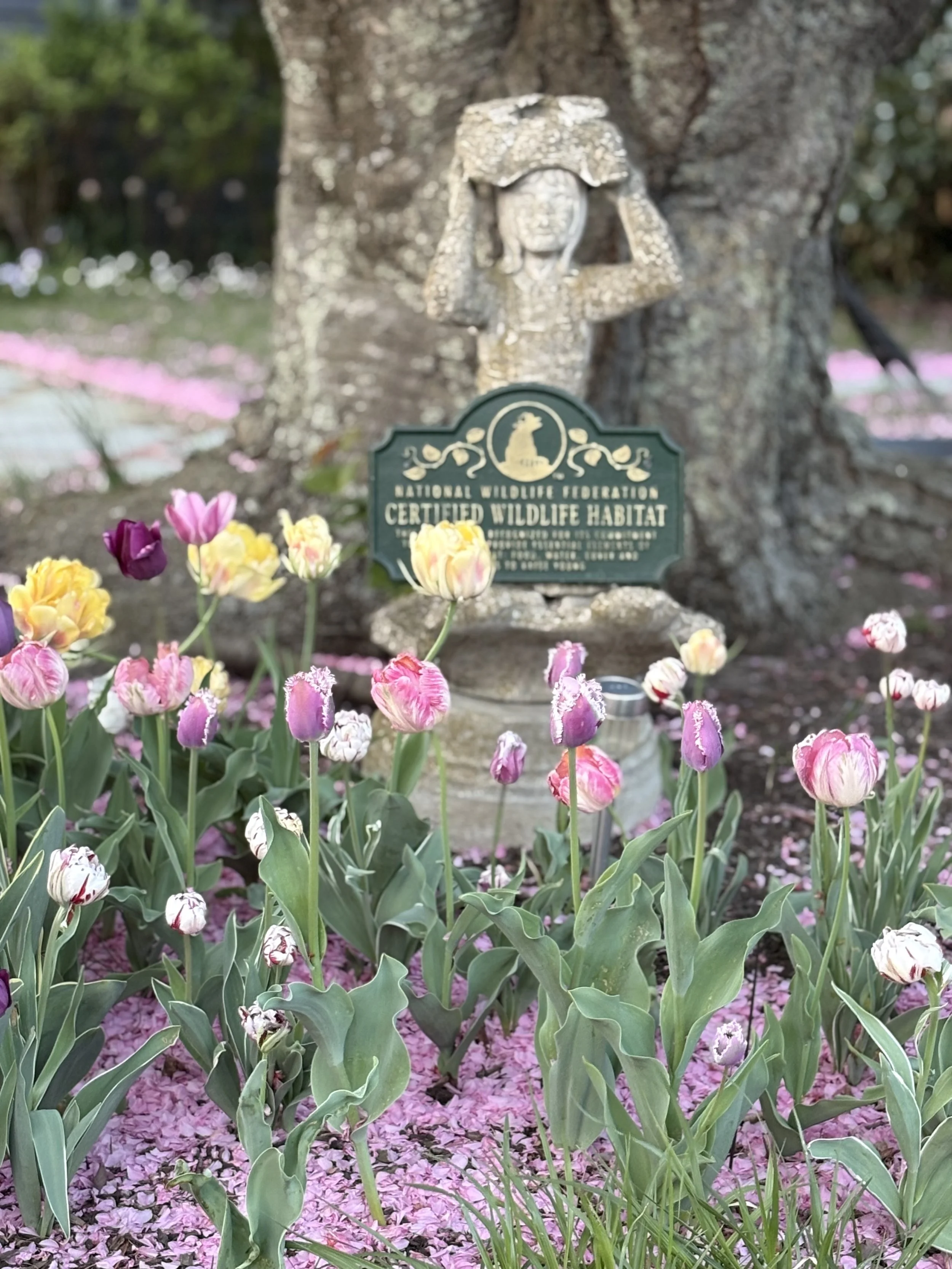
Garden for Wildlife
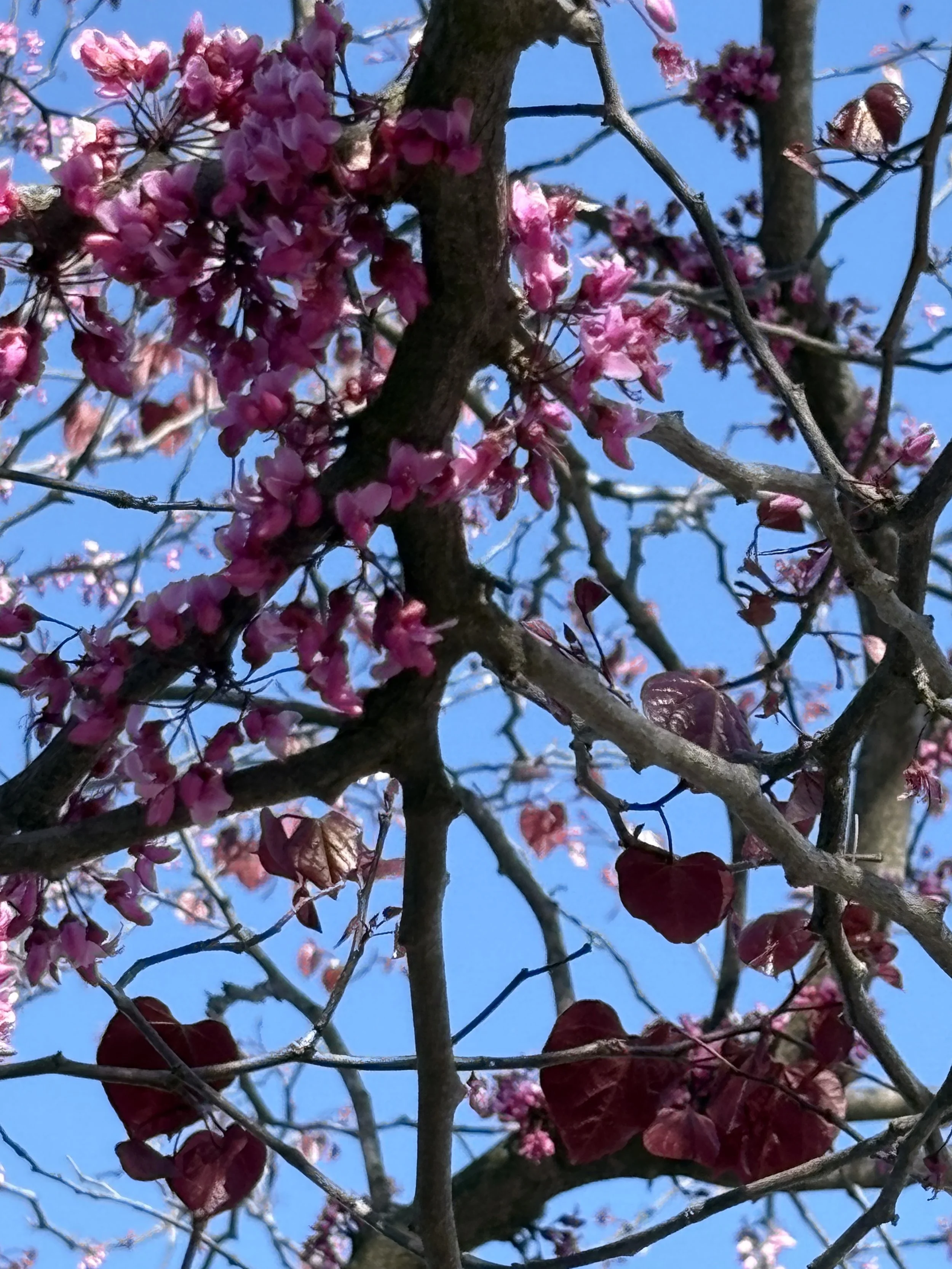
Spring blooming Native Redbud ~ Don’t you just Love the heart-shaped leaves?
I often note that for horticulturists, spring is truly the “silly season.” It’s the mad moments that span the heart-clutching drama and beauty of witnessing the kaleidoscopic glory of spring ephemerals in bloom, the parade of candy-colored shrubs in bloom, and the ballerina-like florals that waltz across the trees in spring ~ ahhh ~ and then on to the scragglies afterwards, followed by the rigors of pruning (you prune after the bloom is a good way to to guide your maintenance calendar) to planting your colorful annuals. Plus, one is adding in good composted soil, and mulch, shovel cutting borders, repairing or adding hardscapes that may have been scuttled during winter’s “residence” and working on your updated designs.
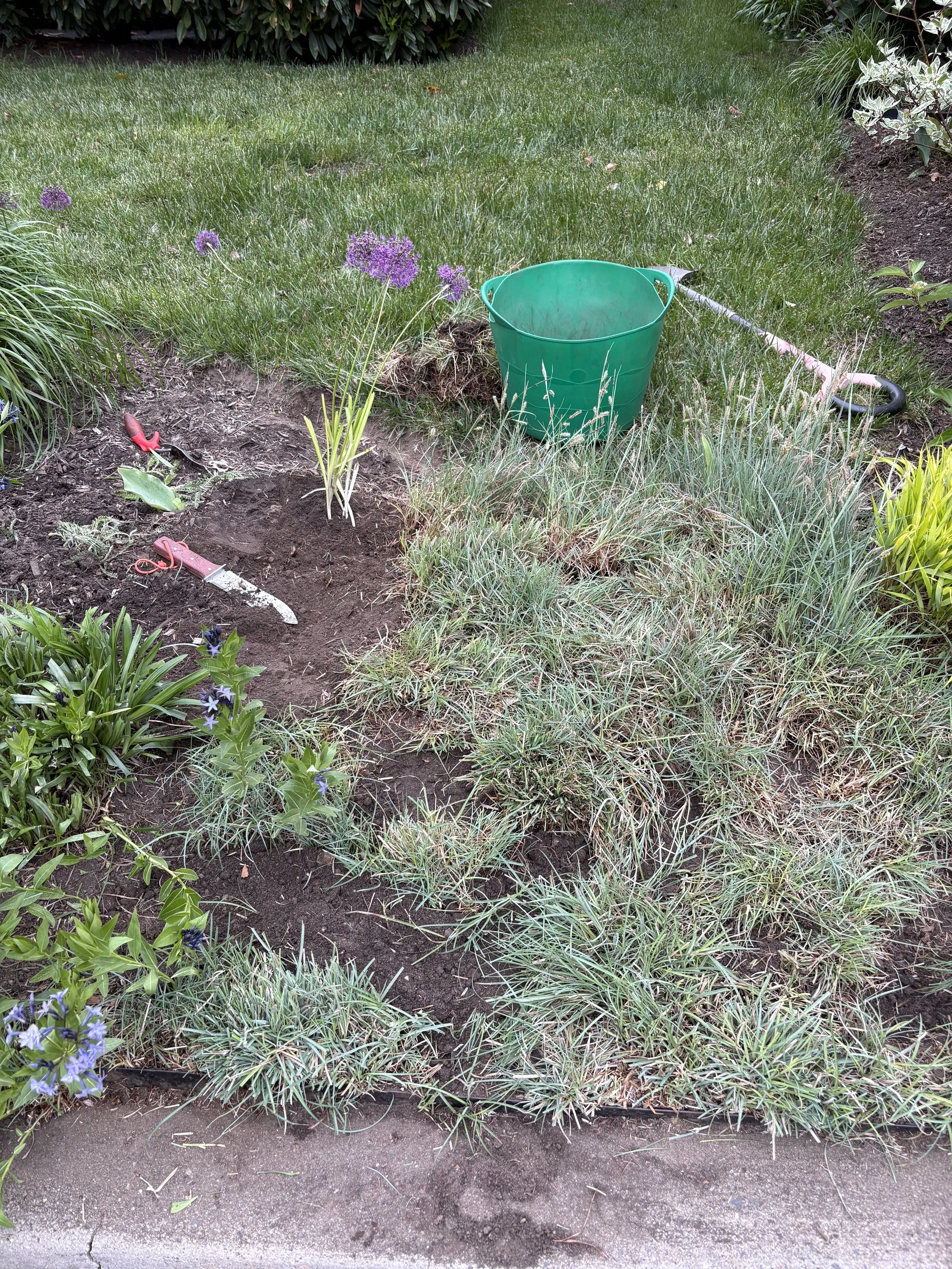
Spring Tasks
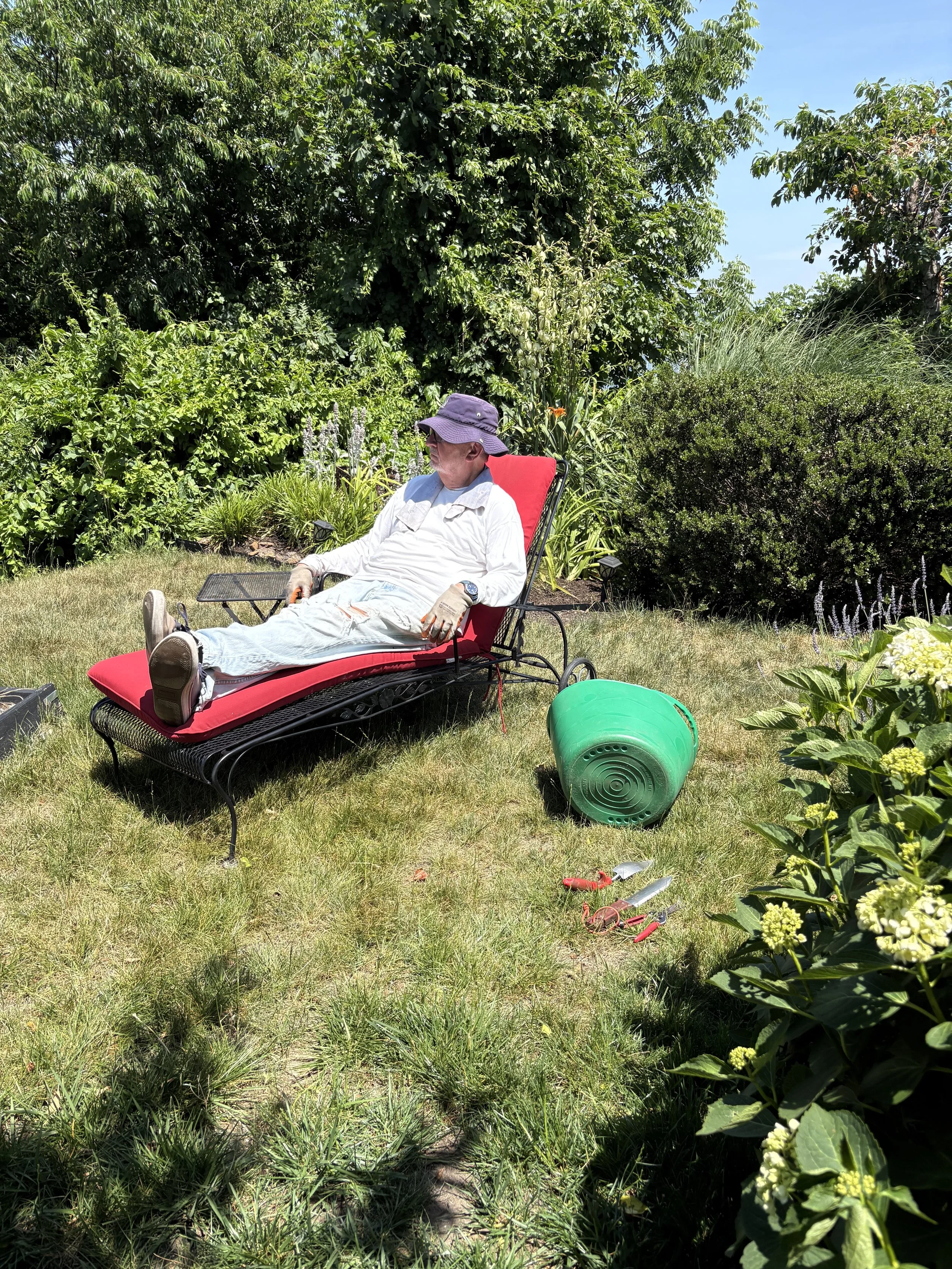
And sometimes, ya’ just need a break :)
It is my opinion that utilizing Native Plants as a sure-fire way to create a sustainable habitat fosters a more sacred connection to a garden. When you host birds, bees, 🐝dragonflies, lightening bugs, grasshoppers, hummingbirds, 🦋🐞and other ‘wildlife” rather than just looking at a garden that is stocked like a social media post or ad, you heart bursts with joy for the immersive experience.
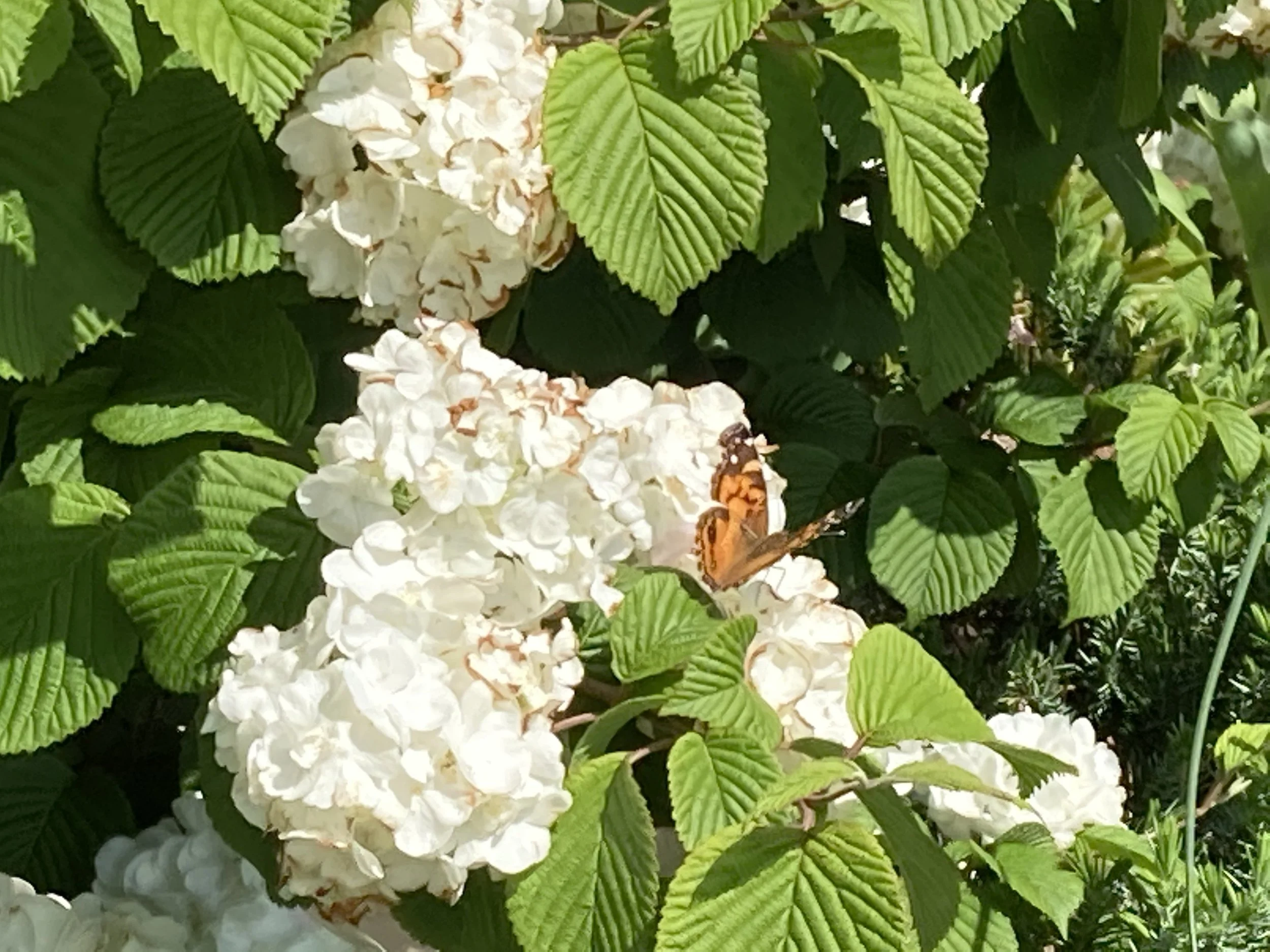
Butterfly on Viburnum
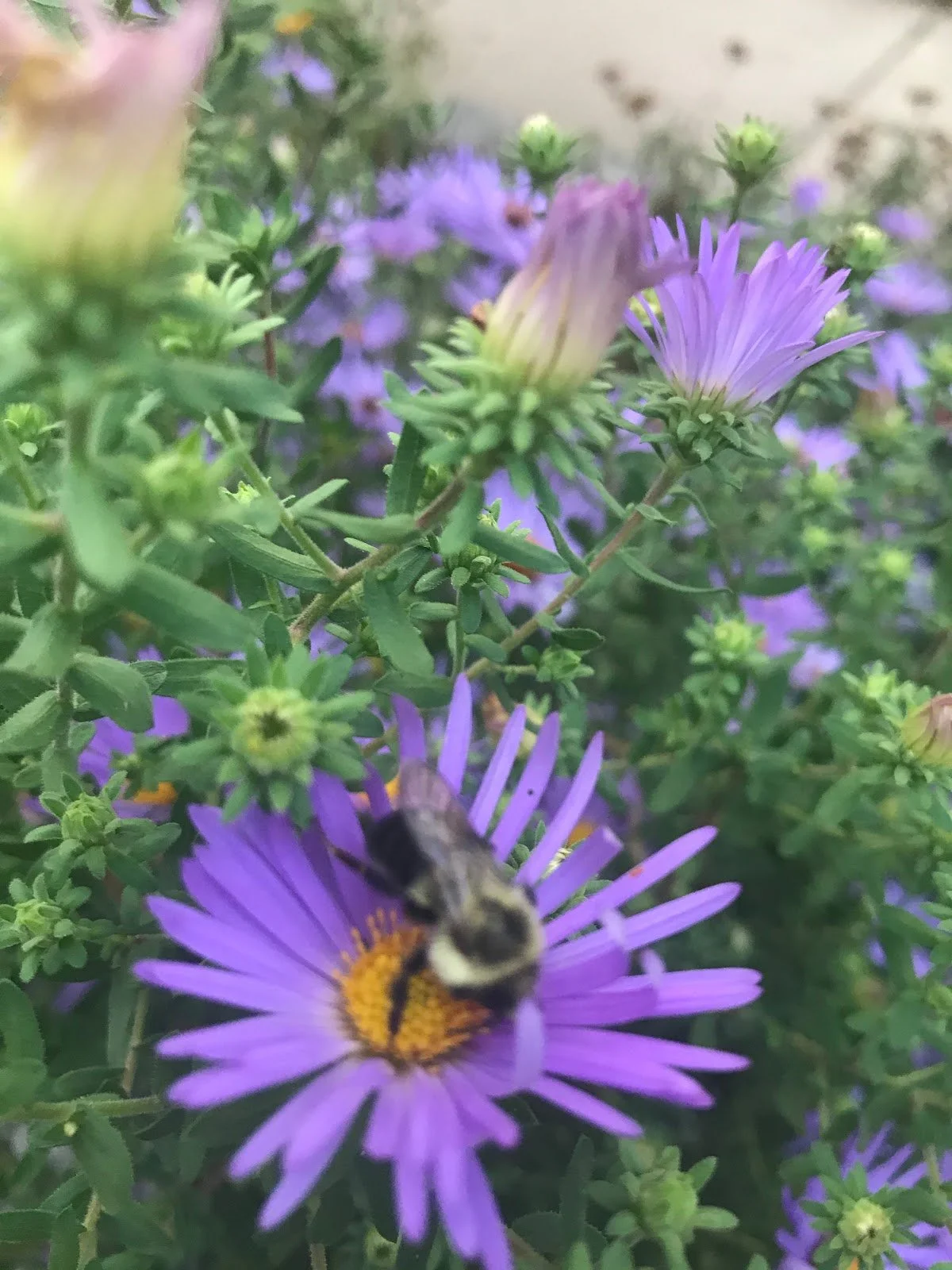
Bee on NY Aster
Granted, preparing a garden tour for such an august group is a lot of work. Actually, I acknowledge that preparing the gardens in our zone is always a lot of work. Almost every plant and hardscape is vying for my attention ~ and the tasks need to be accomplished in a small window of time.
You have to love it, there’s no doubt about that.
But for me, I think of it as nurturing the habitat ~ being a good Plant Parent ~ and that requires the commitment and dedication to create and maintain a sustainable ecology for wildlife.
While we may have inherited the Victorian’s belief that the beauty of flowers and plants are grown for our human enjoyment, not to mention the agricultural practices that are feeding us, we have taken this belief to the extreme I believe, and now overlook such important and science-based values, such as the recognition and respect that plants bloom to attract pollinators for their own survival and reproduction They have adapted and evolved to lure their particular pollinator ~ at precisely the right time so that all benefit.
Take for example the Milkweed plant ~ Asclepias ~ that is the only plant that supports Monarch butterflies on their long journeys. And according to the USDA, “Without a sufficient diversity of pollinator species to accomplish this peculiar and elaborate pollination process, the showy milkweed populations that support the monarch butterfly could continue to decline.” For a fascinating and quick overview of the pollination protocol, please read the entire USDA’s report on the conservation of the Milweeds that host the Monarch larvae.
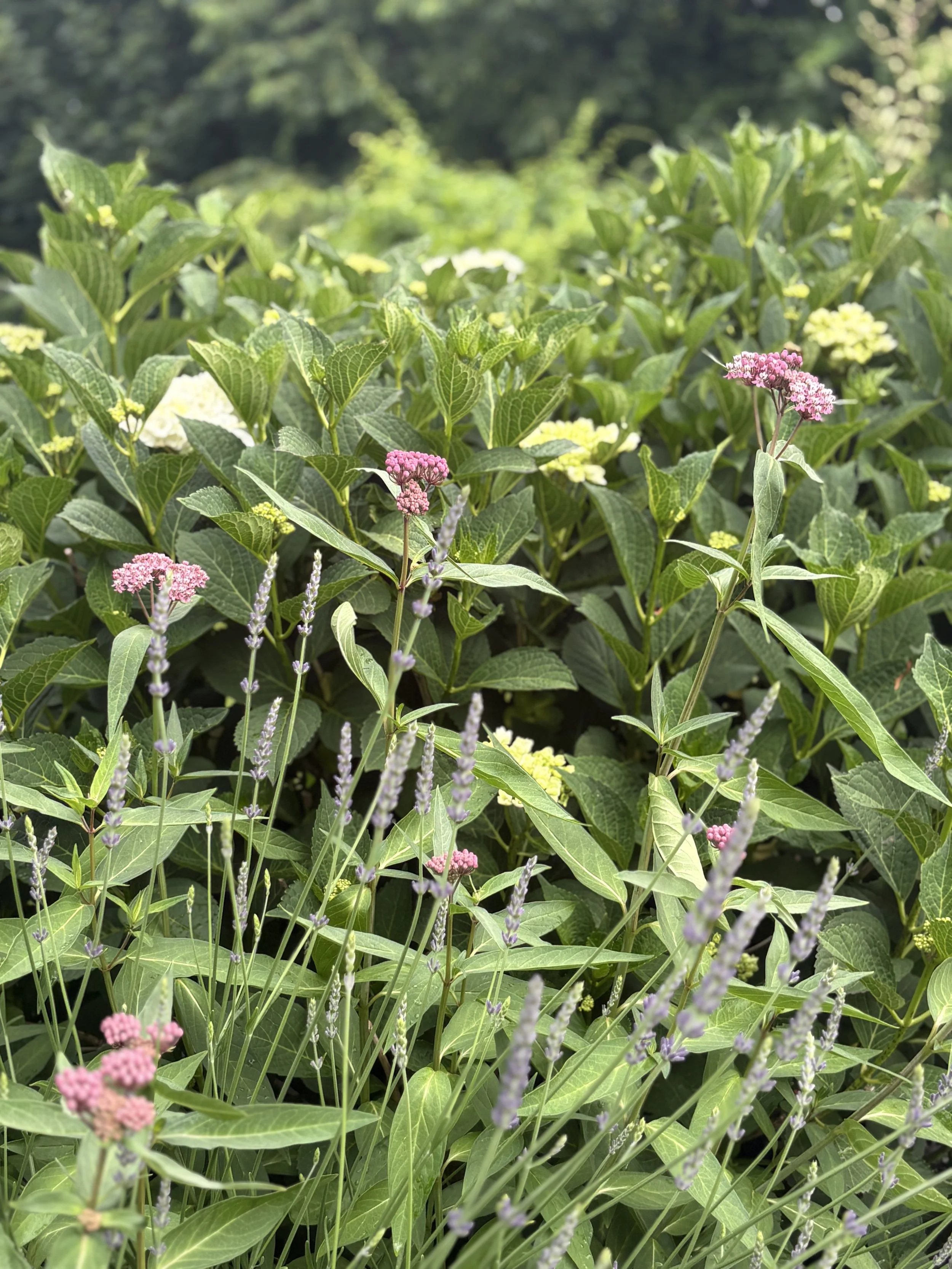
Asclepia Incarnata in my garden
Another almost magical partnering is Monarda or Bee Balm, and its pollinators, including long-tongued bees, butterflies, and hummingbirds, while its hollow stems offer vital hibernation habitats for native bees during the winter. Psst ~ the Monarda also attracts a kind of wasp that eats Stink Bugs.
I am a member of the Xerces Society where you can read more about Monarda ~ the Wild Bergamot attracting a corps of specialist pollinators including hummingbirds and a cute little Sweat Bee. And I hope you’ll consider joining and supporting this important organization too.
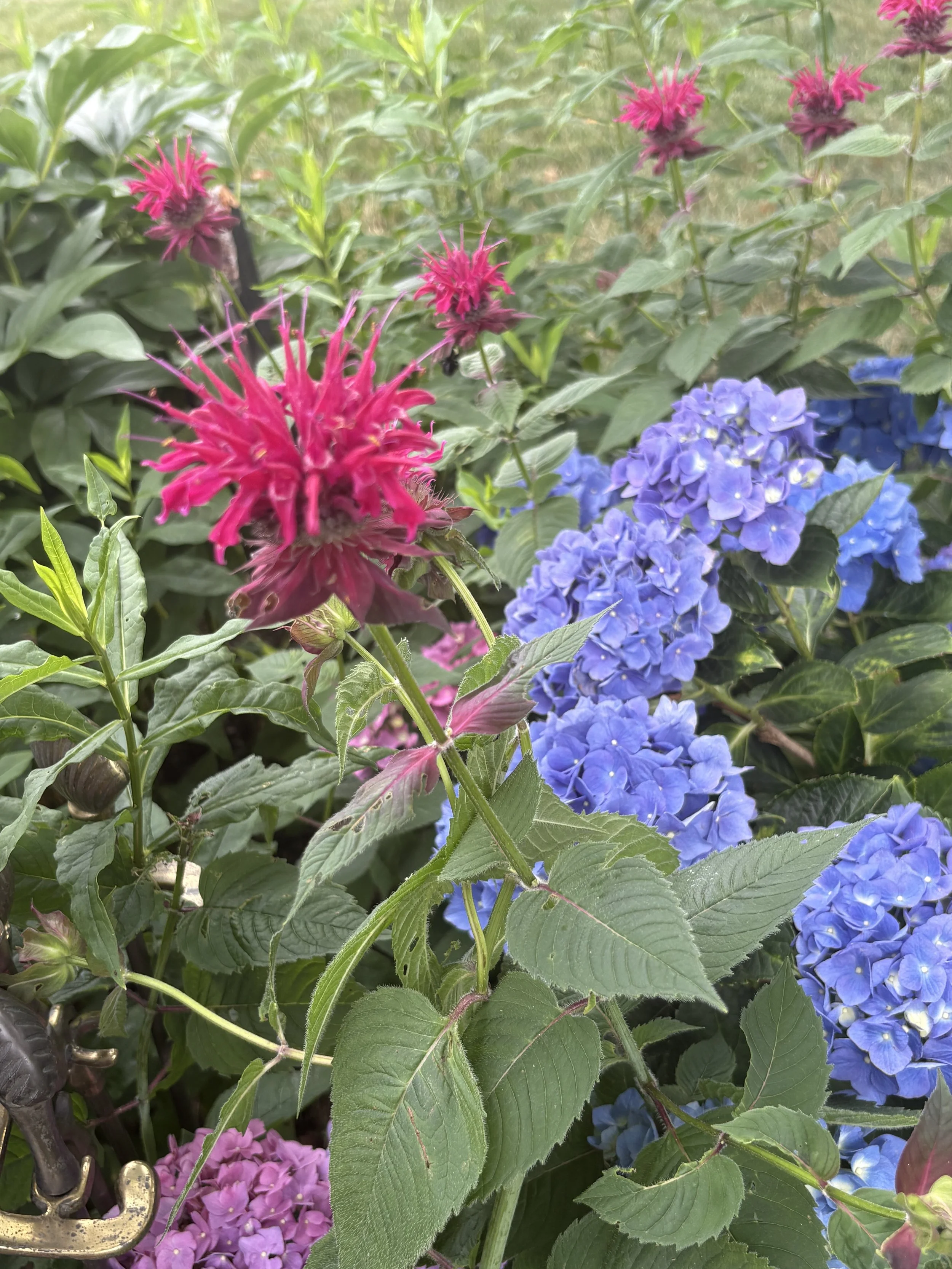
Monarda in my Red, White & Blue Garden
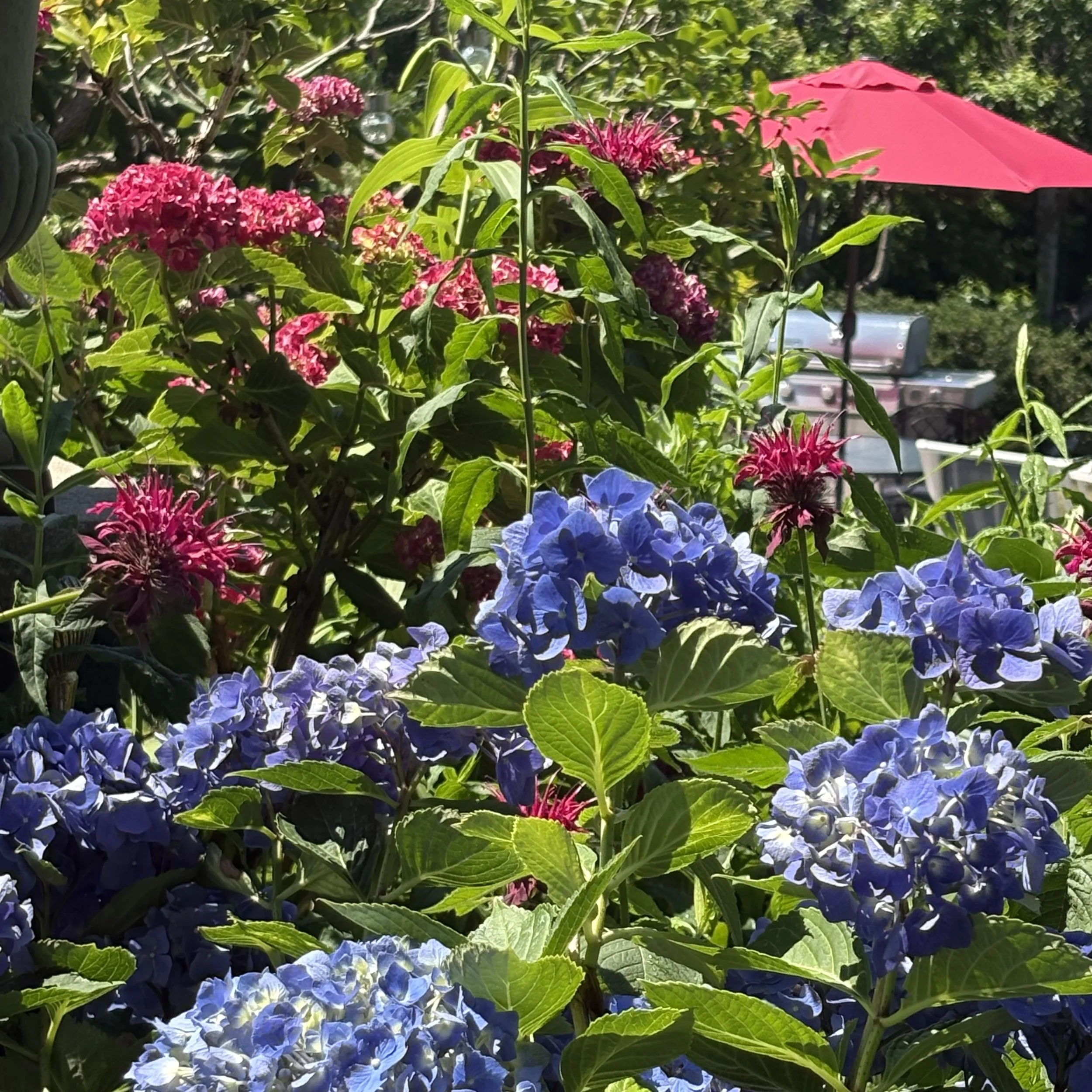
Monarda~Bee Balm~is a glamorous companion plant
If a plant’s bloom times are altered and accelerated by disruptions in the seasonal protocols, let’s say, or the aggressive weather of rain and wind and fires, then the match-up of the precise pollination for the plant and the food for the pollinator, is gone. Poof. And just like that, there is a tear in the system that Mother Nature/God/Pacha Mama ~ you name your spiritual divinity ~ has so generously provided to us.
You’ve all probably seen the bumper sticker: No Plants; No Food. And I'll just cringe a wee bit to add that without plants, we have no oxygen. Plants give us the air we breathe…. Ahhh.
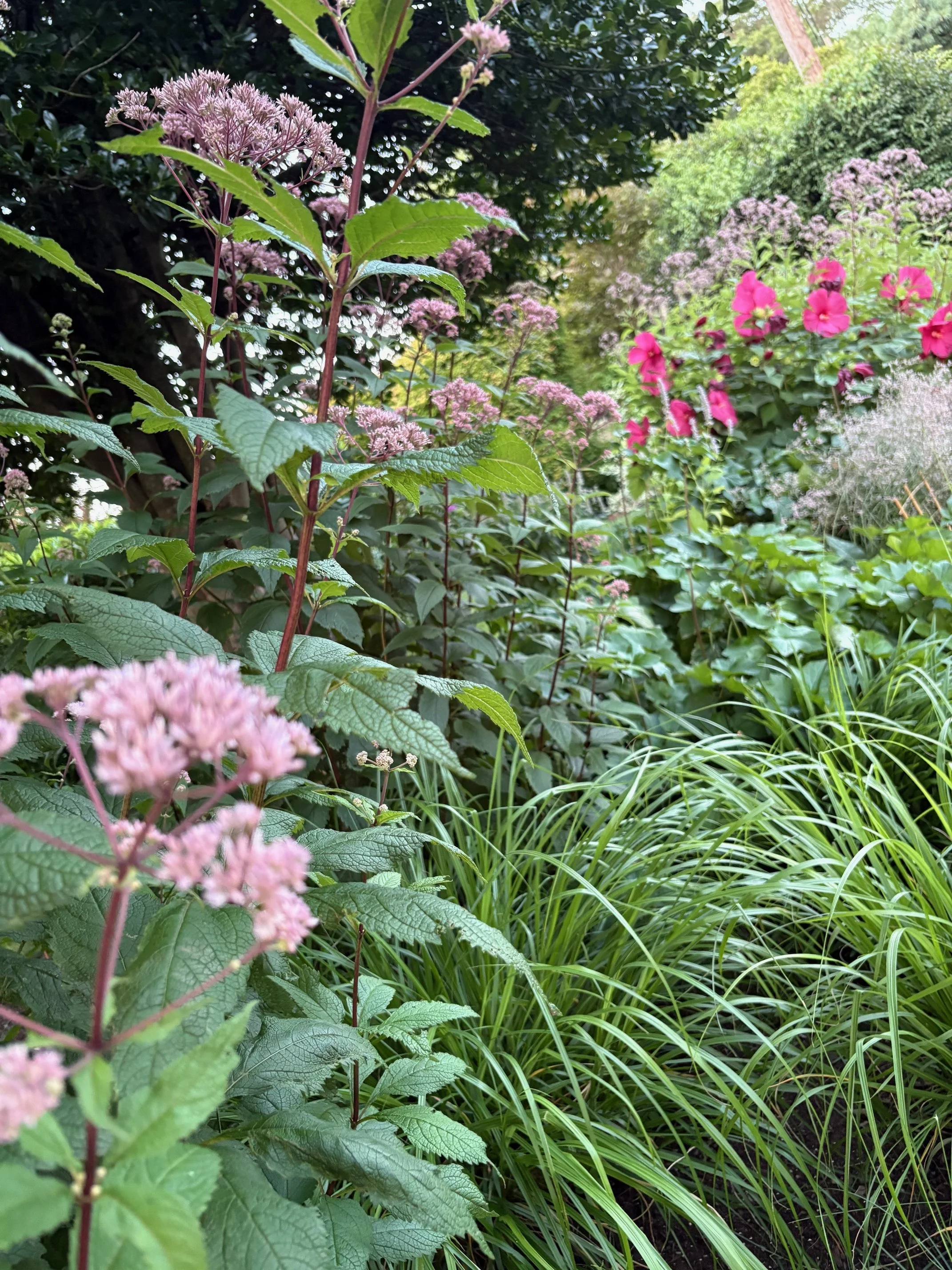
Native Plants & Cosmo Plants nurturing pollinators & giving us H2O!
I salute those who really care about not only the beauty and glamour of the garden, but also take action to safeguard the layered life that exists there. We garden for the life we cannot always see.
We aim to give back as much as we take from our garden world. We can create Pollinator Pitstops and steward an ecological environment ~ in our yards, in containers, in our schoolyards and municipal tracts.
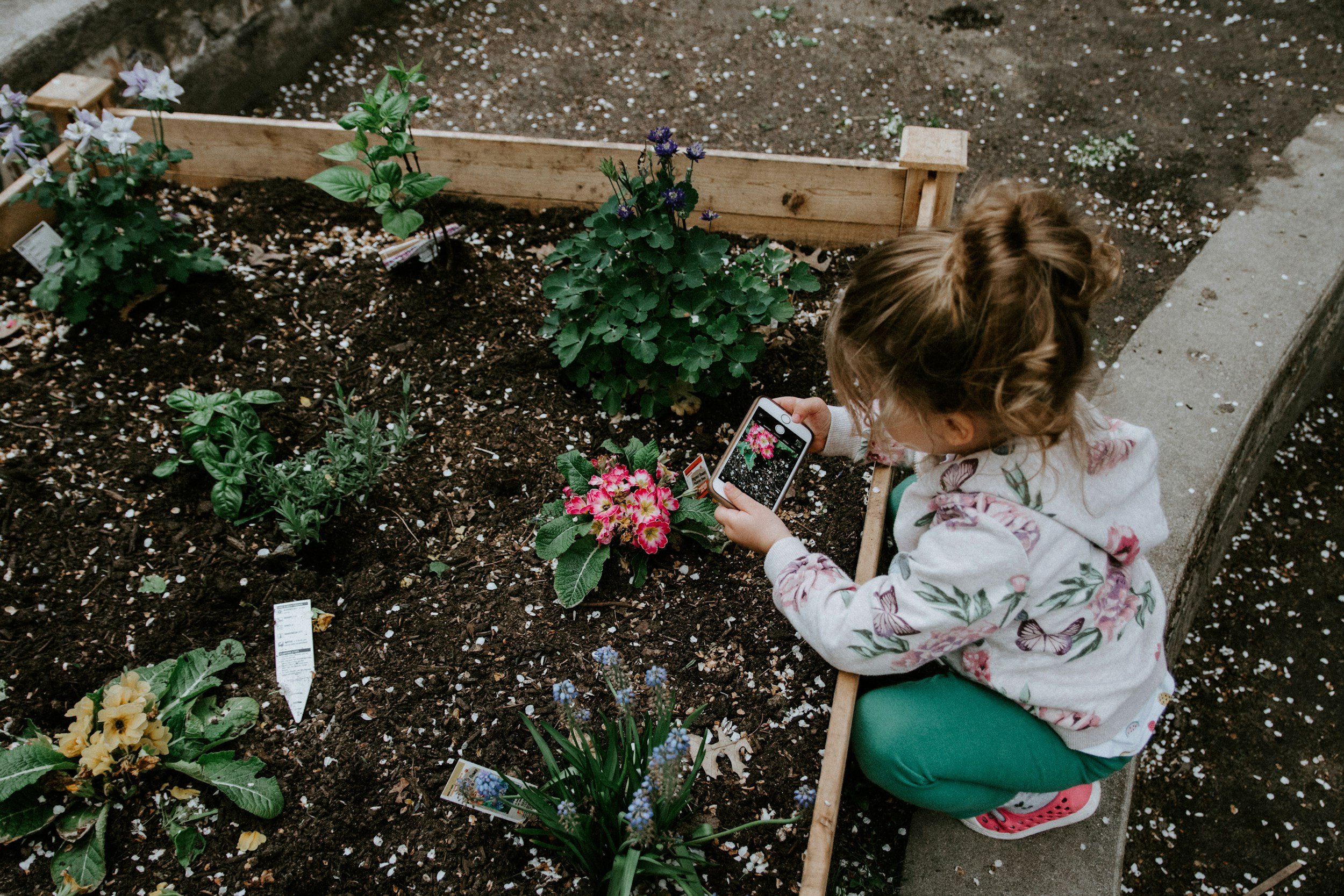
My goal was to hold tight to that challenge of creating gardens that can give us an extraordinary aesthetic ~ to tell our garden story whether it’s a classic, or a Japanese or a French- inspired, one we saw in a magazine or the cinema, a small or big garden ~ whether your garden is for looking at or living in, blowsy or sculpted ~ along with a commitment to nurture wildlife and the future.
I think it’s safe to say that we did it 🙂
Whew!
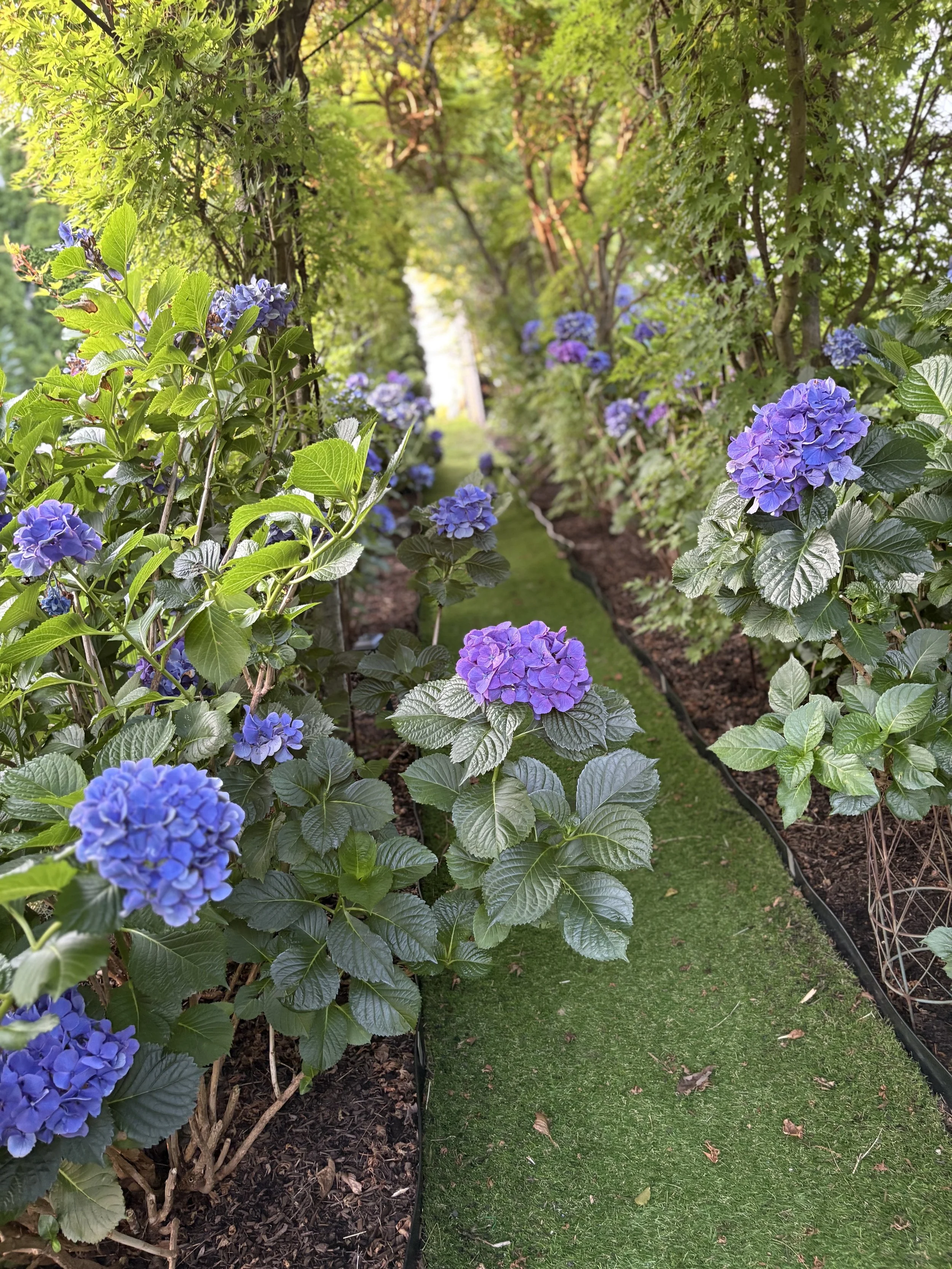
Our Garden Arbor
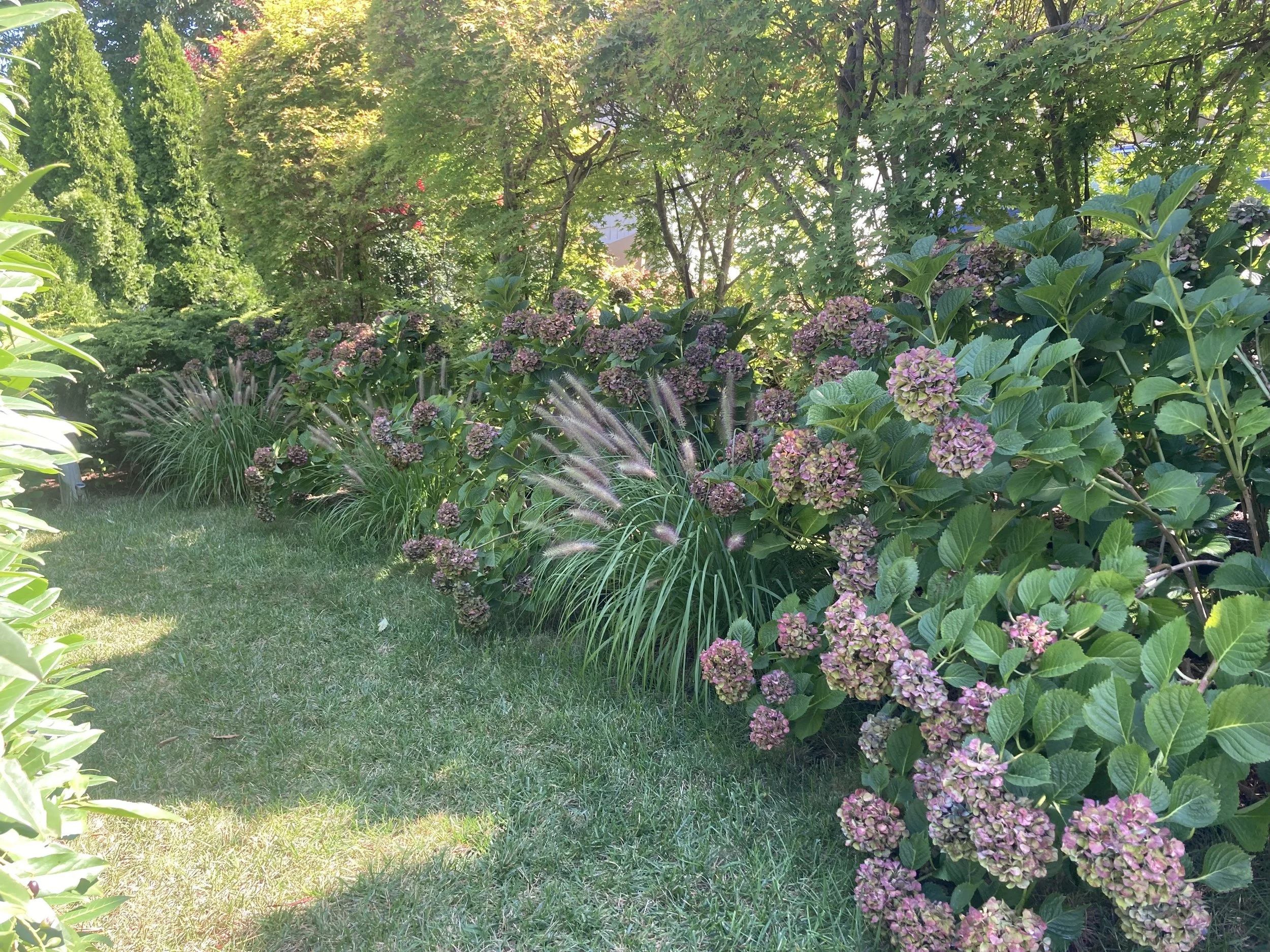
Garden Arbor border
G-Day ~ Garden Day
The weather report on the day of the Garden tour (Thursday) was for rain. Lots of rain. I felt compelled to call Marilyn to ask if she and Kim had decided to move the tour event to Saturday. (Ironically, I was working in our Water Garden ^:^). She said she’d get back to me. She also asked that while they’d capped the participants at 40, could we admit or allow a few extra guest members who’d just asked to join. “Sure,” I replied. The more the merrier for a garden tour with folks who know and love gardens and plants.
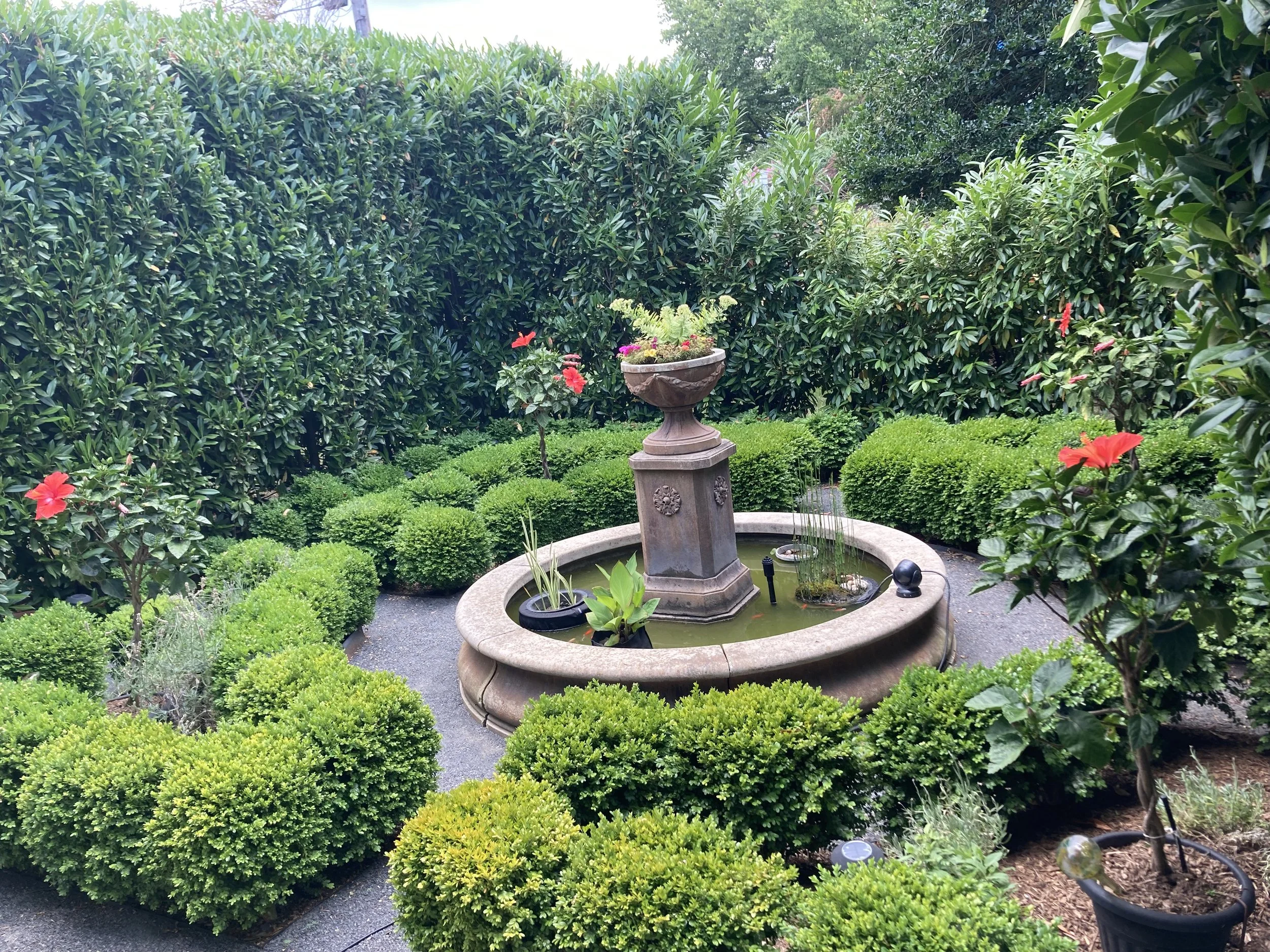
Water Garden
As the day progressed, we could sense the sun and no rain were on-point. I figured it was one more New York Knicks miracle as this was the same day as the Ticker Tape parade through the canyons of lower Manhattan and there was simply no way that Mother Nature was gonna’ spoil the celebration! We benefited from her magnanimity. Albeit she neglected to keep the high winds in check. They were pretty fierce. Nevertheless, it was a glorious setting for the garden tour.
The tables were put out with literature from the NJ Native Plant Society and their sign- in/attendance list.
I had prepared two alcoholic drinks and two NA ~ made with ingredients, by and large, from the gardens.
At the Welcome Table, I placed the Rosé Fruit and Herb punch bowl drink.
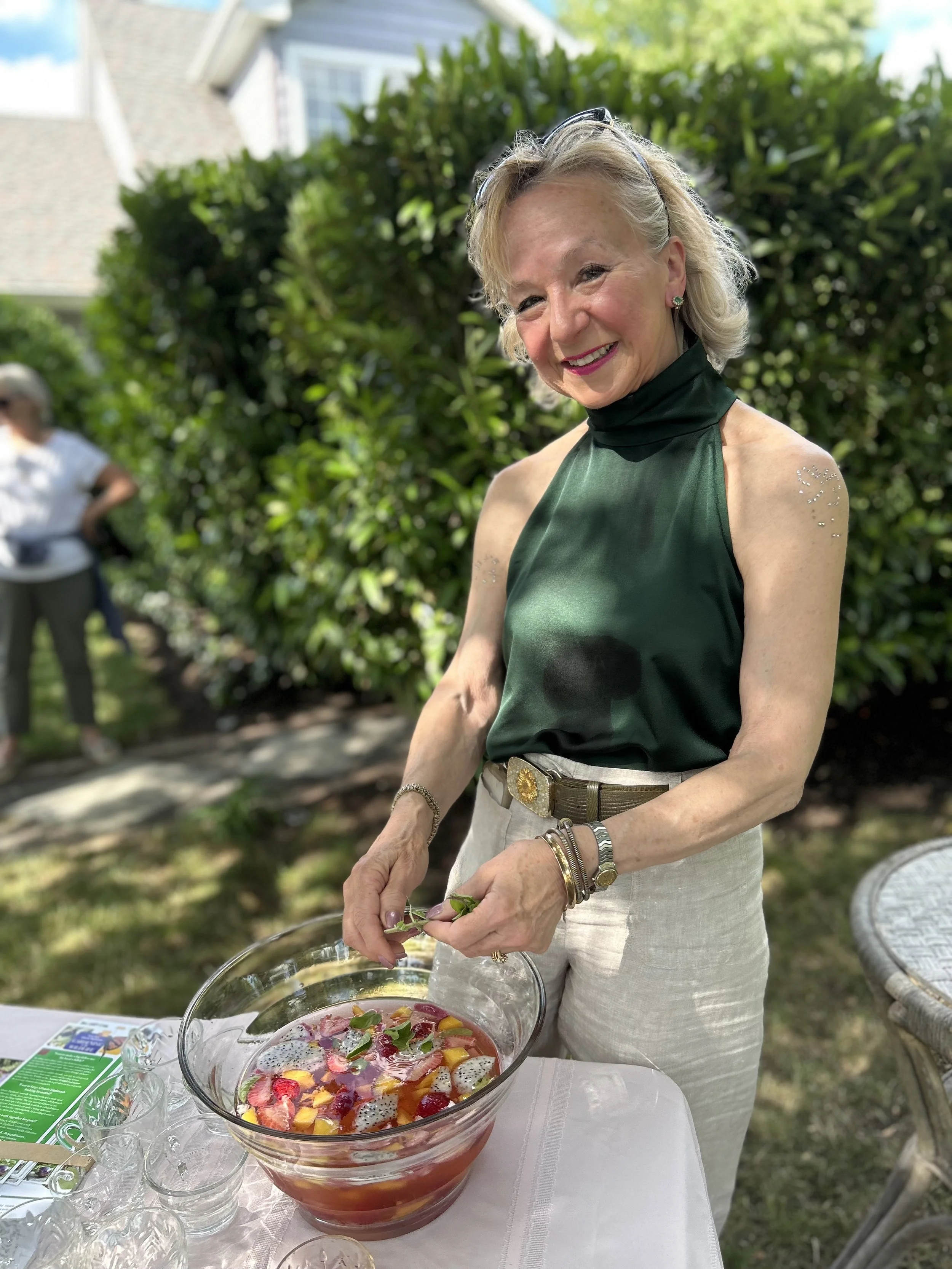
Me adding garden mint to the Welcome Punch
I had wanted to include my nature-inspired premiere fragrance, Petrichor, but didn’t have the time to set out. Same for the 4-Season video I made for the last garden tour that shows how the garden rooms change and morph their beauty, glorifying each season.
I did provide the hand-drawn garden map and the plant lists, though 🙂
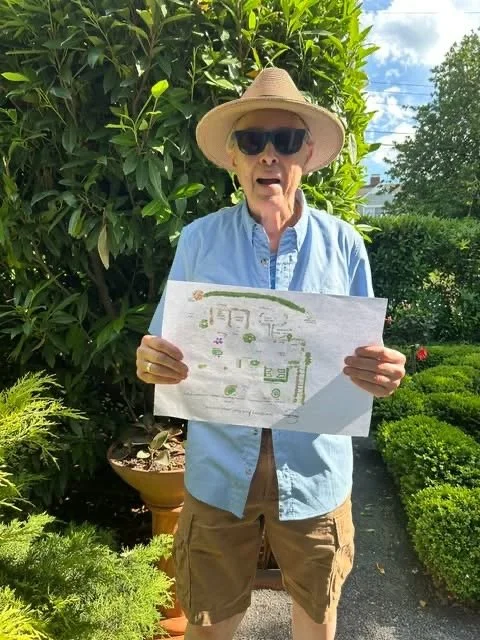
Love you, Victor! Here with the garden map. He was tickled by the Blue Fescue that he said looked like sea urchin. He’s right!
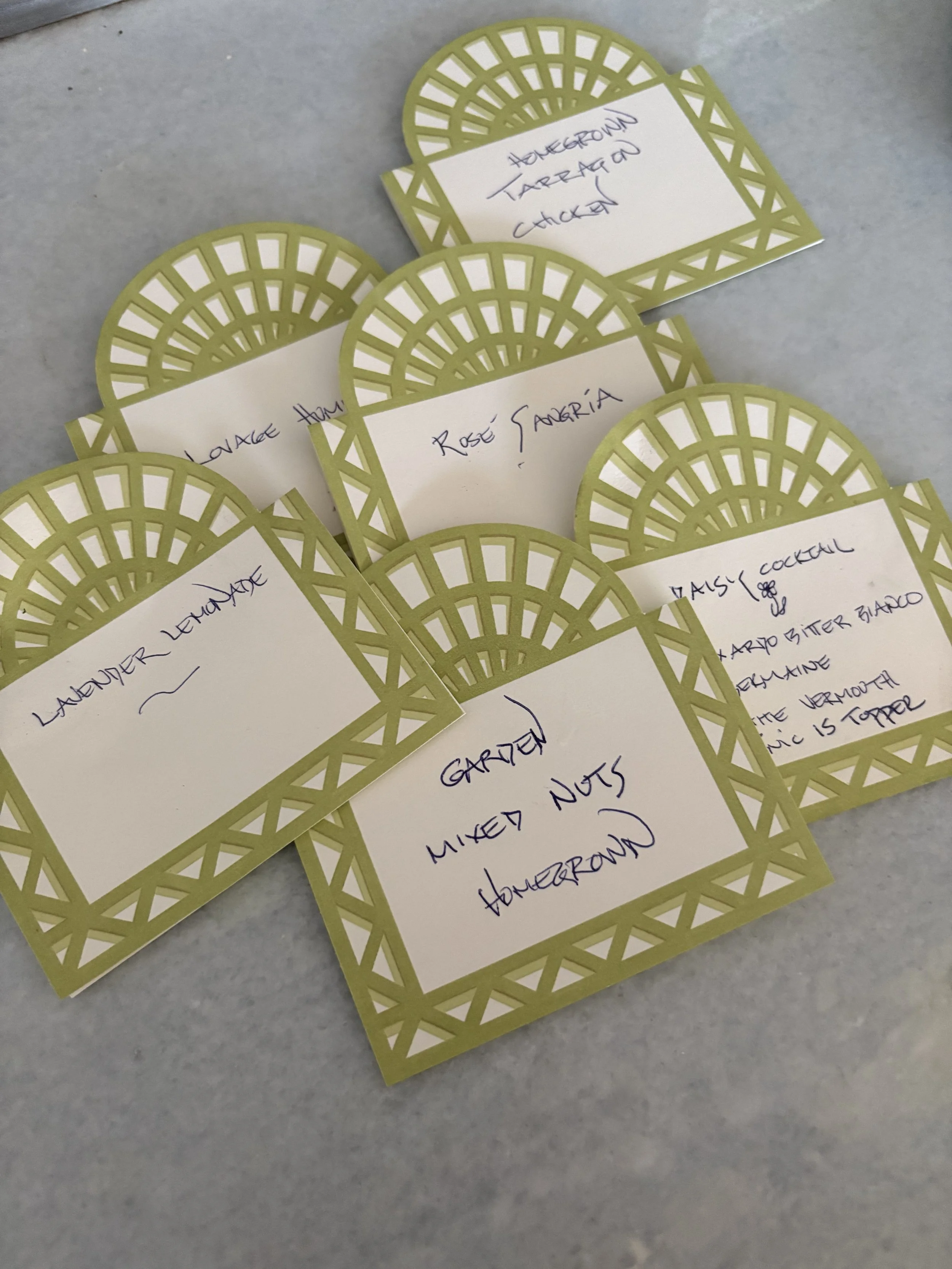
The other drinks were placed throughout the garden rooms ~ one on the terrace, one on the porch and one on the potting table cum drink station! Lemonade with Simple Syrup made with our Lavender; my Daisy Cocktail with garden Feverfew garnish and Agastache Iced Tea with fresh garden mint.
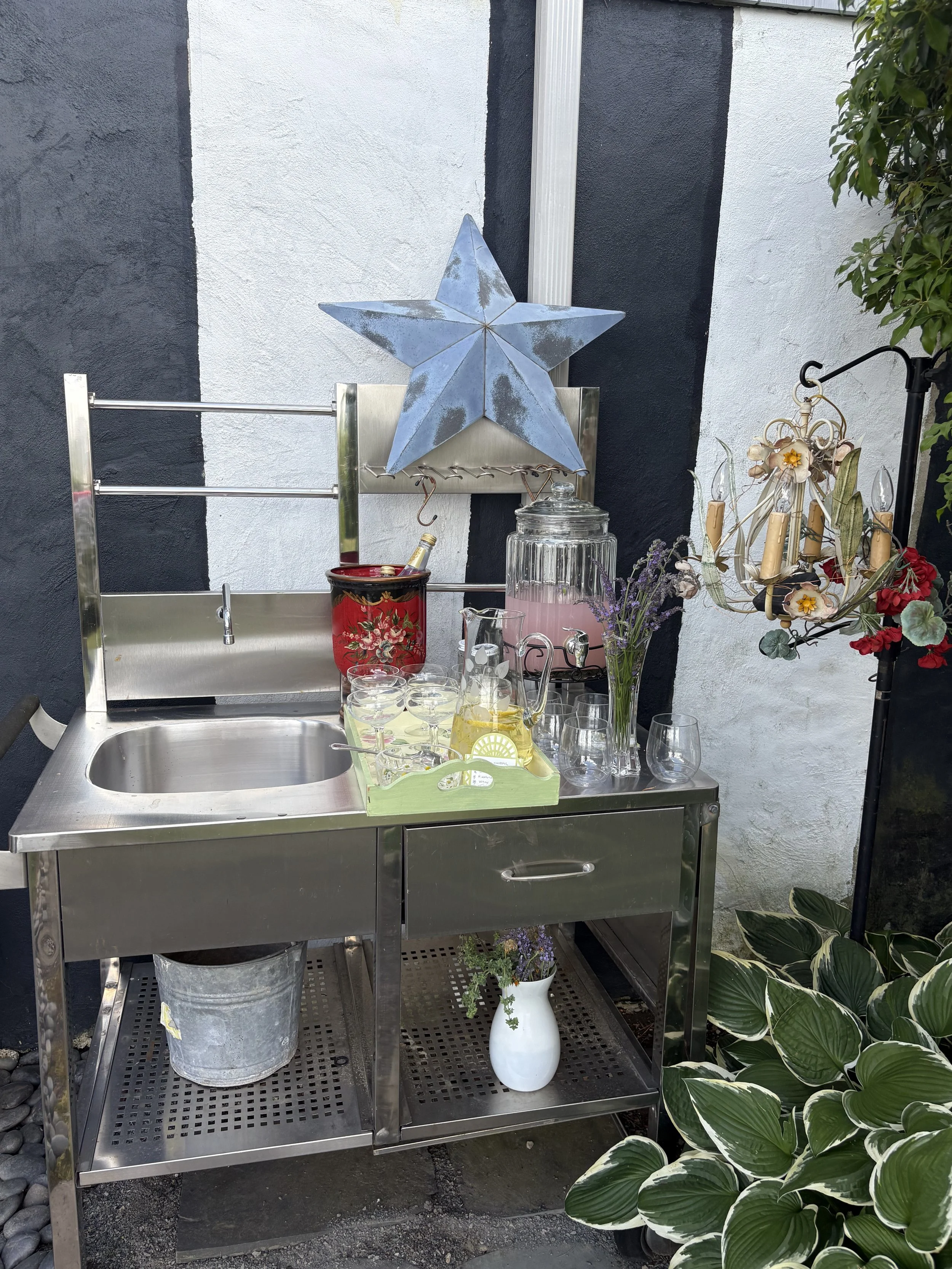
Garden-to-Glass Hostess Drinks
While attendees walked the garden rooms with their drink, we eventually all gathered on the Grillscape Garden, and I welcomed our guests, then telling about the evolution of our yard from a typical (read “boring”) space that was mainly lawn, to one that boasts a number of garden rooms, designed with an aesthetic that relies on genius loci, the pursuit of a Four-Season Garden, and the desire to host pollinators and their native plant partners. I also talked about our composting and rain barrel use, as well as designing a shell garden in place of lawn.
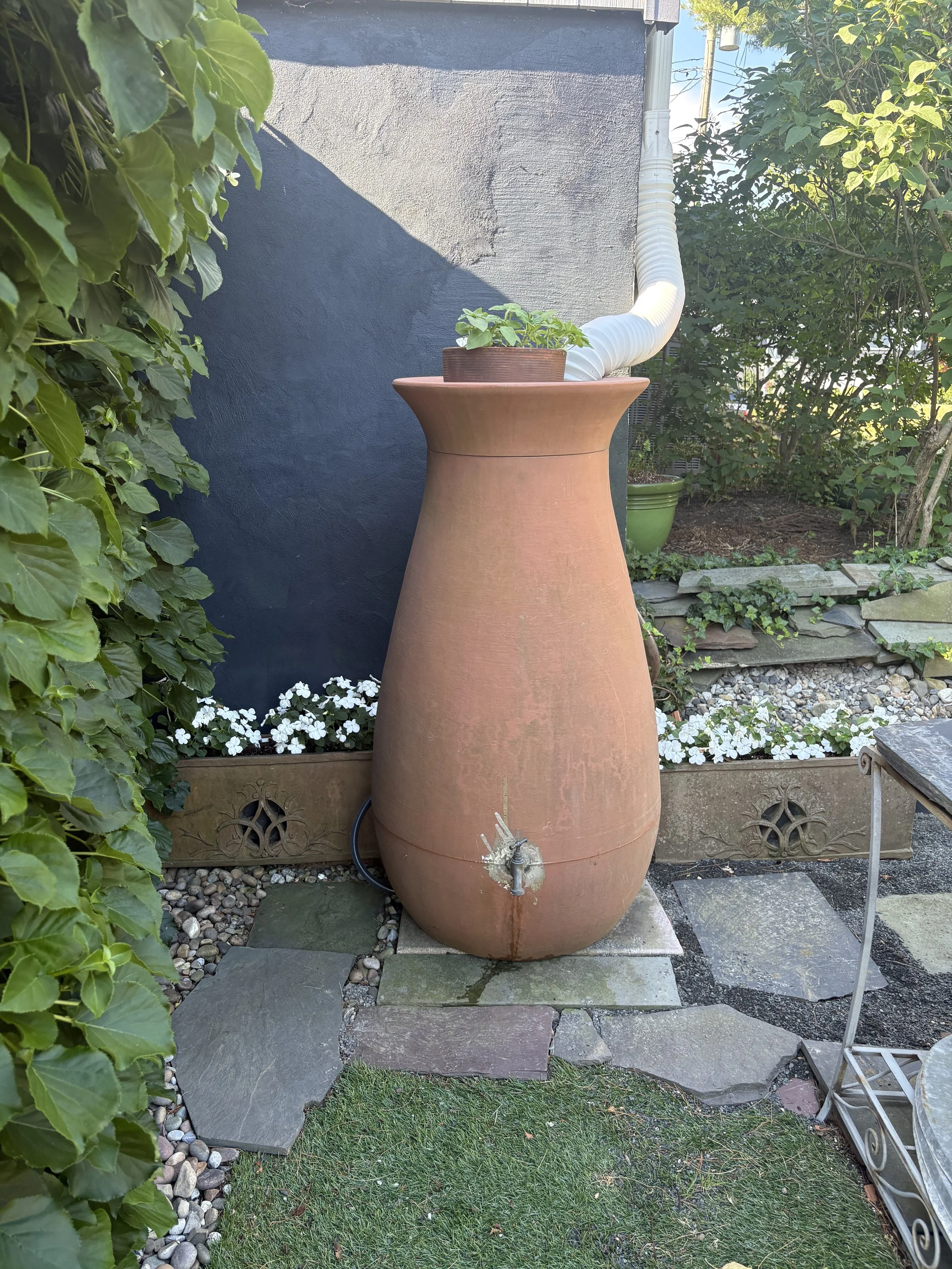
Garden Glamour Rainbarrel
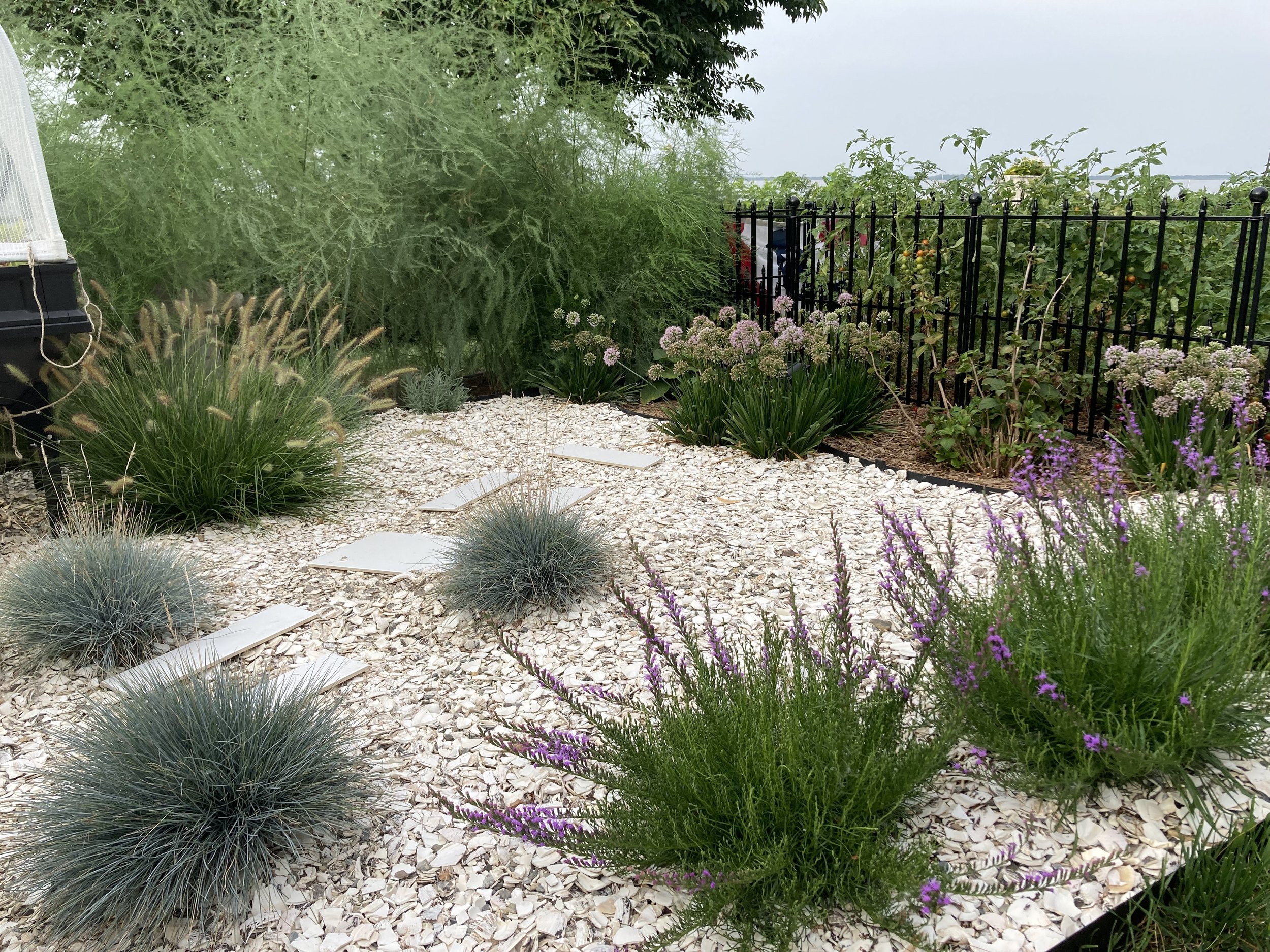
Shell Garden
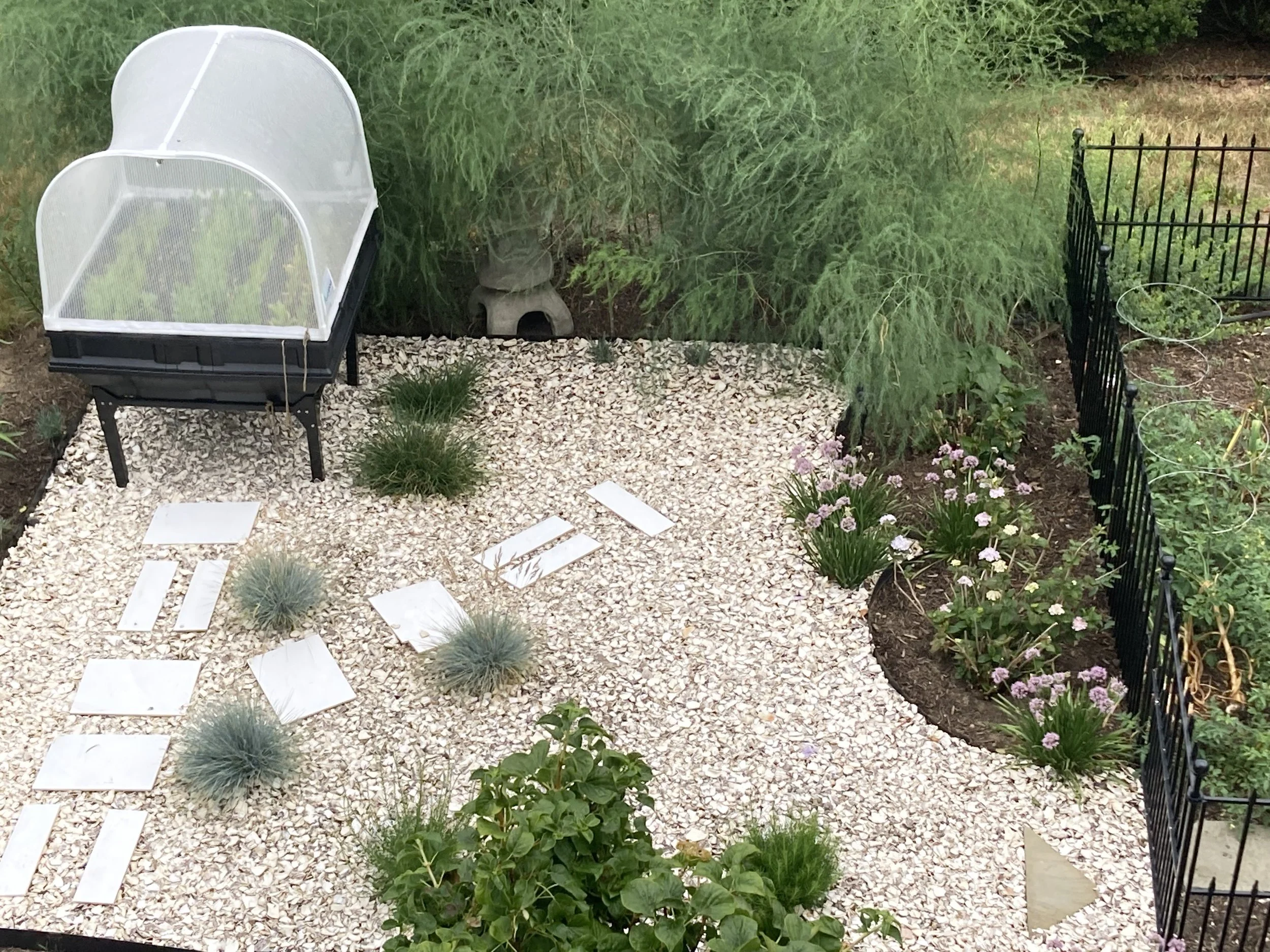
Shell Garden alternative to lawn
I also stressed the importance of whimsy and art and creating mystery in the garden. I think that native plant gardens suffer from a perception that they are messy, so good landscape design and intention is ever more important.
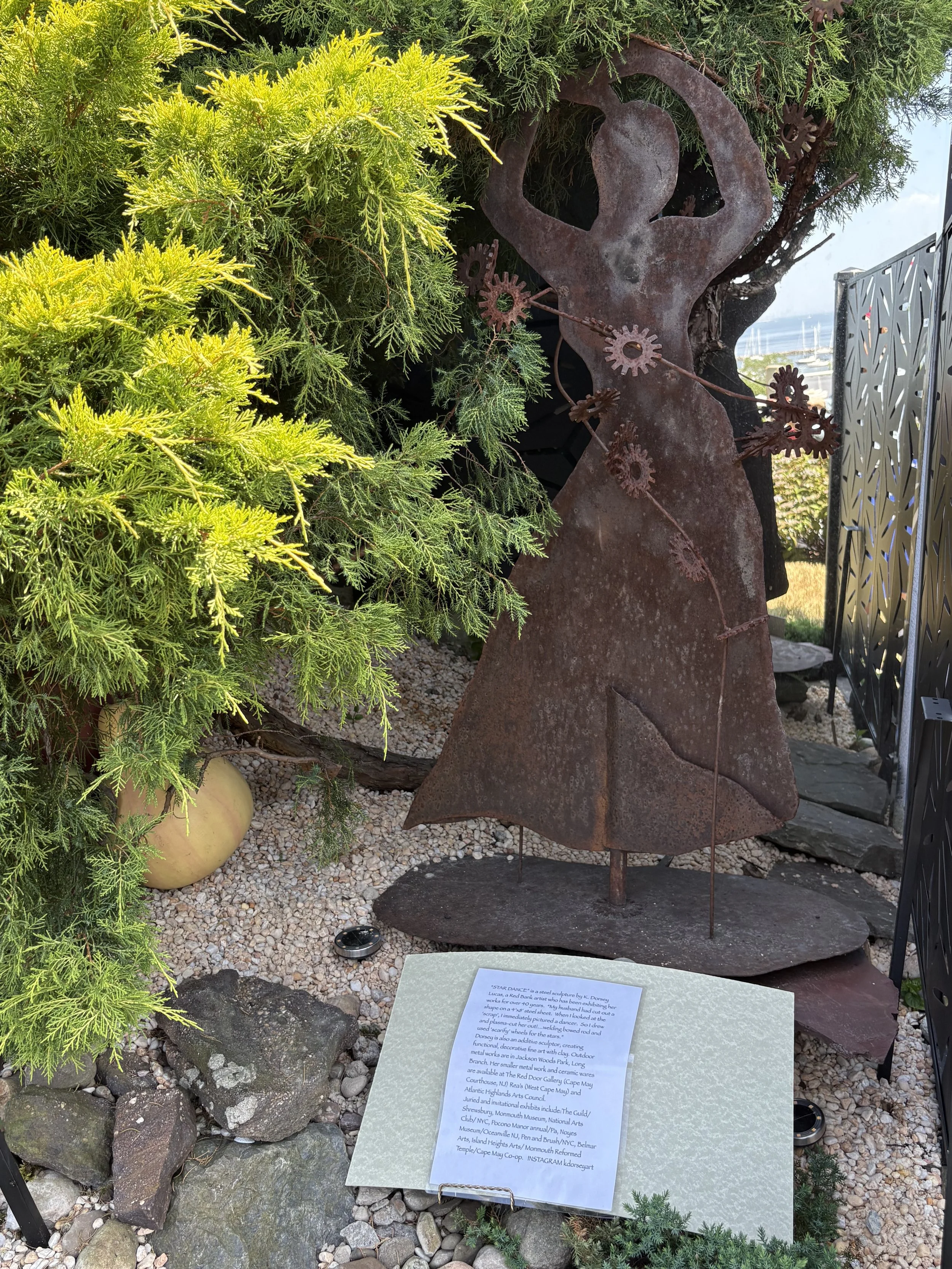
Star Dancer sculpture by Dorsey Lucas, an AHARTS artist. The organic posture next to outdoor shower is divine. The welded scarify wheels of the stars look like flowers! I often use mirrors in my garden design & here it amplifies Star’s sinuous shape, along with bringing the skyline in…
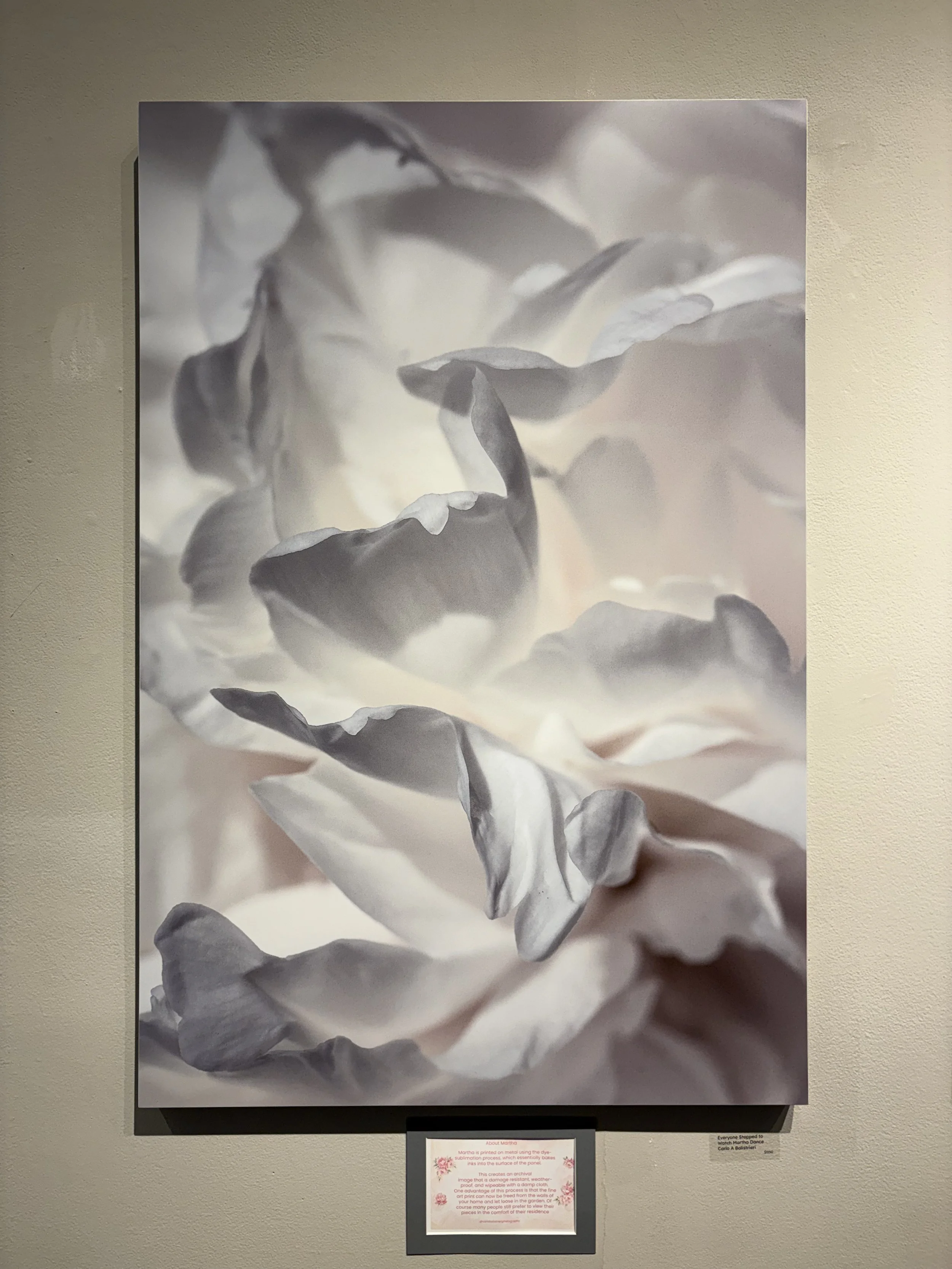
Martha Peony photo now on our porch wall by Carlo Balistrieri Photography is printed using dye-sublimation process creating archival image that is weather proof & damage resistent. So glamorous.
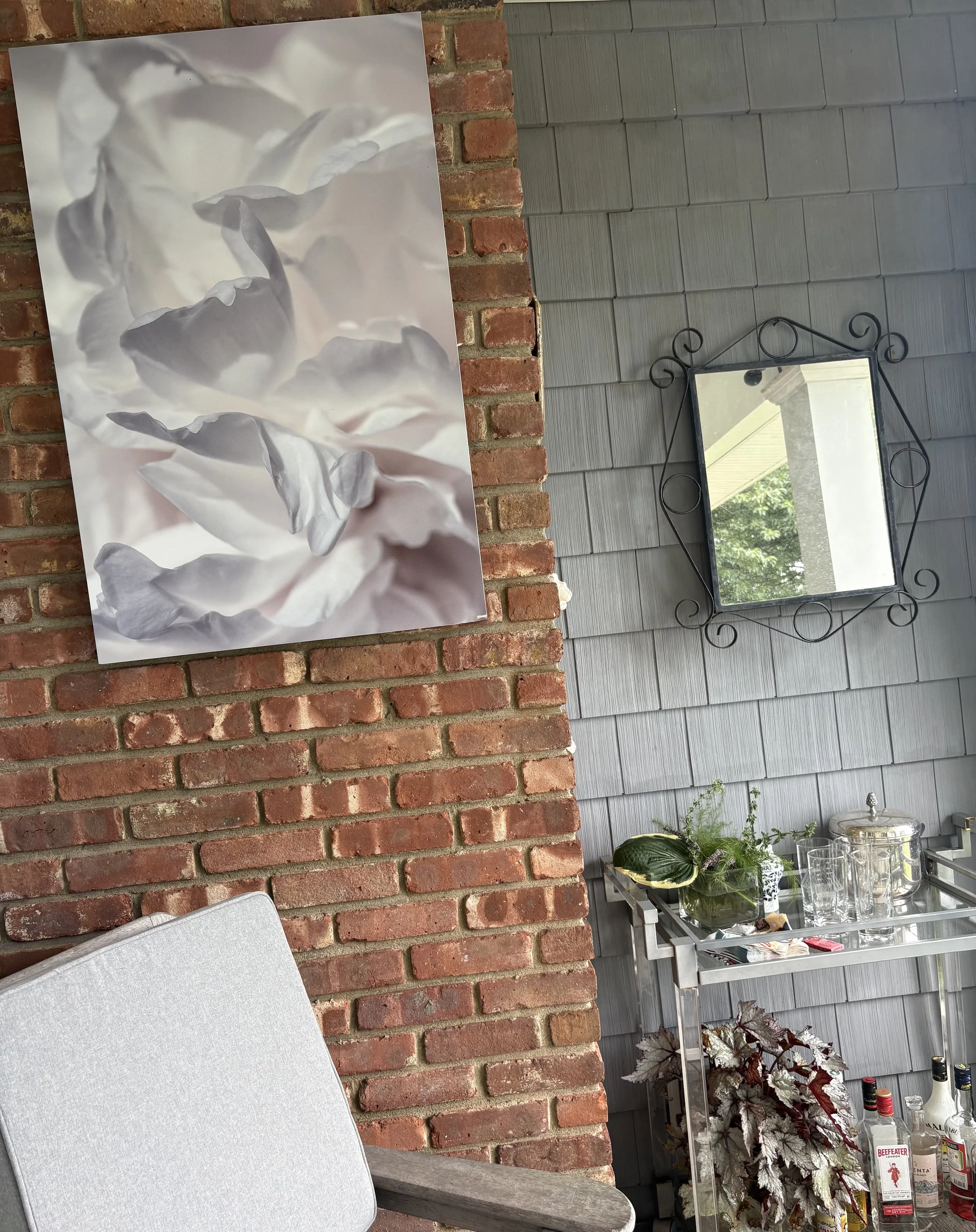
The Martha Dancing art is poised on our porch perch. Love the sinuous, sensuos petals & the pas de deux she does with our exterior design
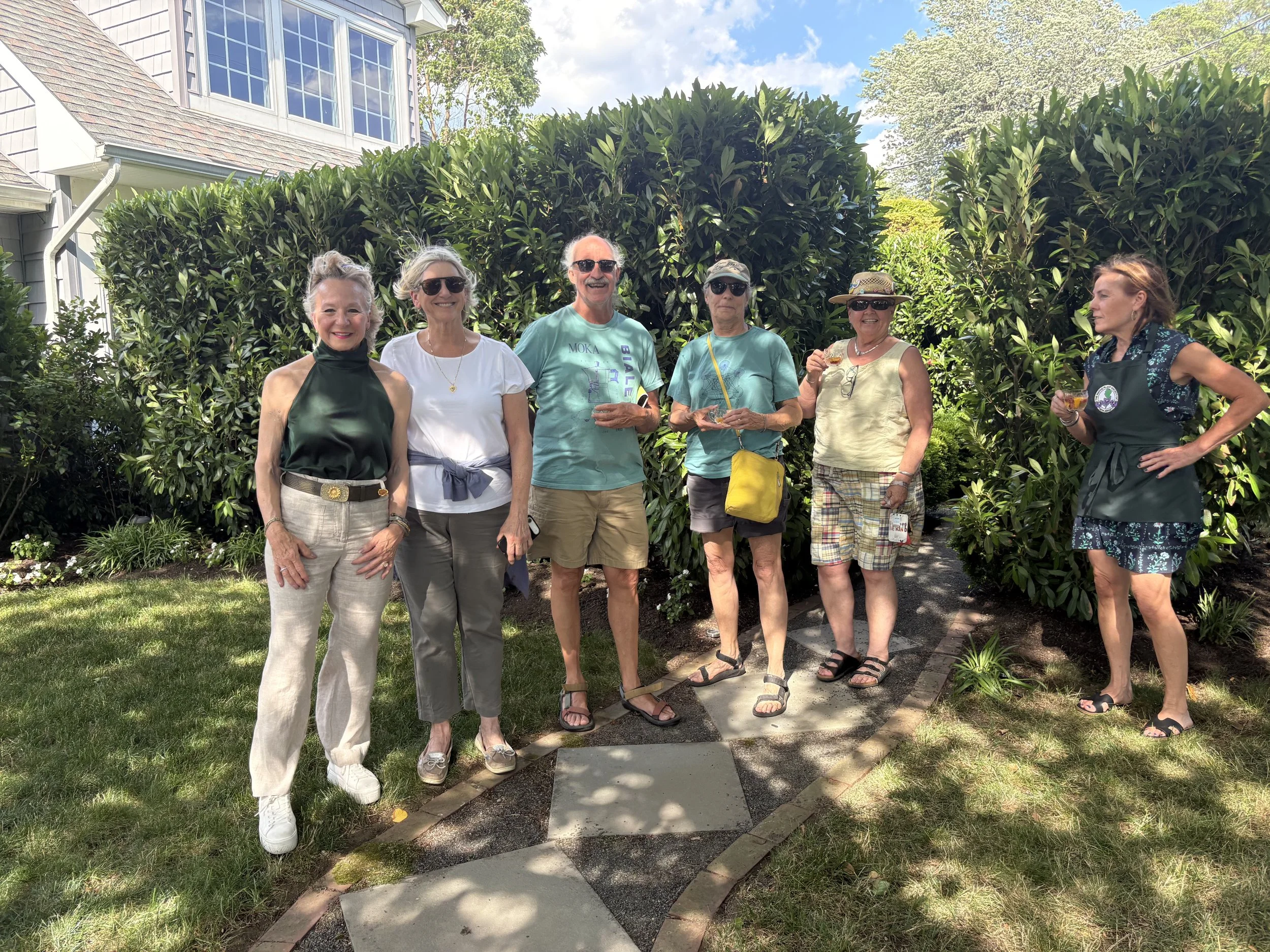
There were lots of great questions and input from our guests. Even the high winds could not suppress the joy of horticulture. 🌳. Then it was time for the guided tour ~ More native garden bliss.
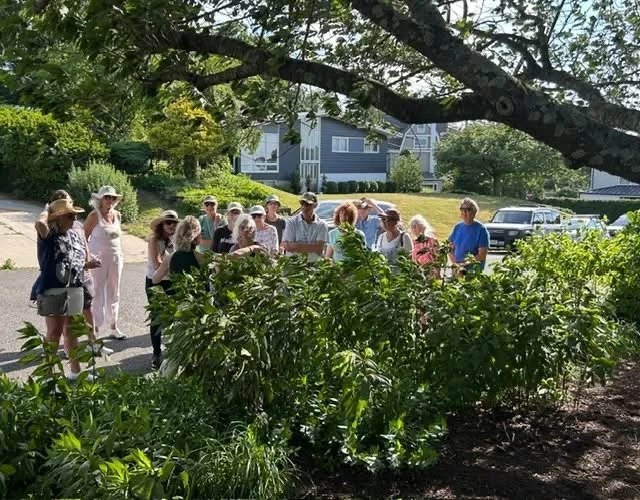
Guided tour with NJNPS at the front border beds
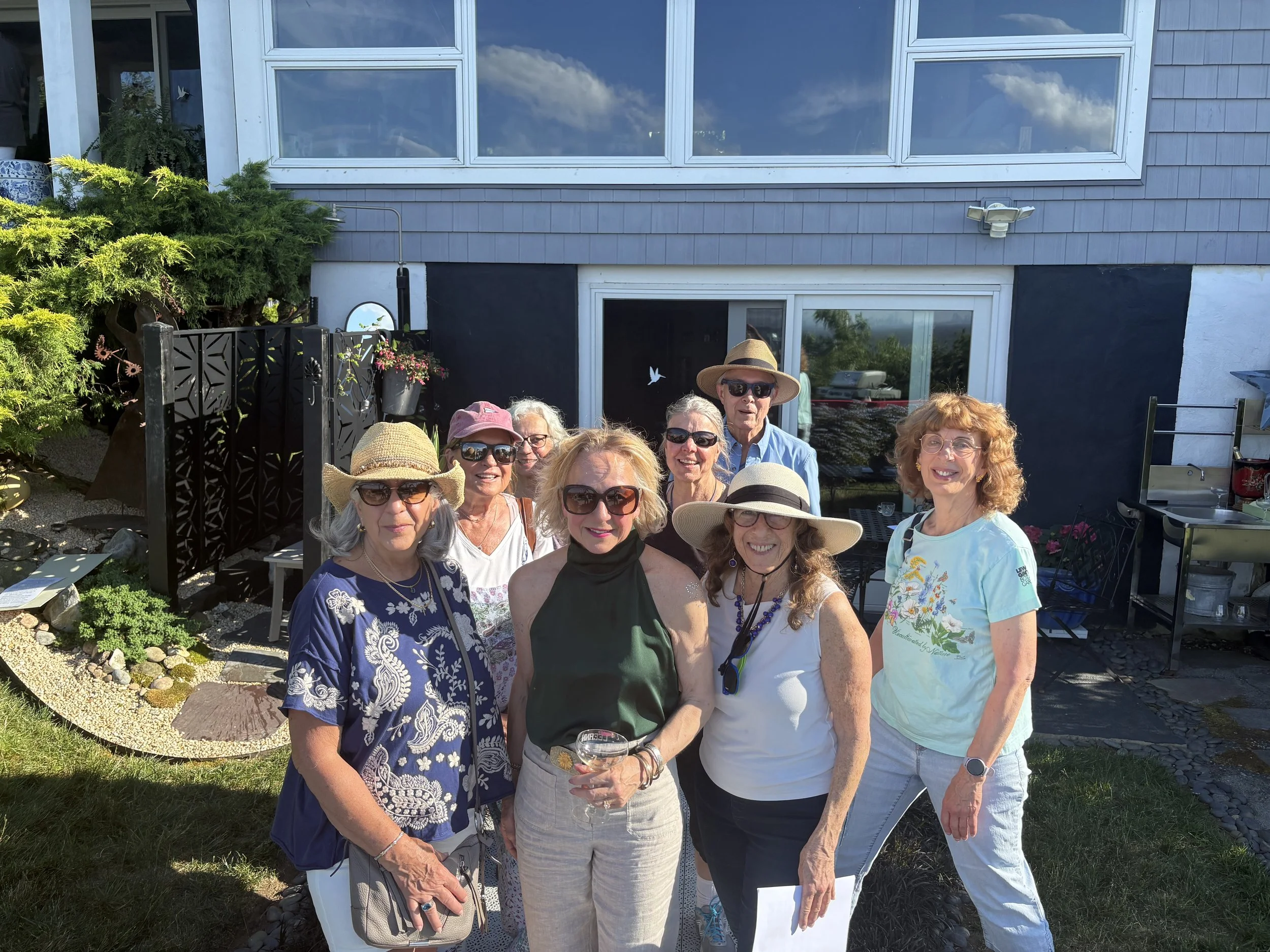
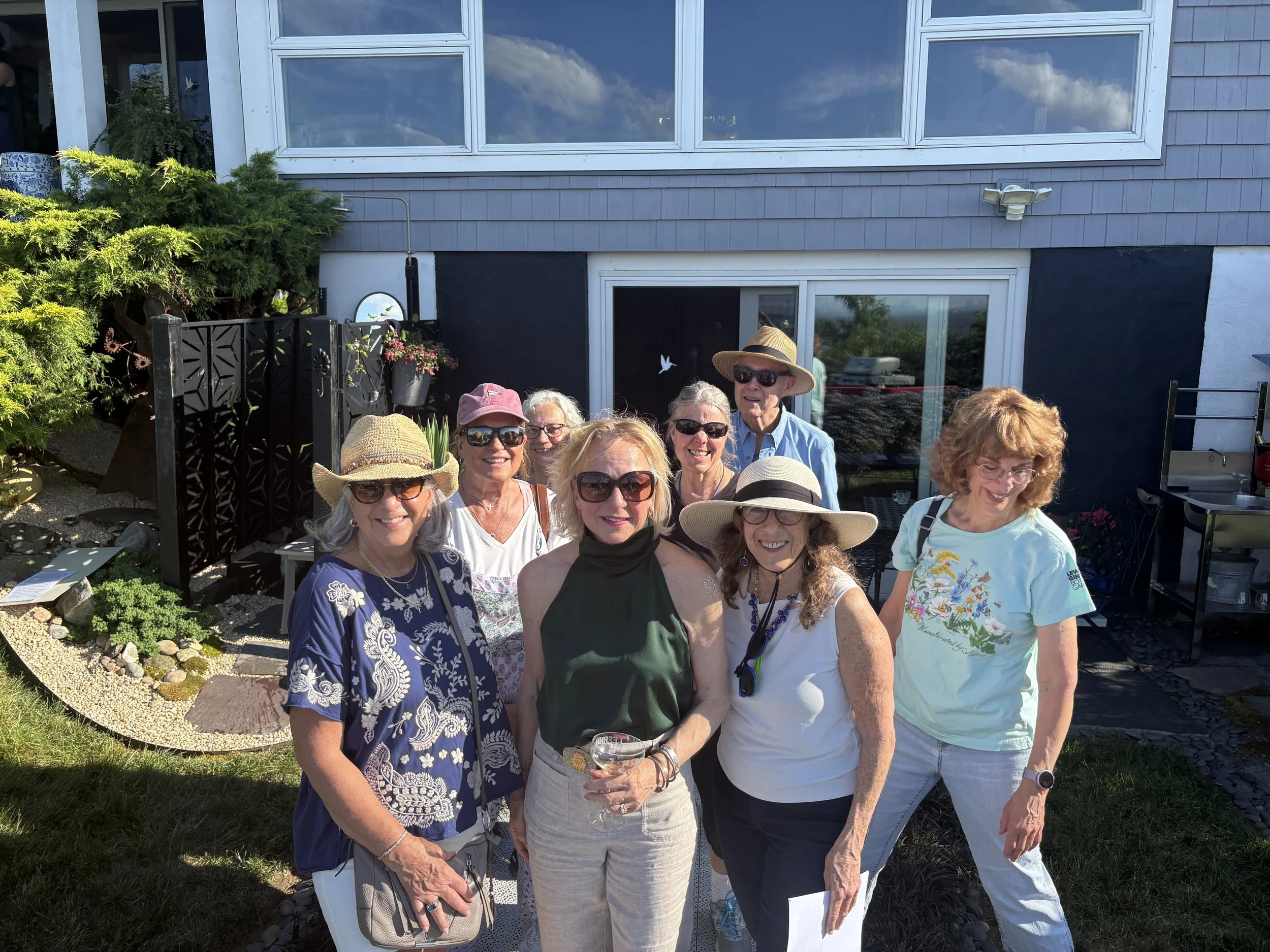
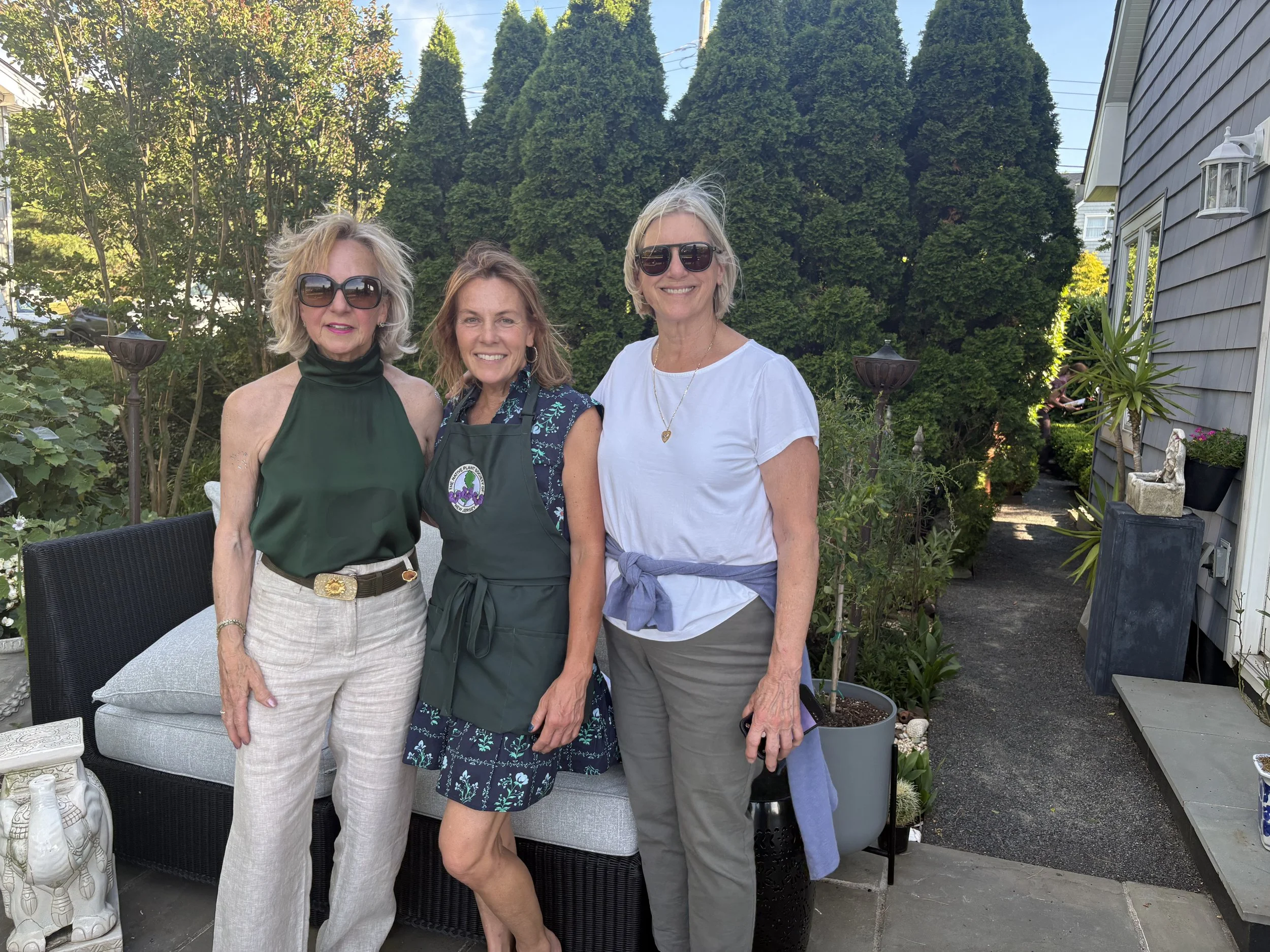
I want to add a few things in this post because I regretted not including or amplifying at the time of the tour. Here are three overlooked points: (I’m certain there are more!)
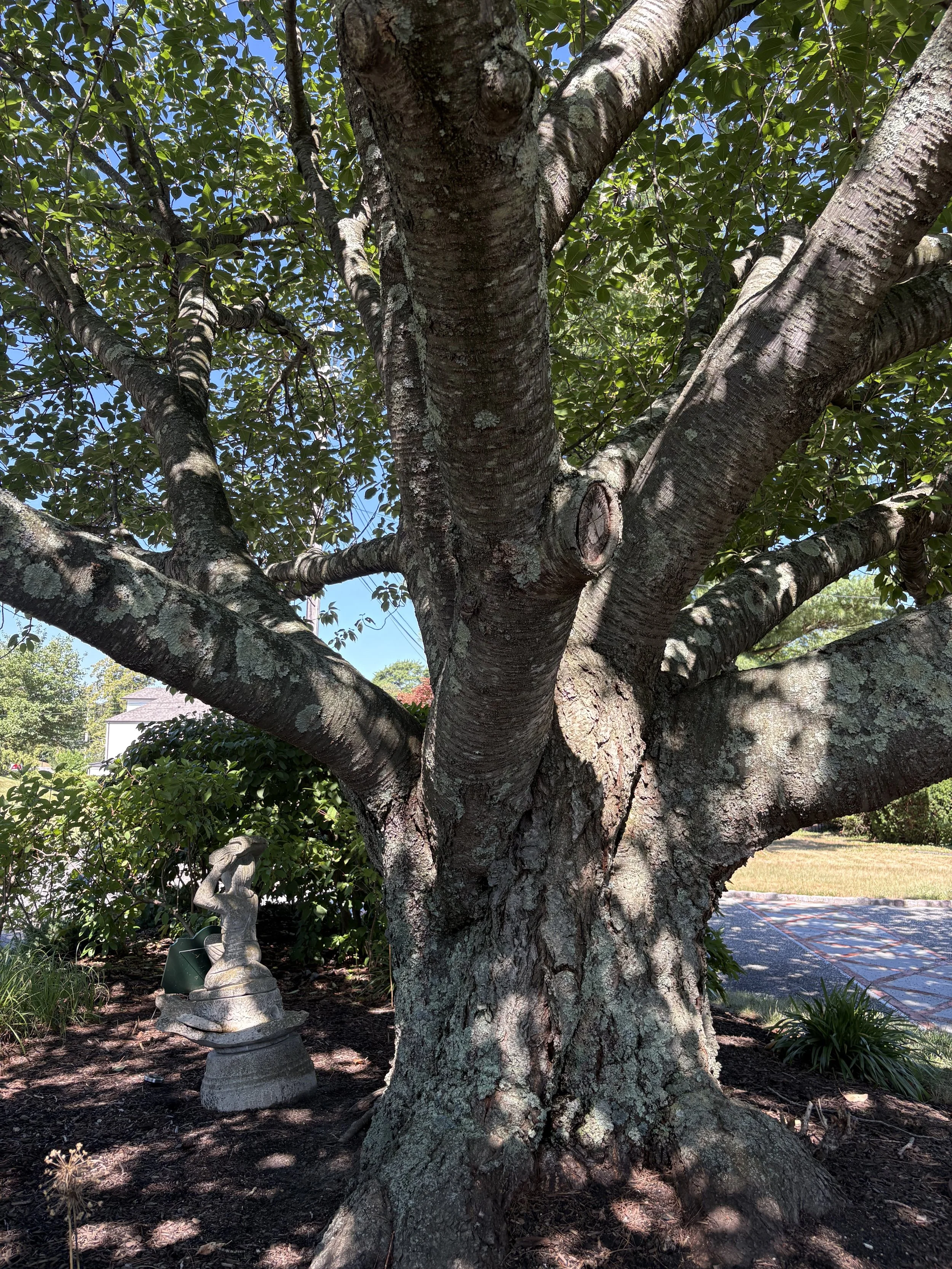
Observe & celebrate the lichen ~ here, in residence the Kwanzan cherry tree
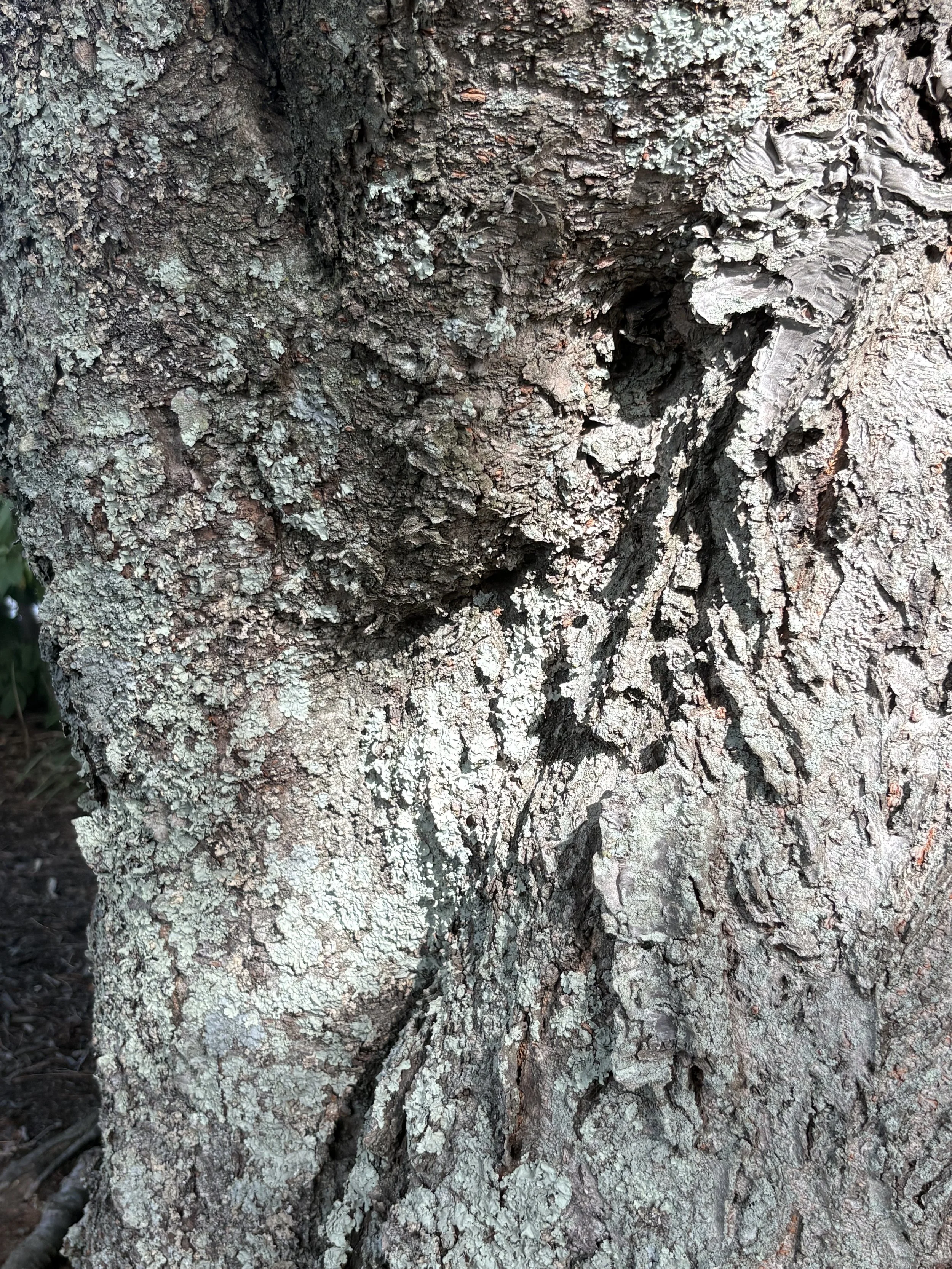
Lichen ~ while I pointed out the beautiful lichen living on the ornamental Kwanza cherry tree and the rhododenbron we inherited, I want to emphasize how critical lichen is; especially as one guest asked, “So that’s a good thing?” I answered, “It most certainly is. The standard definition about lichen is that it “enables algae to live all over the world in many different climates, they also provide a means to convert carbon dioxide in the atmosphere through photosynthesis into oxygen, which we all need to survive.” Spiritually, lichen means Harmony, Patience, Resilience and Adaptability. All traits we aspire to practice, yes? Moreover, lichens act as indicators of air quality ~ if there is pollution, they can’t grow. I remember they were referred to as the proverbial canary in the coal mine by the NYBG lichen expert at one of our Metro Hort lectures.
Leaves ~ While there is no question about ‘leaving the leaves” is an Autumnal horticultural “Best Practice” that is beneficial to creating good soil and a winter home habitat for critters, and it’s natural for deciduous trees to drop their leaves in preparation for winter. However, I remove the fallen evergreen trees’ or shrubs’ or conifers’ boughs or needles that have yellowed or are looking diseased in spring and summer. After all, the plant has shed them for a reason, I believe. Figuring they know best, I clean up the garden beds when they drop those yellowed, or puckered leaves. Keeps the garden clean and the aphids and other critters from hibernating or setting up residence too easily. When too much diseased or decayed plant material is creating heat and loss of air flow under shrubs particularly, it invites unwanted critters. So I aim to keep it clean.
The Shore Mallow ~ I wanted to highlight because growing this native plant is so easy. Mine stays in the same pot where it over-winters (six years and counting). Outside. And because it’s so pretty! I love this sweet Native plant so much I even included their images on my bespoke Roman shade curtains in the garden room. And, I also love it because it’s edible ~ the flowers can be eaten fresh on salads or used to make tea. The leaves are edible cooked or raw but best if cooked. And the Roots can also be eaten raw or cooked ~ it is where we first got the Marshmallow from! Cooking the roots with sugar ~ Marsh - Mallow! Sweet Nature treats.
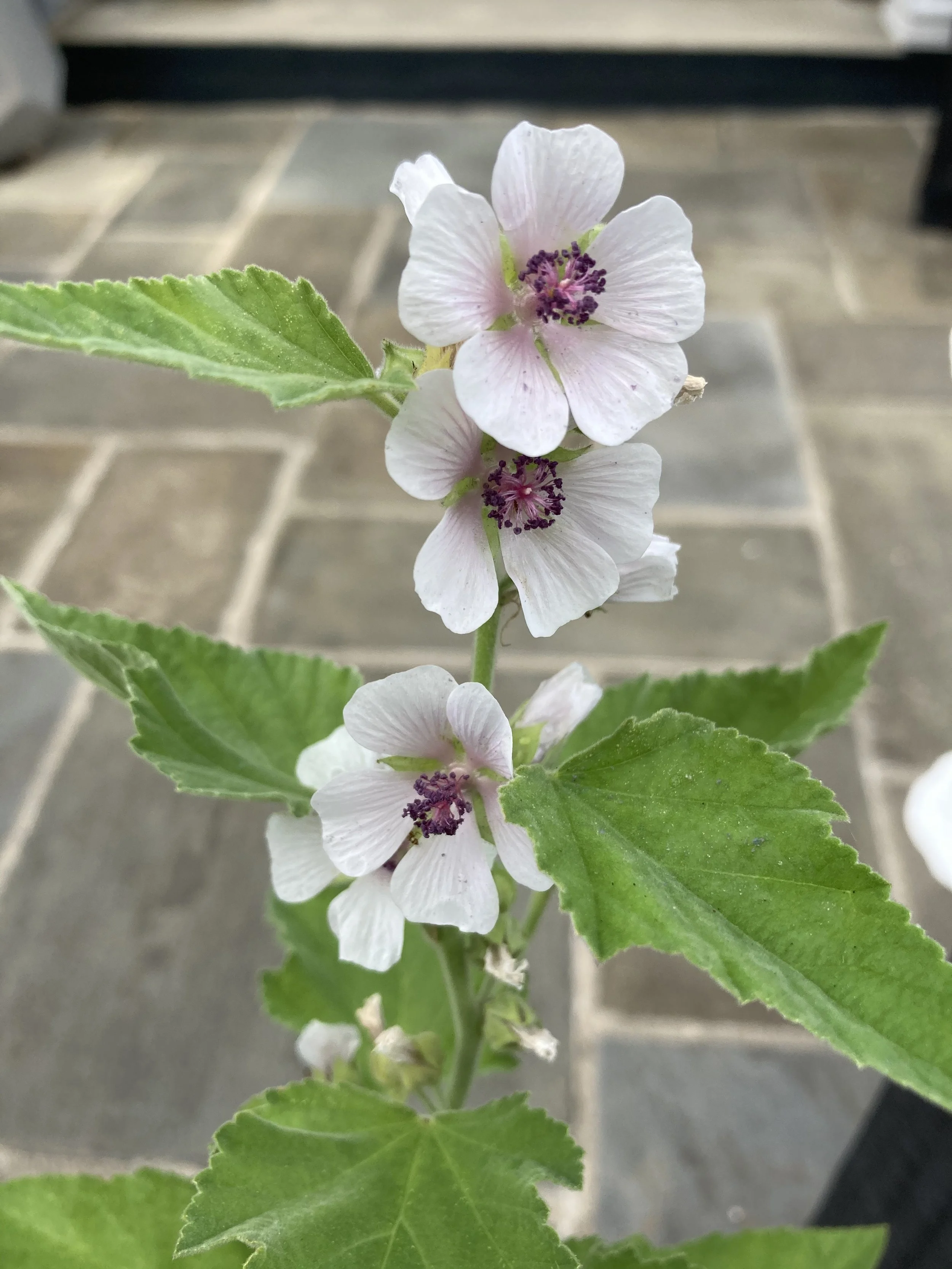
Shore Mallow’s pretty blossoms
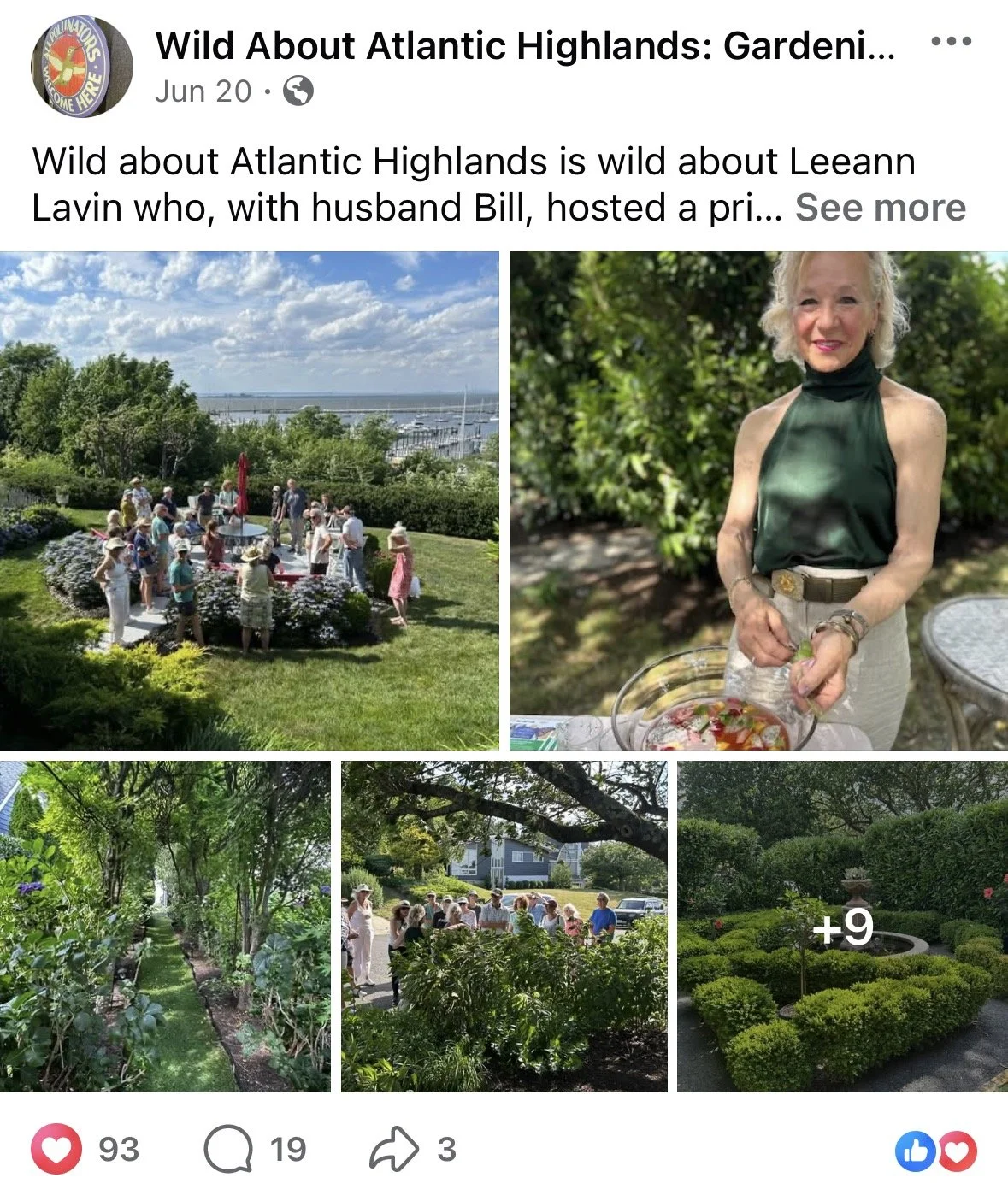
Wild Gardening FB Post
Afterwards, Marilyn posted the nicest overview in the Gardening for Wildlife Facebook page. Here is the text:
Wild about Atlantic Highlands is wild about Leeann Lavin who, with husband Bill, hosted a private garden tour offered by the Monmouth Chapter- Native Plant Society of New Jersey. In spite of the threat of severe thunderstorms (which never happened), and gale force winds (which did occur -- scattering maps and other papers everywhere), Leeann's enthusiasm and professionalism never wavered. Not only did this knowledgeable woman offer the tour group a glimpse of her luxurious gardens in their spectacular settings, but she also shared her knowledge of garden design, all the while being a charming and elegant hostess. Thank you, Leeann, for sharing your gardens, your knowledge, your elegance, and your love of nature. Thank you, NPSNJ for offering this program
https://www.facebook.com/AtlanticHighlandsGardeningforWildlife
I was so overwhelmed it took me a day or two to work up a blushing response. I wrote: “Oh gosh ~ you all are so generous and so kind. It was truly my sincere pleasure to host you. Gardeners love nothing more than to share their gardens with fellow enthusiasts and what a special group the Monmouth Chapter- Native Plant Society of New Jersey is. I appreciated your infectious enthusiasm, curiosity, and delight touring the variety of our garden "rooms." I'm thrilled that you enjoyed the botanical drinks and homegrown treats, too. I noted to Marilyn and @kimrowe Kim, that I'd hoped to welcome you, share my passion for the Art of the Garden and the astonishing world of Plants ~ edible and ornamental ~ to encourage you to pursue a more seasonal design aesthetic (yes, garden design for the winter too!) to nurture gardens ignite all our senses ~ and of course, to use our beautiful native plants for more sustainable ecosystems that are beautiful and healthy ~ for pollinators, pets, and us!💚
Gardens charm us, as they change every day ~ offering us adventure, mystery, and discovery right in our own yard. How lovely is that?
Thank you all so much for the opportunity to pursue a bit of garden glamour together. Bill and I are very grateful for this opportunity. What great guests you are! I'll be posting about the special event on my Garden Glamour blog (please do subscribe for tips and ongoing garden and plant news). I look forward to seeing you there and on my Garden Glamour by Duchess Designs instagram. Let's keep the garden conversations going... Cheers.”
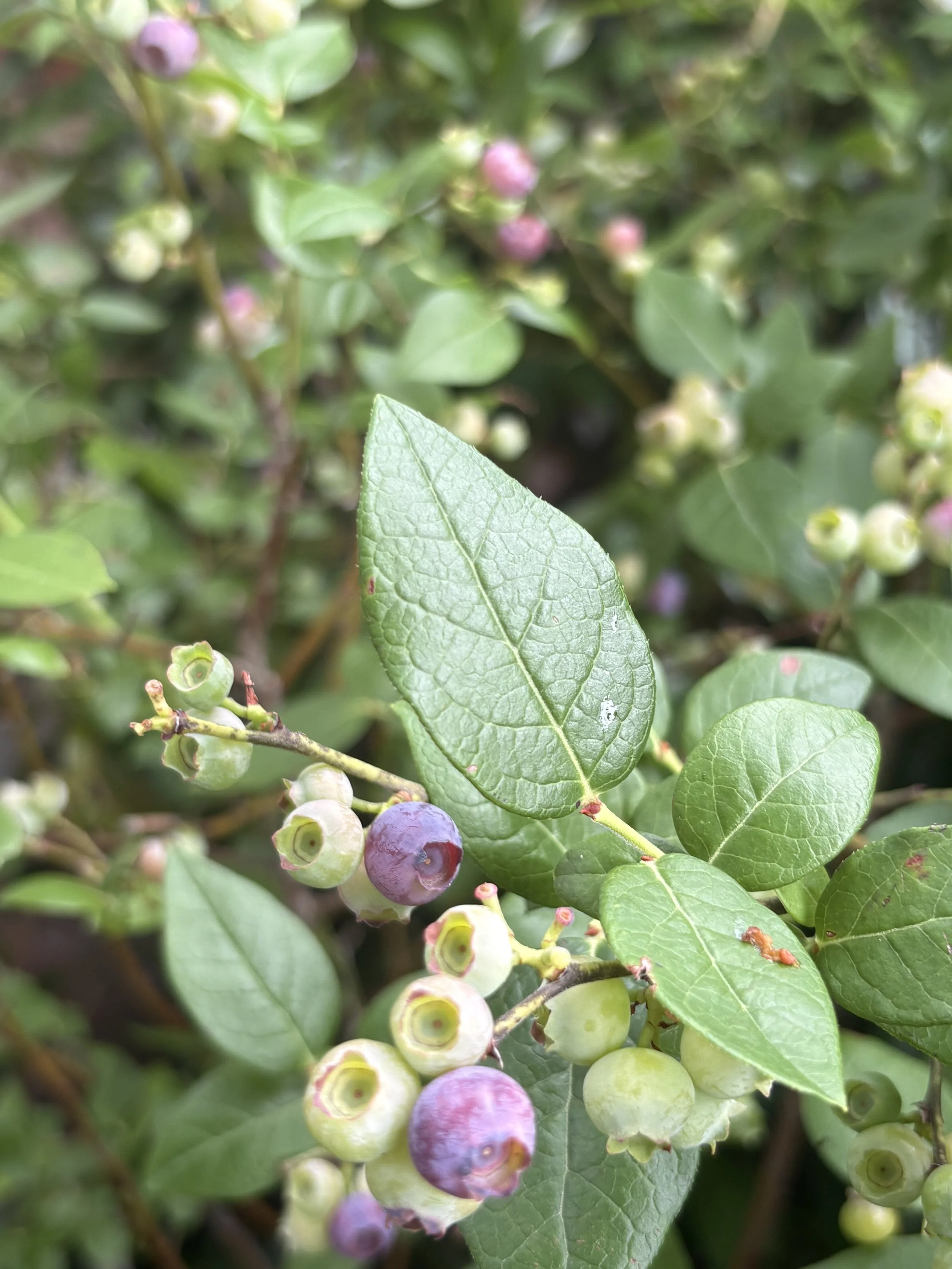
Our Native NJ Blueberries in front border
Thank you again, Marilyn, Kim, ~ and Bill. And for all the member guests who attended and for all the folks who weighed in on social media ~ so far. 😉
I hope that we are spreading the good word about the importance of growing native plants, protecting our environment and advocating the beauty of inspiring, thoughtful garden design and why it matters.
With Love,
Garden Glamour
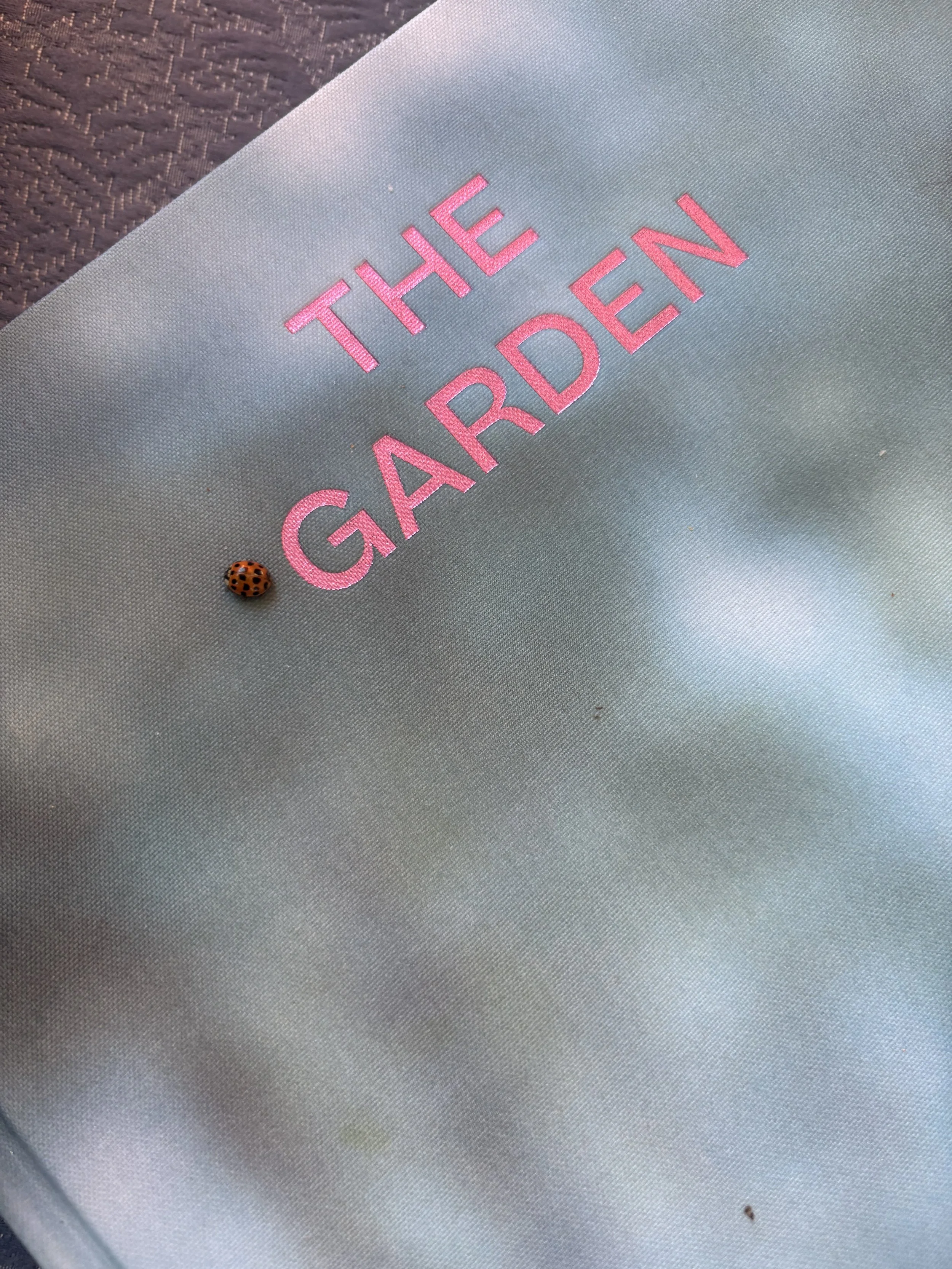
I discovered this little Ladybug trying to get into this Garden (book)! An emerging “bookworm” transformation perhaps?! Everything is possible in the Garden…
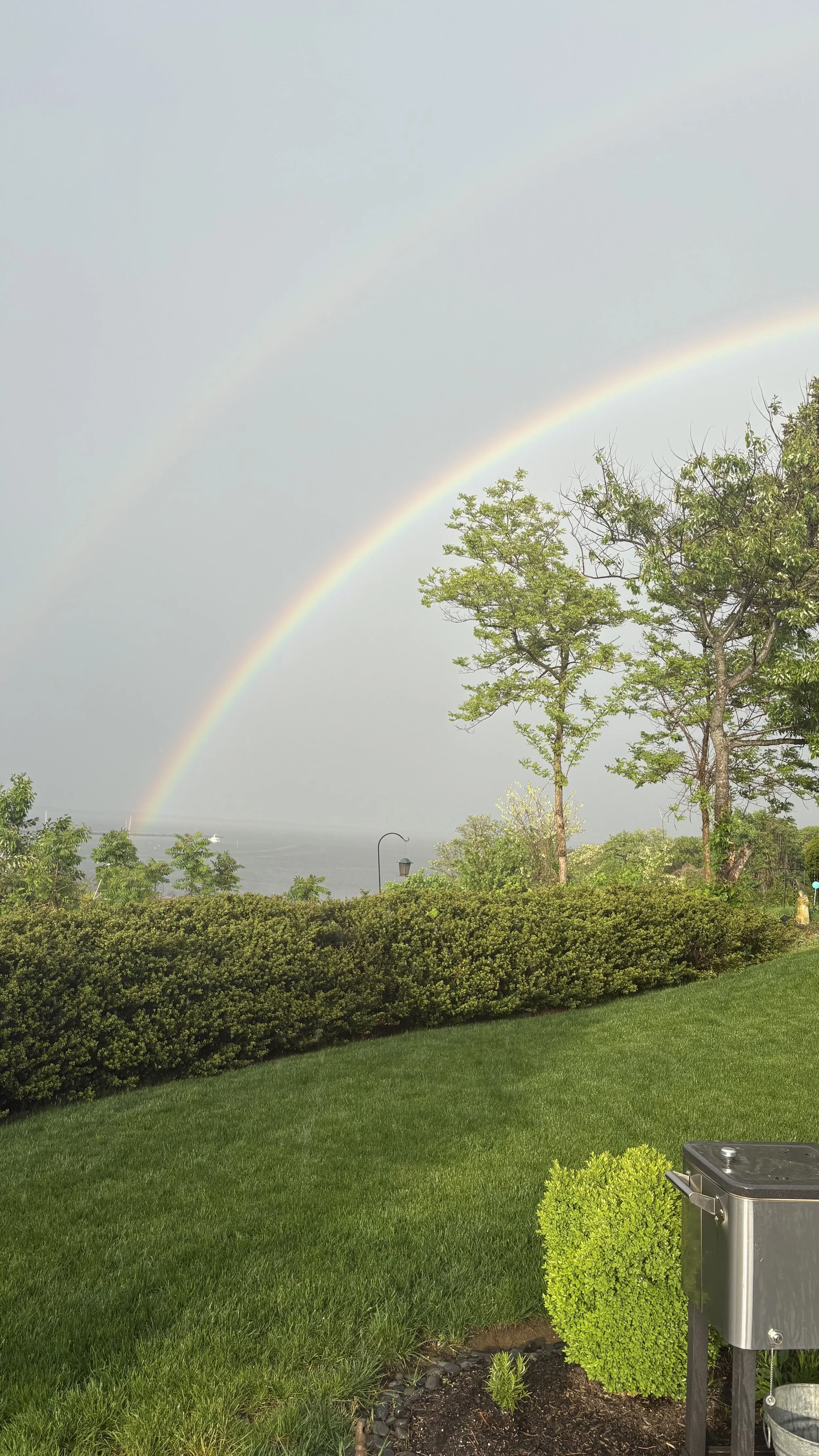
Paradise found ~ in one’s own yard… Just as Dorothy said in the Wizard of Oz ~ next time you go looking for your heart’s desire somewhere over the rainbow, look closer to home…
