Book Review: When the Forest Breathes, Suzanne Simard
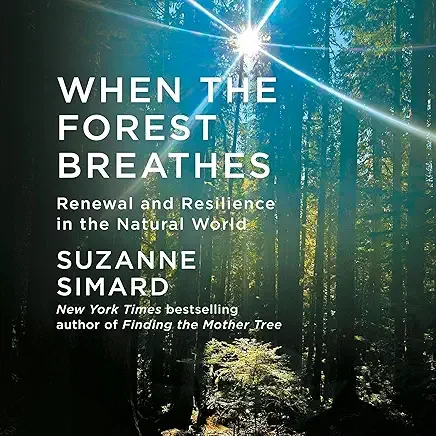
I come proclaiming good news. It is the First Day of Spring 🪻❇️🌸 and a perfect day to share my latest book review. Suzanne Simard, scientist, ecologist and the author of FInding the Mother Tree ~ which pioneered the concept of sophisticated communication between trees, now offers a powerful vision for saving our forests based on nature’s deep-rooted cycles of renewal.
Her new book, When the Forest Breathes Renewal and Resilence in the Natural World, celebrates its official publication date, March 31, 2026. I was given the opportunity earlier this year to read and review the book via an ARC (author’s review copy). I did so with reverence and great anticipation. I am just that geeky that I couldn’t wait to get back to the world as Simard translates it.
For those of you who are not yet converted and are perhaps curious and maybe teetering as a proselyte ~ or maybe you are totally uninitiated in the seismic change that Simard wrought, so allow me to set the stage and put the new book into context.
Suzanne Simard's research was the real-world inspiration for the 'Wood Wide Web' seen in Pandora
First, I think I have a way to visually tell some key elements of the story in a fun way. You are all probably familiar with the Academy-Award winning, box office hit Avatar ~ which went on to become the highest grossing film of all time. So you know of the importance of the Mother Tree to the story. A quick online search says it best:
Avatar mirrors scientific, real-world concepts of forest communication networks (sometimes called the "wood wide web") where trees share resources and information via underground fungal networks, a field championed by scientists like Suzanne Simard. In the film, these trees act as a neural network for the entire ecosystem.
When I first saw Avatar, I practically leapt up, or I did leap up ~ either way, I was moved so much to feel that, finally, at long last, I was seeing what I’d long felt was true but of course, didn’t have the vocabulary or scientific gravitas to articulate,
It was as if the ground literally shifted.
Then, Simard’s ahem, ground-breaking book, The Mother Tree took the world by storm. It was a revolution at the time it was published, and remains so. Her Ted Talk has earned about two and half million views. And counting.
Be sure to watch this “earh-shattering talk: (sorry, the nature and earth puns are irresistible.) You will be astounded.
The Mother Tree book remains a best seller. It charts her years researching and proving what she knew was true but seemed unimaginable. Regrettably, it still does to some folks. Why this is so is a mystery to me. Why is it impossible to consider that trees and plants communicate and moreover care for their young?
Today’s technology allows Simard, her research team, and now others, to track and chart the plants’ ability to network and communicate; to document how mycelium connects different species.
One of Simar’s singular contributions is that she discovered and demonstrated that Douglas firs provide carbon to baby firs.🌲 She found that there was more carbon sent to baby firs that came from that specific mother tree, than random baby firs not related to that specific fir tree. It was also found that the mother trees change their root structure to make room for baby trees.
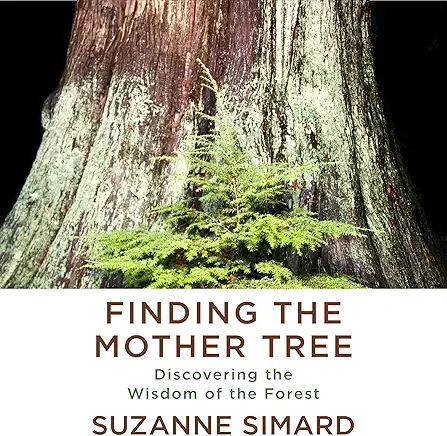
If you haven’t read the Mother Tree book, I heartily recommend it.
But even if you haven’t read it, don’t worry, my little overview is enough of an introduction 🙂for you to understand the context for her new, follow up book, When the Forest Breathes. And you needn’t worry about your ability to understand the research or the science. Simard writes about life, change, and love.
Plus, Simard provides more than enough background, launching into the work of forest communication by Simard and her team.
She gets right into the hard work and challenges of dealing with a skeptical logging industry in her native Canada. The loggers are at odds with her holistic approach to renewal and regeneration as practiced by the indigenous: the First People.
Why? Well, mainly because it takes time and money. And those are investments that the logging industry doesn’t see as part of its mission.
Plus, climate change is bearing down on the natural resources, accelerating the destruction of the future ecosystems.
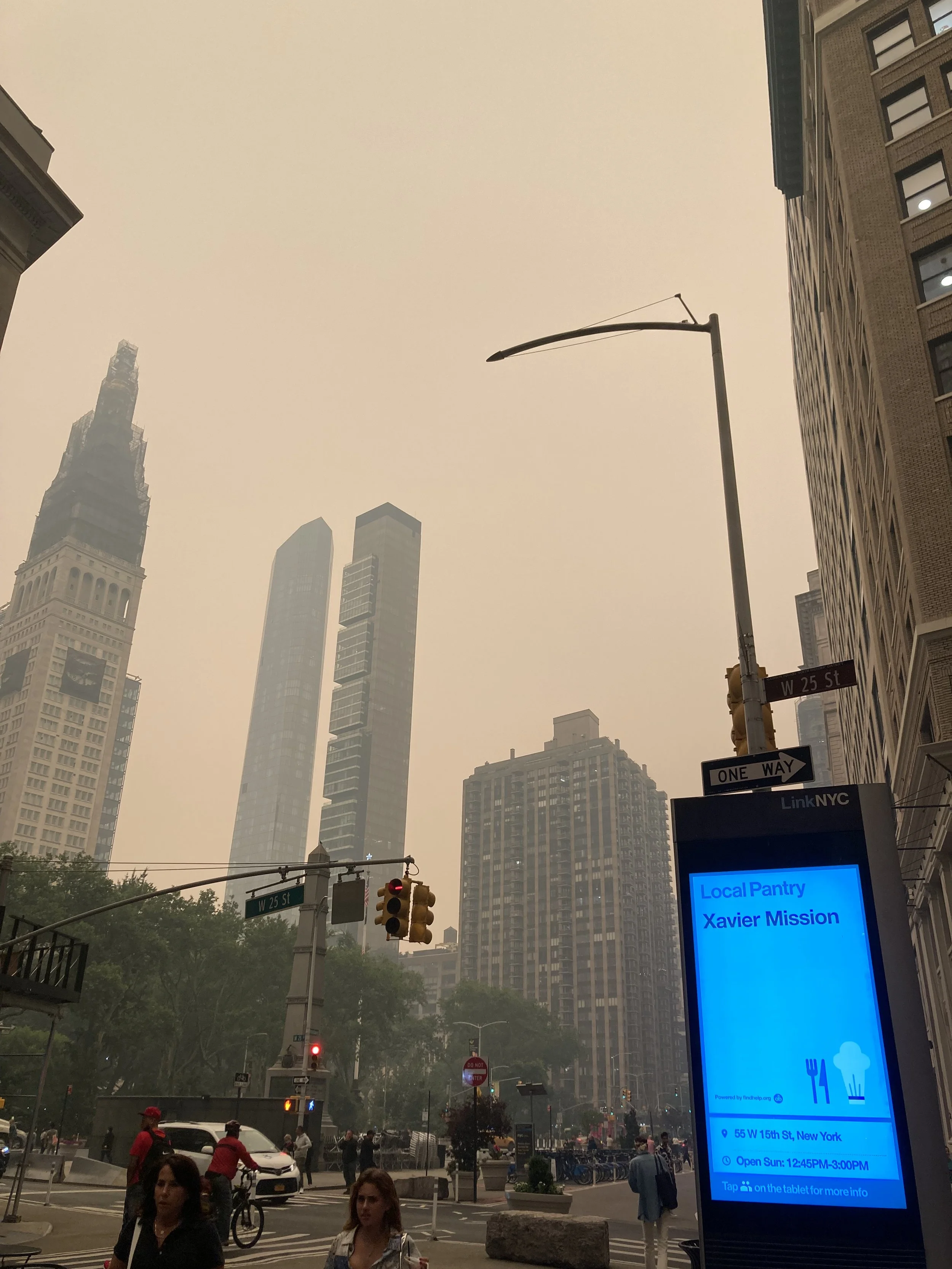
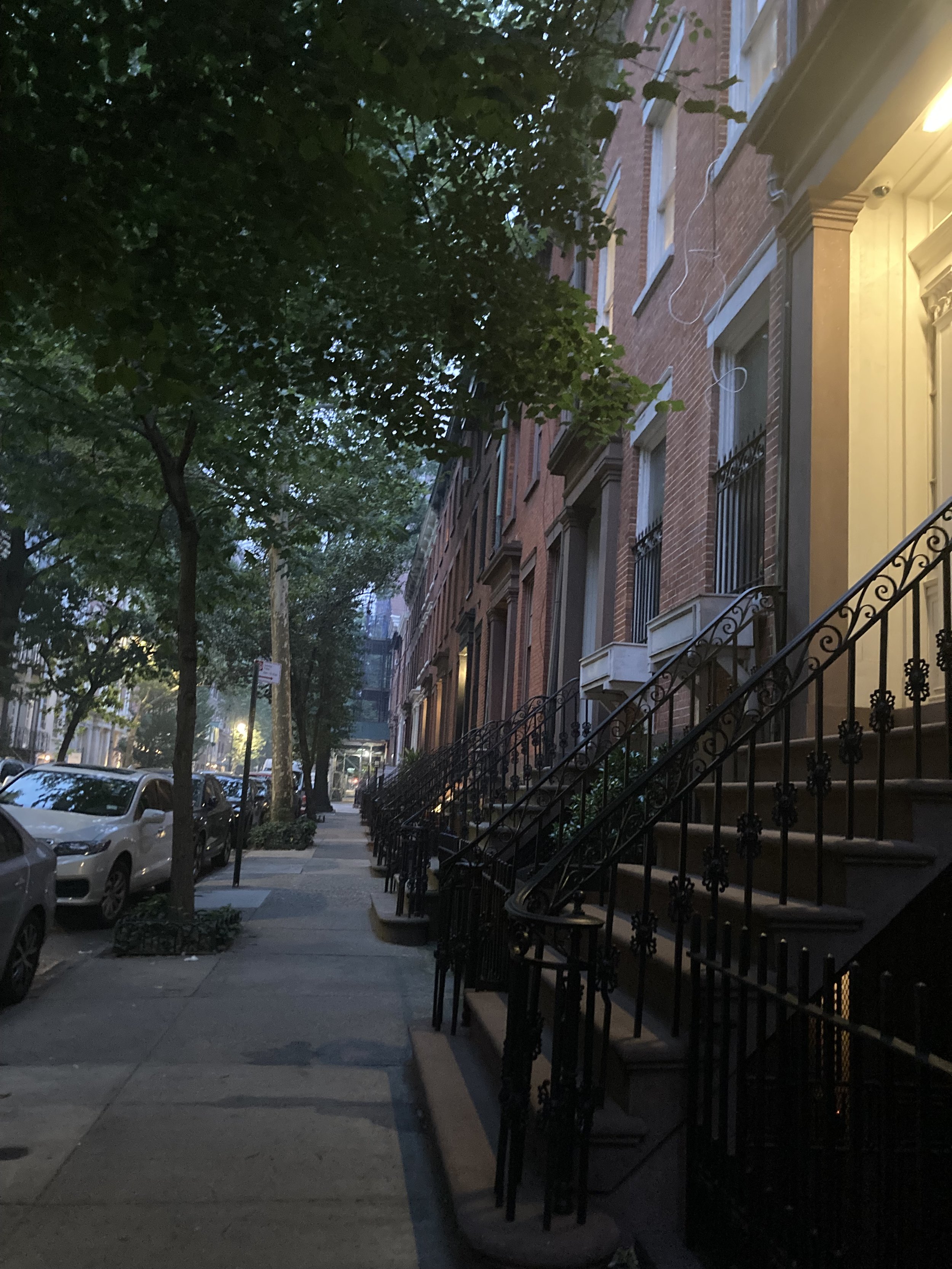
She cites the fires of the Canadian forest and its impact on the rest of the continent. I can personally attest to the days that were as dark as night in New York City because of these fires…
In the book, Simard set up the insider’s look into the very real good guys and bad guys in this battle for the future of our environment and business that relies on nature. Loggers in particular are the villains and the government doesn't come out looking good vs. Simard, her team and the indigenous practices. Simard offers deep and respectful insight here that should be required reading for anyone who works as a public servant in environmental and interior policy.
With her notoriety, and general understanding of her brand of environmental stewardship there was more of a willingness for the Canadian government to implement her protocols. As readers, we come along as the team does their work to test her rigorous regeneration forest management.
The tug between the two sides is what makes the battle an interesting read.
The other interesting element in the book’s narrative is how Simard offers us parallel stories as she considers how the older Mother trees age, offering to the new-growth trees and baby trees nearby. She includes a memoir of her own family’s story.
In particular, there are very touching moments as she shares her obvious pride for her two daughters and her beloved PA~ who suddenly dies in a skiing accident. Simard writes of Nava, Amanda, and Hannah so that we experience the irresistible “siren call of duty” to the forests, and their commitment to take up the stewardship banner and continue the mission. As in a relay, team way.
We sense the magnetic pull of the trees and the environment; experience their triumphs and insights as they have matured to adults who now share her passion for their heritage and the forests. Then there is the impending grief and planning with her mother to determine her final days, choosing to die by way of Canada's Medical Assistance in Dying (MAID) program. That her mother applies for eligibility makes it no less crushing. (By way of background, in order to be approved, citizens must be 18+ years old, eligible for Canadian health insurance, have a serious illness/disability, and endure intolerable suffering that cannot be alleviated.)
I can’t imagine it wasn’t just as heartbreaking to write about her mother’s final days as it was to experience it; but Simard delivers a tender, respectful account that makes this element of the book so enriching. As a Death Doula, I was sensitive to how Simard navigates this life experience.
In the book, she weaves her personal accounts into the grand, macro story that makes the memoir like a puzzle, where the pieces all fit together.
Simard’s inspiration as told in the book also combines and complements her work and learning from the indigenous people in Canadian NW and from a visit to the Amazon rain forests in Ecuador. Having spent several years in Ecuador myself, this passage is close to my heart. Simard visits the rainforest as a kind of healing retreat after the ravages of the two recent deaths. In Ecuador, she spends time with Kichwa of the Sarayaku community, seeking out and visiting a large Sagardo Uchuputo tree.
This trip is presented at the end of the book and her pilgrimage.
The book’s narrative reminds us that life ~ all life ~ is about cycles, rhythms; good guys and bad guys.
I am a card-carrying Simard groupie so it was a bit painful for me to consider that I wished the book was tighter, edited in a way that I didn't feel I’d read that already. I think that to the uninitiated or converts, it could be a wee bit of a slog.
If you ARE a convert, you didn’t want this book to end. The narrative tugs at your heart; the prose is brimming with tender sensory writing that transports you.
While there’s tension, the battle dynamics and the personal stories of life and death, it’s not a discovery or adventure in that usual way. But then, perhaps that is the very point. After all, trees and communities take time to mature. This is a reflection on the world as it is. Does it offer hope? Yes, but not the kind of happy ending with a bow tying everything up.
It’s a meditation on her personal family networks, including the forests and the environment, and the magical ability of nature to renew and rejuvenate. It’s a roadmap and a blueprint for all of us.
Thank you, Suzanne.
And thank you NetGalley and to the publishers: Knopf / Penguin Random House for the opportunity to review the book. All opinions are mine.