
Create a Mood-Boosting Scentscape for Your Home or Office: Poinsettia Potpourri Recipe
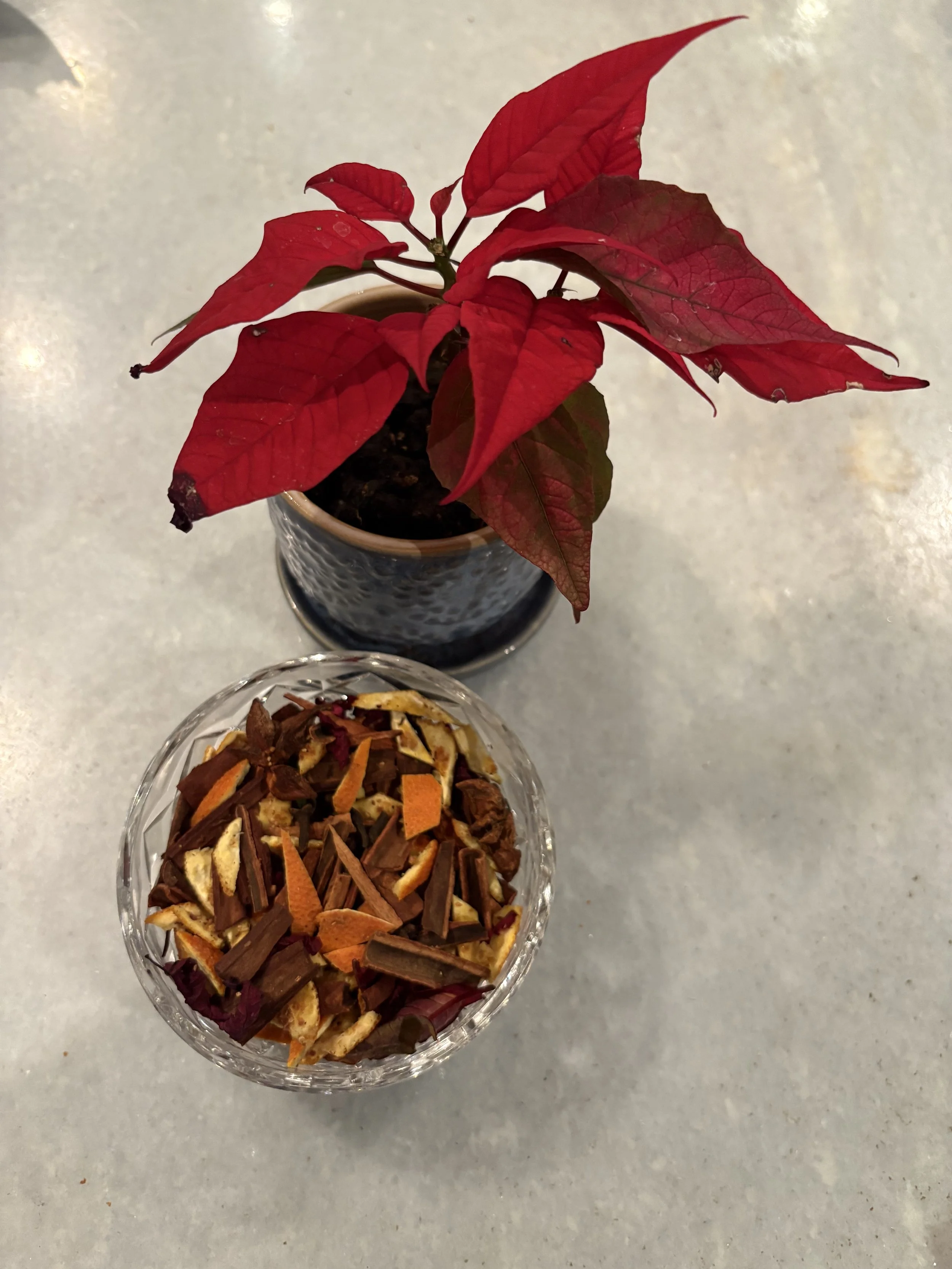
If your holiday poinsettias are feeling a wee bit weepy, perhaps even drooping from what would appear to be too many eggnogs or champagne cocktails; don’t despair. I’ve got a repurposing~DIY idea of how you can create lovely Winter Home Scentscaping using the fallen leaves, the pretty detritus, to better enhance and energize your home or office with natural, fragrant, luxurious ingredients.
You can make a Poinsettia Potpourri ❤️!
This is a fun and easy winter recipe that will add warmth, elevate the mood, and create a healthy, feel-good sanctuary.
We’ve all spent tooooo much time indoors ~ understandable given the snowmaggeden and frigid weather here in the East US ~ but in turn, our air is stagnated. If you practice House Burping ~ a wellness-focused trend based on the German practice of lüften (airing out), which involves briefly opening your windows for 5–10 minutes daily ~ good for you. You can amplify your air purifying practicce when you refresh your air with homegrown potpourri.
Let’s get creating.
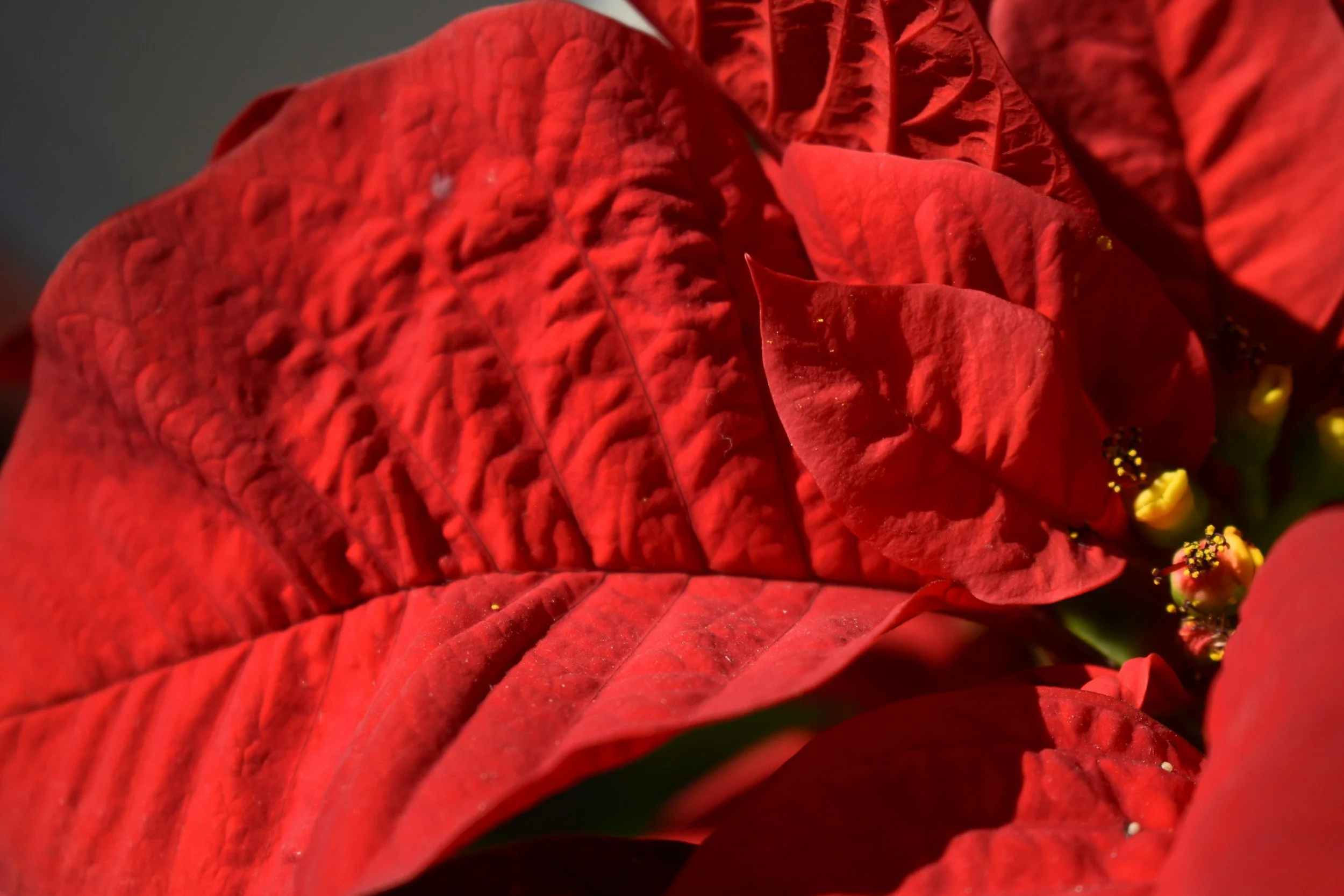
Did you know that the poinsettia leaves, or bracts, have, in fact, a very mild scent ~ sometimes described as earthy or "green." It is a very faint, slightly pine-like or terpenic, woody or green, grassy odor.
Admittedly, there are very, very few products in perfumery or home fragrance using a Poinsettia fragrance or even perfume variants with a poinsettia note; nevertheless, in my pursuit of poinsettia love and all things fragrant, I researched and discovered that “the olfactive profile of the Poinsettia Flower is a pine-like terpenic scent, frequently with a mushroom note.” As if mushrooms needed any more time in the spotlight. Ha. for the purpose of scentscaping, we’ll build on the piney, terpenic base.
Plant Profile and History
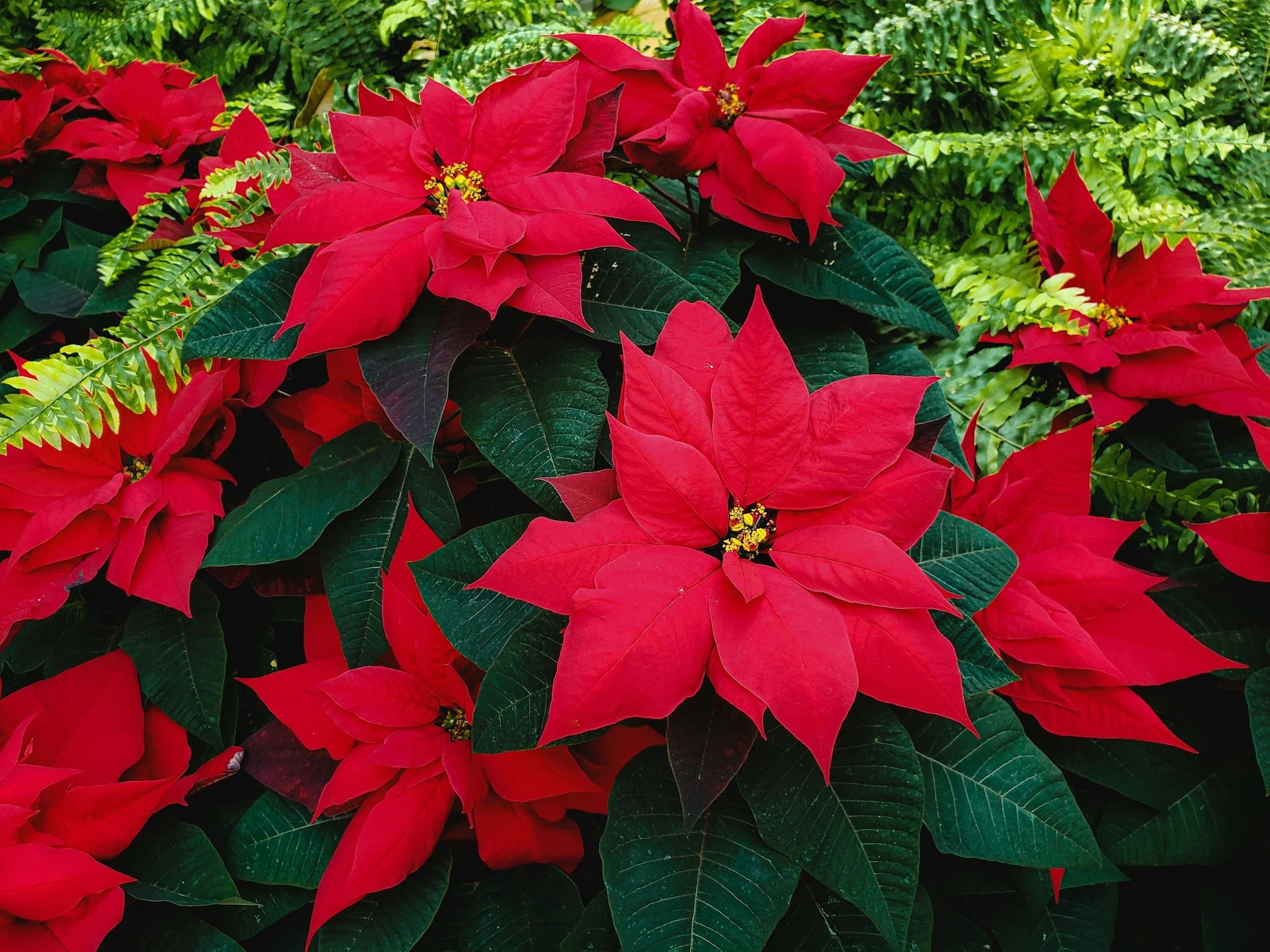
First the plant profile and fun facts: The poinsettia’s botanical moniker is Euphorbia pulcherrima. It belongs to the Euphorbiaceae (spurge) family and is native to Mexico and Guatemala. The name means "most beautiful." Indeed she is such a beauty queen. A holiday diva!
The poinsettia was used by the Aztecs as a source for purple dye and medicine for fevers, according to the American Phytopathological Society. It was introduced to the United States in 1828, when the first American ambassador to Mexico, Joel Roberts Poinsett, noticed the luscious red plants flourishing there. And like a certain someone we know of, liked to name things after himself 😆
Being an avid horticulturist, Poinsett sent some of the plants home to his greenhouses in Greenville, South Carolina. He also shared the plants with fellow growers.
But poinsettias as we know them today, became associated with Christmas thanks to the savvy marketing of a German immigrant family, the Eckes who settled in California.
For more fun and interesting poinsettia plant stories and history, particularly how the Eckes used creative marketing ideas such as sending the plants to talk show hosts for the stage and living room-like settings of Johnny Carson to establish their holiday presence, please click on over to my Garden Glamour holiday post from a 2020 Christmas’ feature.
Today, Poinsettias are the top-selling U.S. potted plant, with over 35 million sold annually. They are native to Mexico where they grow as 10-15 foot shrubs, not just small holiday pots. I saw them growing out of the mountainous crevices and dotting the cliffs near the majestic waterfalls when I studied in Cuernavaca. It is a breathtaking vista.
The plant's vibrant "petals" are actually modified leaves called bracts, while the true flowers are the tiny yellow clusters in the center. There is a lot of religious symbolism surrounding the color and the center’s yellow cross.
Potpourri
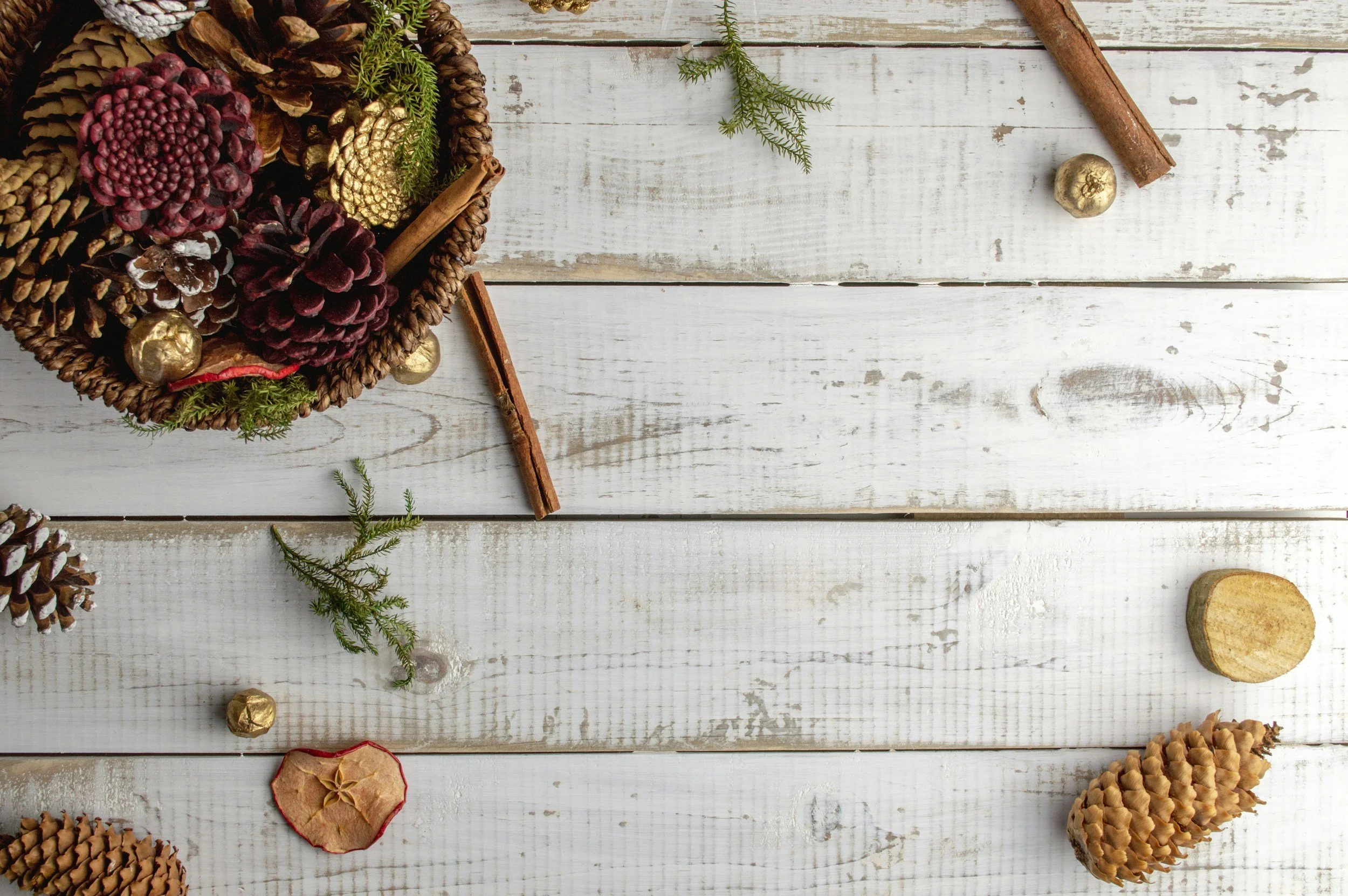
Potpourri is an ancient way of mixing dried flower petals and spices to create an endless variety of scents to add fragrance to a space.
Poinsettias can be incorporated into a lovely, winter-season scentscaping potpourri by using their dried colorful bracts (leaves) for visual appeal and scent, combined with spices like cinnamon, pine, or citrus.
You can also use the potpourri in sachets featuring poinsettias for a warm, aromatic display.
How to Make Poinsettia Potpourri ~ The Scentscaping Recipe(s)
I simply used the colorful fallen bracts (leaves) from my poinsettia plants. You can trim the bracts if you are choosing not to keep the beautiful plant and nurture it in order to replant or bring outside in the spring ~ (even though this snowmaggeden winter in the Northeast seems like it’s been forever, spring will be here all too soon).
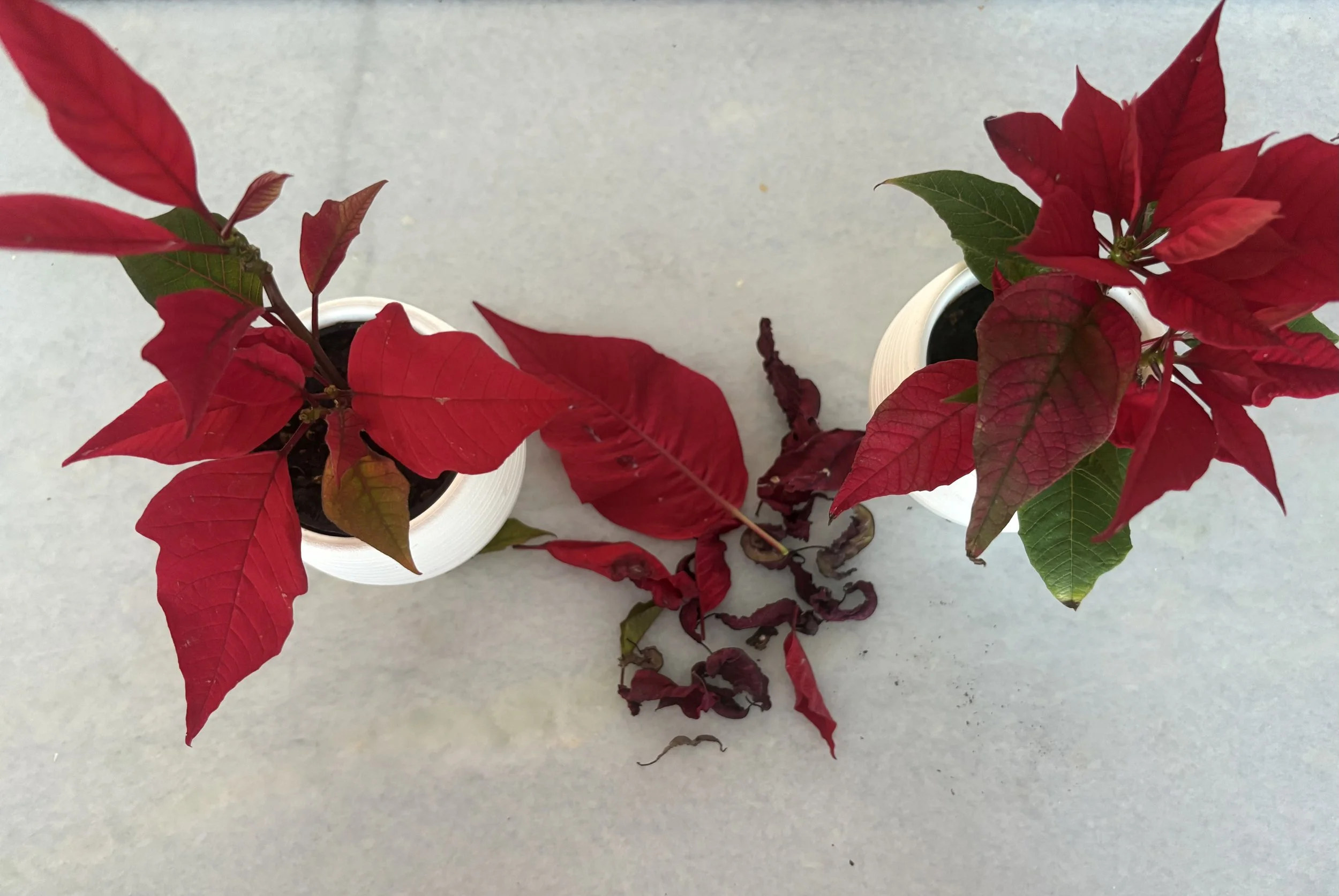
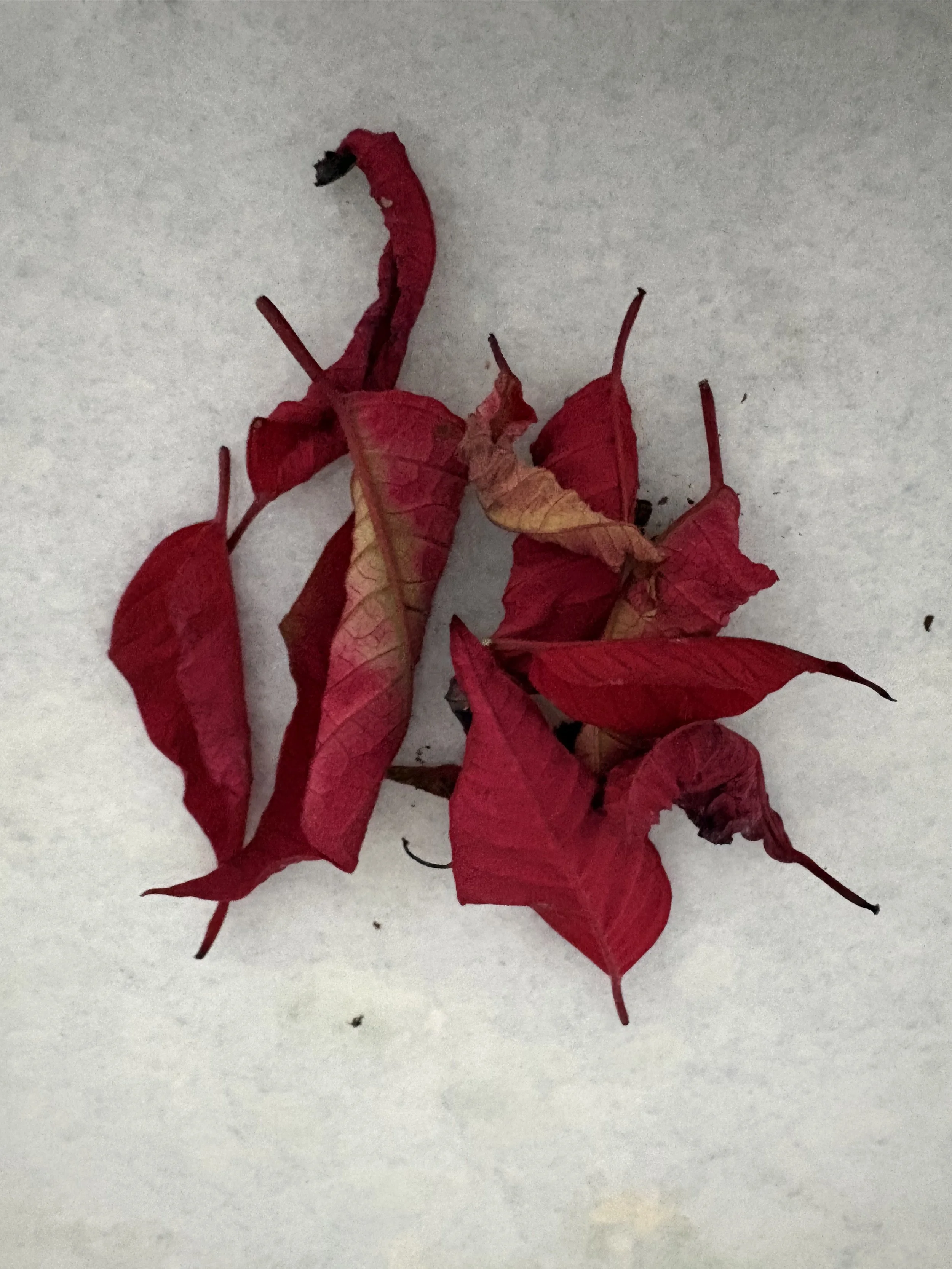
If you use the fallen leaves, just collect enough for a cup or so. I wasn’t in any hurry and over the last month, I had collected enough.
If you are trimming the leaves, you might need to stop the sap. Dip the freshly cut ends of the stems into boiling water for about 30 seconds to stop the irritating milky sap, then rinse them in cold water.
Whether using spent or trimmed bracts, you need to dry the bracts: Lay the bracts flat between heavy books for 7-10 days to dry and flatten them.
I just laid them on some magazines. I honestly didn’t care if they were flattened.
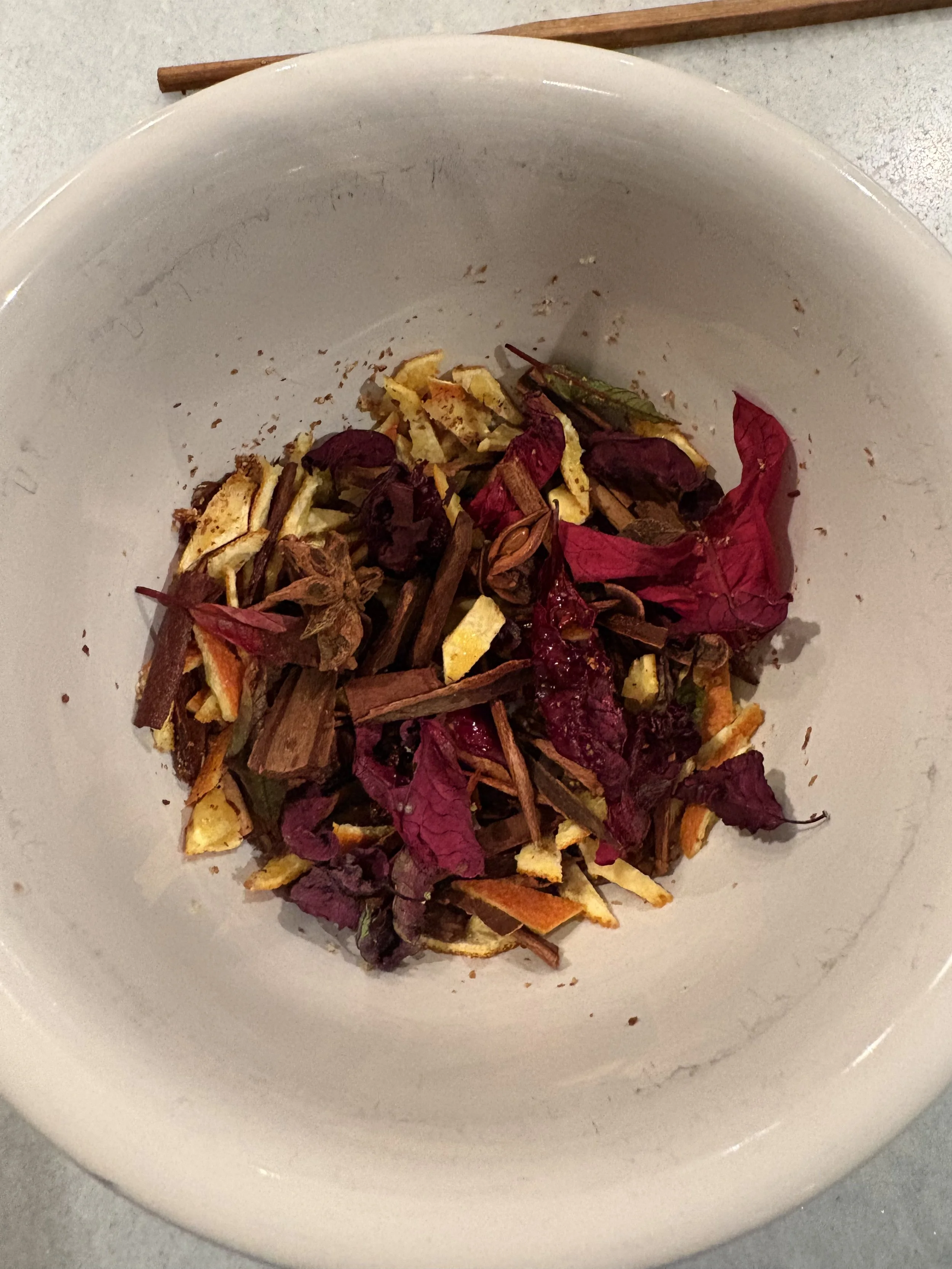
Next is the fun part. Mix the dried bracts with other natural plant ingredients like dried orange slices or cut up peels like I did ~ it’s citrus season, after all. Add in broken cinnamon sticks, star anise, and/or eucalyptus. The cinnamon sticks were a two-fer ~ meaning I re-purposed ones that were pre-used in a basket filled with apples and the cinnamon sticks, so that the steps down to our speakeasy were redolent with the scent of warm and cozy.
I found you can also use small pinecones in the potpourri, especially if you are repurposing those from holiday decor, as well.
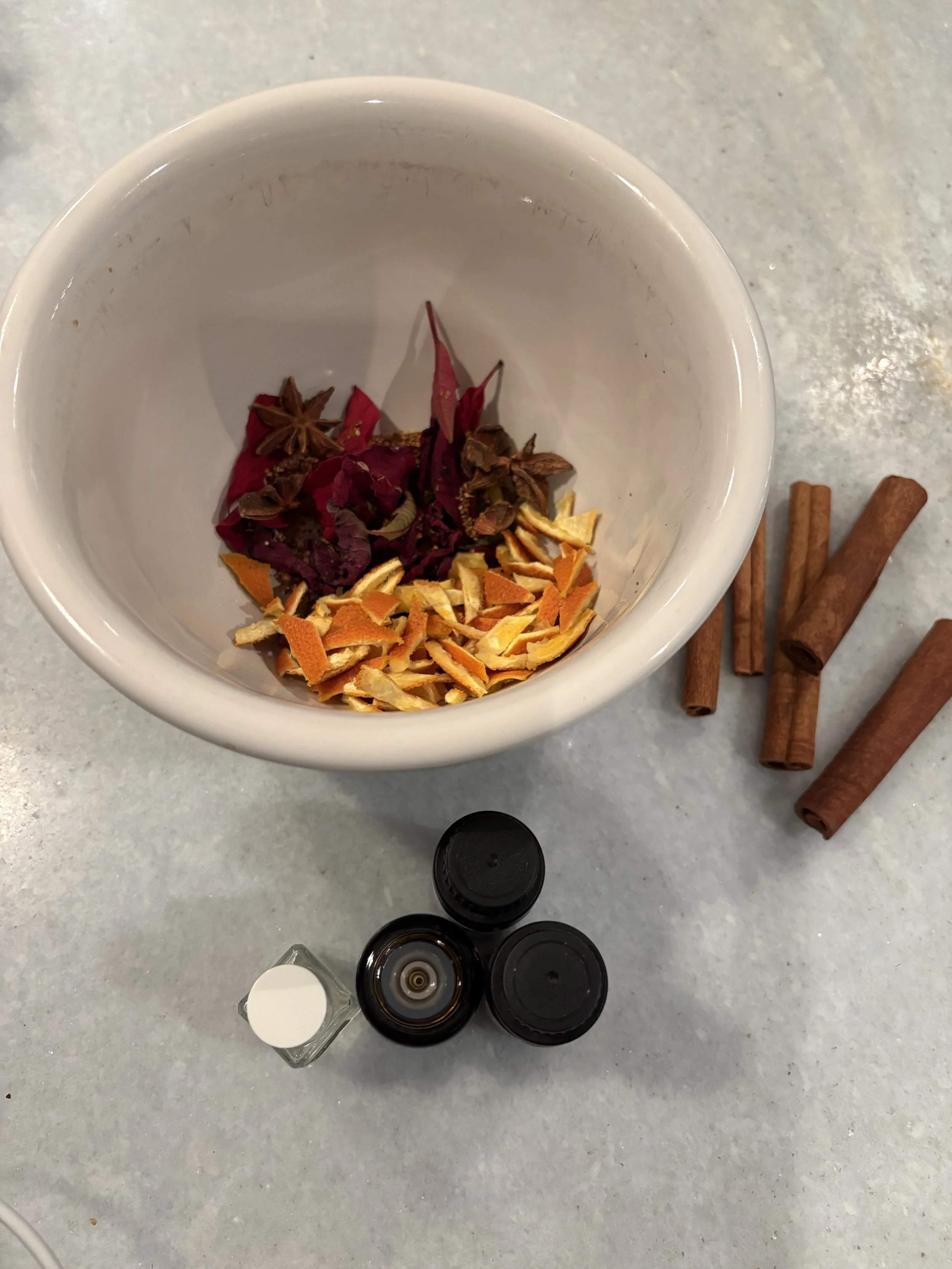
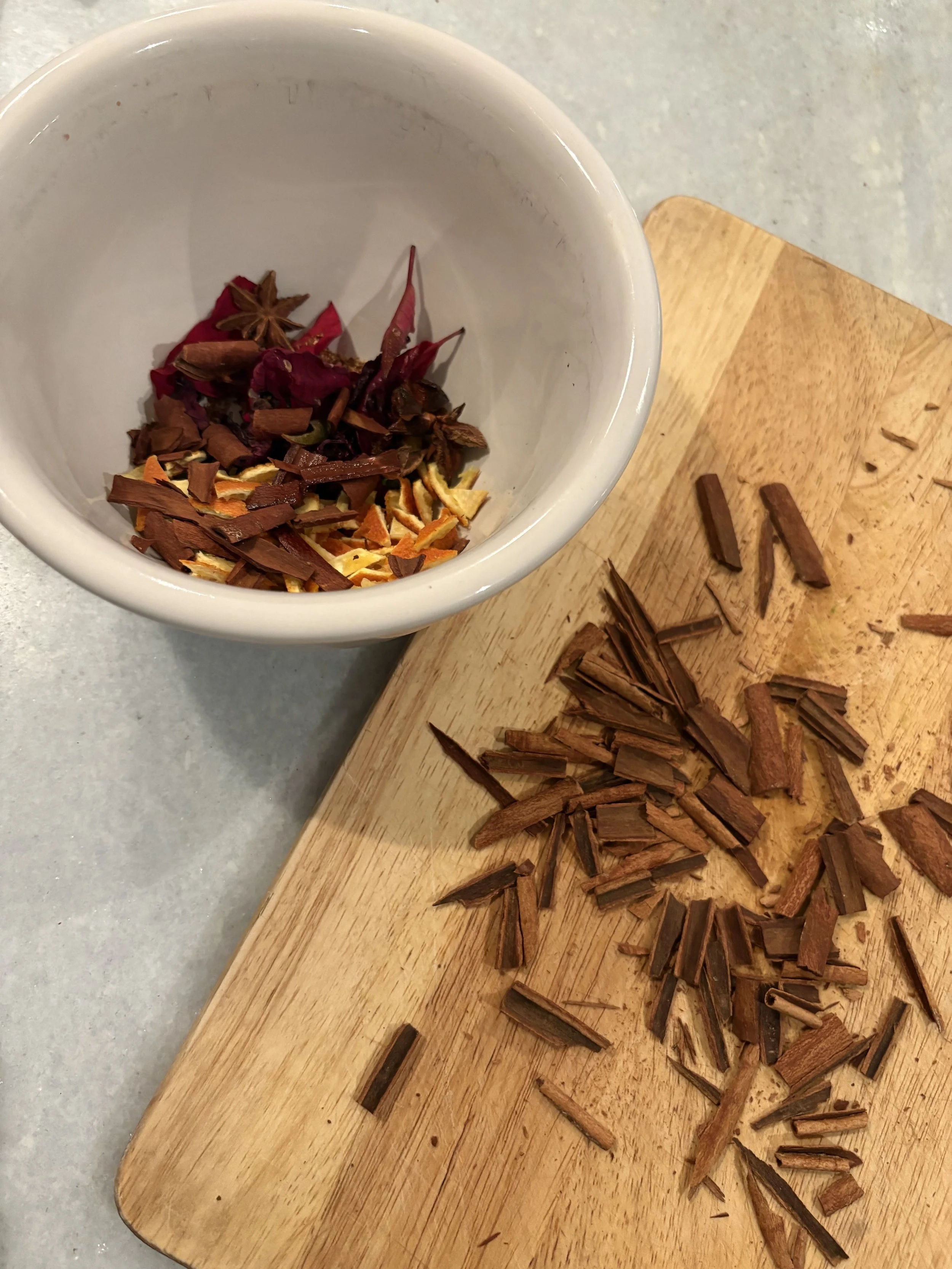
To bolster the Scentscaping, you will need to add some essential oils. I used orange petal oil, ravensara, mint, and a dash of rosemary.
You can also use cedarwood, thyme, lemongrass, or most any scented oils that you like. I recommend you use oils that complement the green or woody terpenic quality of the poinsettia. Scents that blend best with the piney or earthy notes are light smells including grapefruit, lemon, cedar, oak, or sage for a more woody or earthy smell.
I like the idea of adding lavender, thyme, and geranium for a calm or spicy profile.
And of course, my favorite, vanilla works well with the terpanic, adding a sweet pairing. With Valentine’s day coming up, I suggest some rose petals and rose and or geranium oils. The rose petals will look nice with the poinsettia bracts, too.
Bergamot and sage will be very earthy and bright in this recipe.
If the scent starts to wane or you want to just refresh and/or change it up, then just add a few drops of another essential oil(s), different from your first mix.
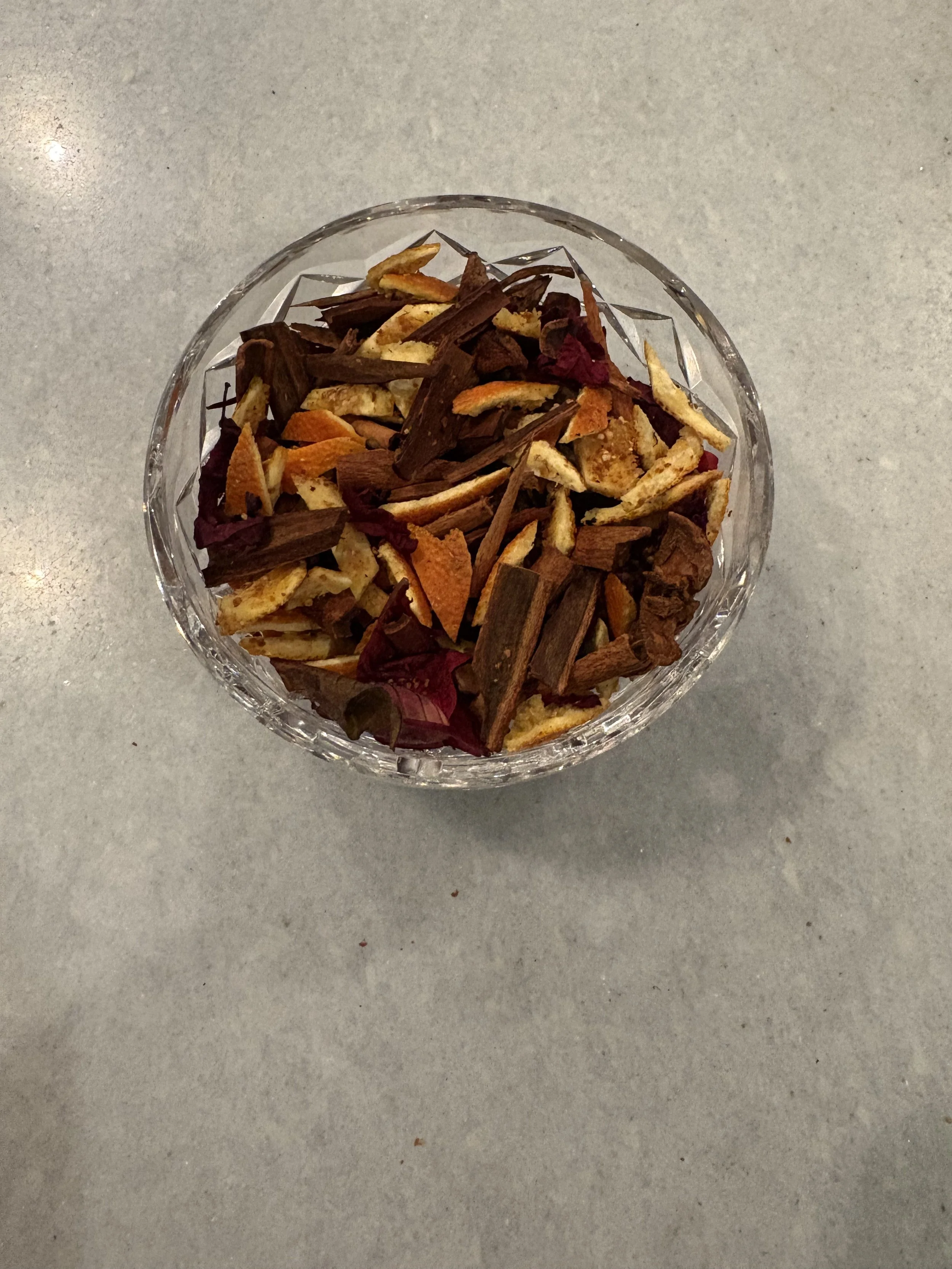
This is an easy, fun, DIY way to use your plants in ways that are regenerative, natural, healthy, pretty, and elegant.
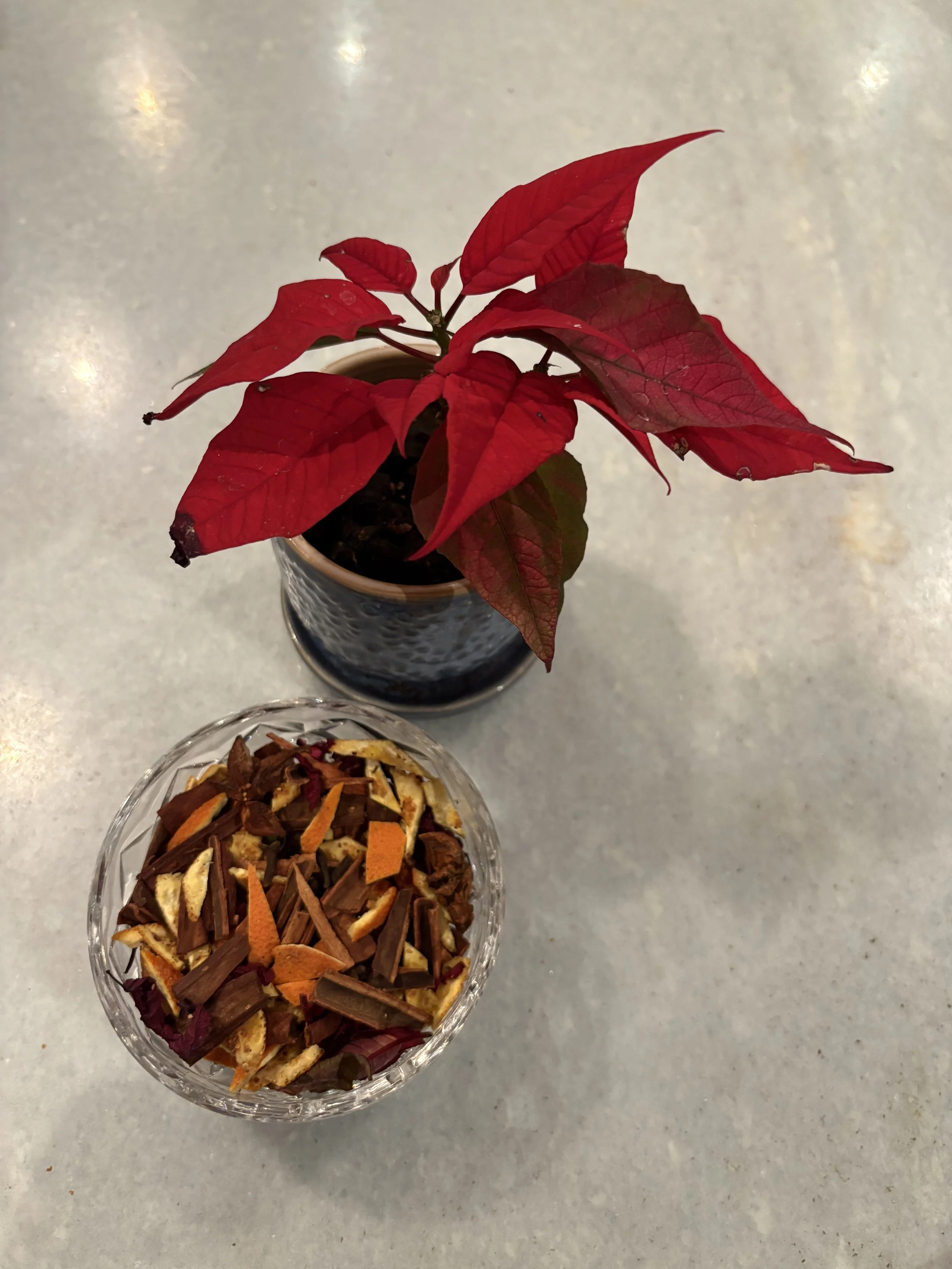
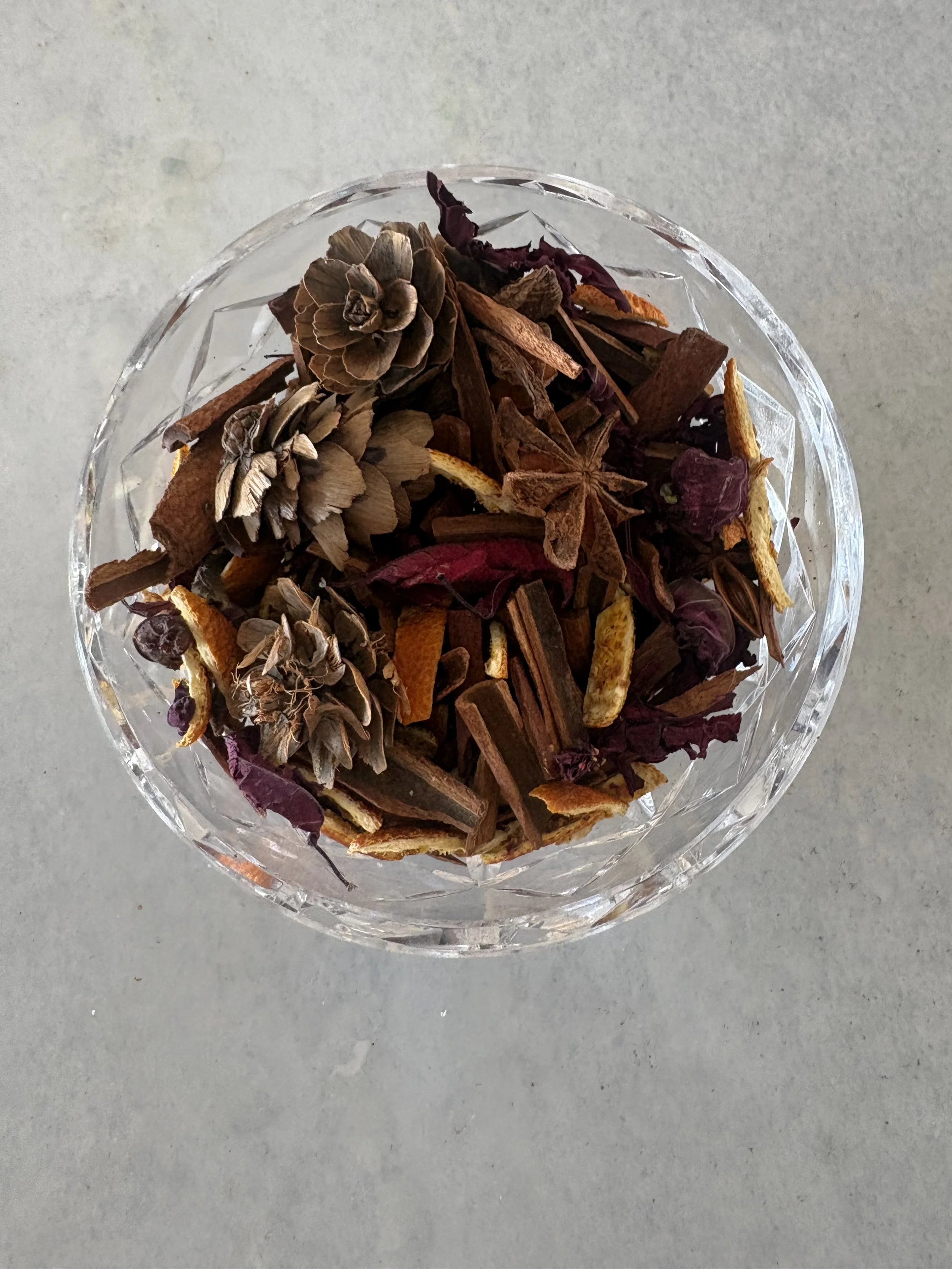
I hope you enjoy designing and creating your “most beautiful” poinsettia potpourri. And the elevated garden-to-glamour winter mood-enhancer that this little luxury offers…
